US‑Israel war with Iran Day 11: What UAE residents need to know on March 10
Missile interceptions, travel updates and security alerts among key developments
Dubai: As the conflict involving the United States, Israel and Iran enters its 11th day, authorities in the UAE continue to monitor developments closely while maintaining security readiness and ensuring the continuity of essential services.
UAE leaders discussed national affairs and reviewed ongoing efforts by military and civil institutions, while airlines released updated flight schedules as travel disruptions across parts of the region persist. Authorities also issued guidance regarding the country’s emergency alert system and reassured residents about the UAE’s security, economic stability and operational preparedness.
Stay updated: Get the latest faster by downloading the Gulf News app - it's completely free. Click here for Apple or here for Android. You can also find it on the Huawei AppGallery.
Why the missile threat alert sounded differently this morning
The National Emergency Crisis and Disaster Management Authority (NCEMA) announced that residents may notice a change in the sound of the National Early Warning System alerts.
The authority said the system remains fully operational to safeguard public security. According to NCEMA, between 9am and 10.30pm, the alert will use a high-tone signal, while a standard text message tone will indicate the end of an alert.
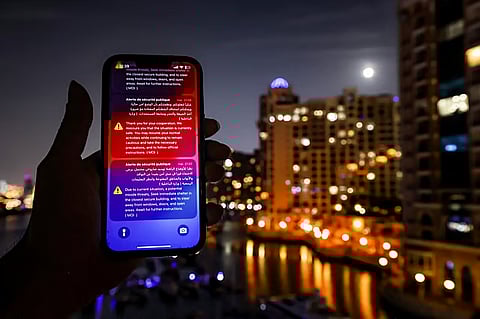
UAE residents get emergency alert over missile threat
The Ministry of Interior has warned of a potential missile threat. Residents are urged to move to the nearest secure building, stay away from windows, doors, and open areas, and await official instructions.
Authorities have stressed the importance of staying in safe locations, following official channels for real-time updates, and remaining vigilant as the situation develops.
UAE leaders discuss national security
UAE President His Highness Sheikh Mohamed bin Zayed Al Nahyan met with His Highness Sheikh Mohammed bin Rashid Al Maktoum, Vice President, Prime Minister and Ruler of Dubai.
During the meeting, the two leaders discussed national affairs and reviewed ongoing efforts by military and civil institutions to safeguard the country’s security and stability and ensure the safety of its people.
They also prayed for the continued protection of the UAE and the well-being of its residents amid the evolving regional situation.
UAE economy shows resilience
A fresh assessment from S&P Global Ratings highlighted the UAE’s economic resilience in the face of geopolitical shocks.
The agency said the country benefits from large fiscal reserves and strong external financial buffers, which give policymakers room to manage potential disruptions linked to regional tensions or energy market fluctuations.
Air India and Air India Express flight updates
Air India and Air India Express said they plan to operate a combined 14 flights to and from Jeddah on March 10, while Air India Express will run 14 flights between Muscat and its network.
The airlines also said they are planning 32 additional non-scheduled flights to and from several destinations in the UAE, subject to slot availability, regulatory approvals and operational conditions.
Etihad releases limited schedule
Etihad Airways has released a limited flight schedule covering March 10 to 12, operating services from Abu Dhabi to key destinations.
The airline advised passengers not to travel to the airport unless they have a confirmed booking or have been contacted directly by Etihad, noting that all flights will depart only after complete safety and security checks.
UAE denies role in attacks on Iran
Speaking in Geneva, Jamal Al Musharakh, UAE Ambassador and Permanent Representative to the United Nations and Other International Organisations in Geneva, said the UAE’s territory is not being used as a launch point for attacks on Iran.
He reiterated that the UAE is not participating in strikes against Tehran and continues to call for de-escalation and diplomatic solutions to the conflict.
Hotels support travellers amid disruptions
Hotels across the UAE say they are prioritising guest safety, stable pricing and flexible bookings as travel disruptions affect passengers across the region.
Several hospitality groups said they are working closely with authorities to ensure smooth operations while supporting travellers whose journeys have been affected by the evolving regional situation.


