UAE flights status update: Saudi cancellations extend as regional tensions rise on November 20
Etihad extends Saudi flight cancellations as airlines prepare to restore more Dubai routes
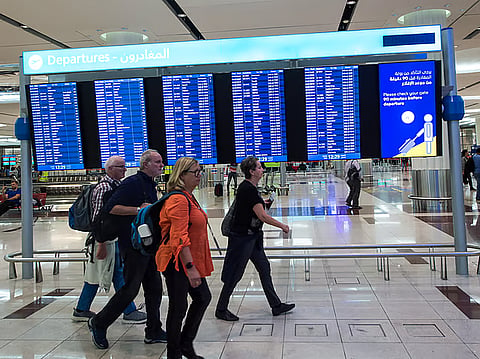
Dubai: UAE travellers continued to face disruptions on Saturday, November 21, as the impact of the US-Iran conflict, security concerns in Saudi Arabia and ongoing regional airspace restrictions kept several international and regional flights suspended.
Etihad Airways has extended cancellations on two key Saudi routes until November 30, while Emirates, flydubai and Air Arabia continue to operate varying schedules across the Kingdom.
The disruption comes amid renewed warnings about the risk of further escalation in the Middle East, with international aviation authorities and governments urging travellers to remain alert to sudden flight cancellations, airspace restrictions and changes to airline schedules.
US-Iran war: What's happening in the region?
Regional tensions remained elevated on Saturday as the United States and Iran continued to weigh the prospects of a diplomatic agreement amid fresh attacks across the Middle East.
US President Donald Trump said Tehran wanted an agreement, but not one Washington considered acceptable. Meanwhile, Saudi-led forces and Yemen's Houthi rebels exchanged strikes, Israeli attacks in central Gaza killed six people, according to local health officials, and Iraqi security forces moved into a stronghold of an Iran-backed militia.
Maritime security concerns have also intensified around the Strait of Hormuz.
The United Kingdom Maritime Trade Operations (UKMTO) reported that a tanker travelling outbound through the strait was struck by an unidentified projectile approximately 11 nautical miles north of Khasab, Oman.
The agency said the vessel had been hit on its stern, with no casualties reported. The environmental impact remained unconfirmed.
The incident underscores the continuing security risks in one of the world's most important energy shipping corridors.
The International Energy Agency has also warned of lasting consequences for global energy security, with disruptions to shipping through the Strait of Hormuz affecting oil supplies and energy markets.
Get updated faster and for FREE: Download the Gulf News app now - simply click here.
Conflict-related flight cancellations, delays and disruption
Airspace warnings
European aviation regulators are maintaining heightened warnings about conflict-related aviation risks across the Middle East.
The European Union Aviation Safety Agency (EASA) extended several conflict-zone advisories on November 16, including those covering Iranian and Iraqi airspace, until January 31, 2027.
Its advisory covering the Arabian Gulf and Gulf of Oman also identifies risks from missile and drone activity, military operations and attacks on commercial shipping.
Separately, EASA has warned that Saudi airspace remains vulnerable to rapidly changing security conditions, particularly following missile and drone attacks around Riyadh and its airport.
Saudi flight cancellations
Saudi Arabia remains one of the most disrupted travel markets for UAE passengers, particularly on services to Riyadh and Dammam.
Carriers are taking different approaches to restoring flights, meaning some services have resumed while others remain suspended.
Etihad Airways
Etihad Airways has extended the suspension of passenger and cargo flights between Abu Dhabi and Riyadh and Dammam until November 30.
The airline's latest operational advisory confirms:
Abu Dhabi–Riyadh: All passenger and cargo flights cancelled through Monday, November 30.
Abu Dhabi–Dammam: All passenger and cargo flights cancelled through Monday, November 30.
Other Saudi routes: Etihad says its other flights between Abu Dhabi and Saudi Arabia continue to operate as scheduled.
Passengers booked on affected services should check their reservation and rebooking options directly with the airline.
Emirates
Emirates continues to operate selected services between Dubai and Saudi Arabia, although flight-status information for Riyadh and Dammam remains limited in the airline's online updates.
The November 20 flight-status snapshot showed:
Dubai–Riyadh: Flight-status information for November 21 was unavailable.
Dubai–Dammam: Flight-status information for November 21 was unavailable.
Dubai–Jeddah: Flight EK805 had arrived, while EK803 was scheduled.
Dubai–Medina: EK2537 was in flight, while EK809 was scheduled.
flydubai
flydubai continues to restore selected Saudi services, although flight-status information remains unavailable for several destinations.
The operating snapshot identifies the following services:
Dammam: FZ883, FZ869, FZ863 operating
Gassim: FZ871 scheduled
Ha'il: FZ925 operating
Jeddah: FZ831, FZ909, FZ829 scheduled
Madinah: FZ897, FZ8387, FZ827 listed
Tabuk: FZ881 operating
Taif: FZ873 operating
Riyadh: Status unavailable
Abha: Status unavailable
AlUla: Status unavailable
Flight-status information was also unavailable for Gizan, Hofuf, Jouf, Nejran, Neom, Qaisumah, Red Sea International Airport and Yanbu.
Air Arabia
Air Arabia continues to operate several Saudi routes from Sharjah, although selected flights remain cancelled.
The flight-status information shows:
Cancelled flights
Sharjah–Abha: G9195.
Sharjah–Riyadh: G9151 and G9154.
Operating destinations
Dammam, Gassim, Ha'il, Jeddah, Medinah, Tabuk and Taif.
Flight-status information was unavailable for Al Jouf and Jizan.
International airlines
Several international airlines continue to suspend, reroute or postpone flights to Saudi Arabia, with some carriers extending cancellations into 2027.
The following is the status reported in the airline updates:
IndiGo: Jeddah and Madinah flights suspended through November 21, while Riyadh and Dammam services remain suspended through November 30.
Akasa Air: Flights to and from Riyadh and Jeddah suspended until November 30. Affected passengers can request a full refund or reschedule without additional charges.
Air India and Air India Express: Flights to and from Jeddah will be suspended until November 24. Flights to and from Riyadh and Dammam will conitnue to remain suspended until November 30.
Qatar Airways: Daily Riyadh flights resumed November 13 and Dammam flights November 14. Abha and Taif services remain temporarily suspended.
Oman Air: Selective schedule disruptions and rerouting continue because of regional airspace and airport restrictions.
Air France: Riyadh services suspended through December 12.
British Airways: Its planned return to Riyadh has been postponed until January 11, 2027.
Cathay Pacific: Riyadh flights suspended until January 31, 2027.
Lufthansa: Dammam services suspended until November 30. Its earlier Riyadh suspension ran through November 18, with the subsequent status requiring confirmation.
KLM: Riyadh and Dammam services cancelled through November 27.
Philippine Airlines: Riyadh flights PR654 and PR655 suspended until November 29.
Scoot: Singapore–Jeddah flights cancelled through December 2.
Singapore Airlines: The planned launch of its Singapore–Riyadh service postponed until March 28, 2027.
Delta Air Lines: Its planned Atlanta–Riyadh route launch postponed until March 2027.
Pakistan International Airlines: Riyadh services remain temporarily suspended, with no confirmed resumption date.
Kuwait Airways: Riyadh services remain cancelled pending the resumption of airport operations.
Gulf Air: Has resumed operations at Riyadh Airport.
Saudia and flyadeal: Selected Riyadh services are operating through Qassim Airport, with bus transfers connecting passengers to Riyadh.
Passengers travelling to Saudi Arabia should confirm whether their flights are operating to their original airport or an alternative airport before beginning their journey.
Iran, Israel flights
Direct flights between the UAE and Iran remain affected by restrictions introduced during the conflict. The UAE General Civil Aviation Authority has suspended services operated by Iranian airlines to and from the country until further notice.
The restrictions affect carriers including Iran Airtour, Caspian Airlines and Karun Airlines.
Services between the UAE and Israel also remain subject to security and operational restrictions. flydubai's Dubai–Tel Aviv flights remain suspended through at least late November, while Emirates' Tel Aviv-related codeshare services remain suspended until further notice.
Etihad, meanwhile, continues to operate direct services between Abu Dhabi and Tel Aviv. Travellers should check directly with their airlines, as security conditions and operational permissions may change.
Important: These are the flight statuses shown in the airport listings at the time of checking. Passengers should confirm their flight status directly with their airline before leaving for the airport, as timings and operational updates can change.
International travel advisories
Governments continue to urge passengers travelling through the Middle East to prepare for unexpected disruptions, even where regular commercial flights are operating.
United Kingdom
The UK Foreign, Commonwealth and Development Office updated its UAE travel advisory on November 18, warning that the security situation remains unpredictable and the risk of sudden escalation is high.
British travellers are advised to follow local authorities' instructions, monitor developments and prepare for potential disruption to travel plans.
United States
The US State Department advises American travellers to consult destination-specific travel advisories before departure, particularly when visiting countries affected by regional military operations.
Travellers should monitor security alerts, check airline operating arrangements and review the latest information for their destination and transit points.
Canada
Canada advises travellers to exercise a high degree of caution in the UAE because of the volatile regional security situation.
Its advisory warns that military activity, including missile and drone attacks, could cause flight cancellations and other travel disruptions. Canada also advises against all travel to Riyadh's King Khalid International Airport and Dammam's King Fahd International Airport.
Australia
Australia's travel advice, updated on November 20, recommends exercising a high degree of caution in the UAE, Oman, Qatar and Jordan.
However, it continues to advise against travelling to Saudi Arabia, Iran, Iraq, Lebanon and Yemen. Australian authorities warn that flights can be delayed, diverted or cancelled at short notice and that borders may close unexpectedly.
Dubai flight resumptions
Despite continuing disruptions on several regional routes, international airlines are preparing to restore more flights to Dubai ahead of the winter travel season.
The airline schedules indicates that several European carriers will restart operations in late November and December.
Returning airlines
Lufthansa – November 25: Plans to restart five weekly flights each from Frankfurt and Munich to Dubai.
SWISS – November 25: Scheduled to restore daily Zurich–Dubai flights.
Eurowings – November 25: Plans to resume daily Berlin–Dubai services.
Austrian Airlines – December 12: Scheduled to restart Vienna–Dubai flights, operating five times a week.
The planned resumptions would provide travellers with additional options between Dubai and major European cities during the busy year-end holiday period.
Already resumed
Several international airlines have already restored Dubai services, according to the airline updates.
Philippine Airlines: Returned to Dubai International Airport on October 21, joining Cebu Pacific on the Dubai–Manila route. Both airlines operate four weekly flights.
Air Astana: Restored Dubai connections with Kazakhstan, including Almaty.
Aegean Airlines: Resumed Athens–Dubai services.
British Airways: Operating daily nonstop flights between London Heathrow and Dubai.
Extended suspensions
However, several major international airlines continue to keep Dubai services suspended.
Singapore Airlines: Flights suspended until February 28, 2027.
Cathay Pacific: Dubai services suspended until January 31, 2027.
Air Canada: Dubai services suspended until the end of March 2027.
KLM: Dubai services suspended until March 27, 2027.
Finnair: Dubai flights suspended for the entire 2026/27 winter season.
Korean Air: Dubai services suspended until further notice.
Virgin Atlantic: No return to Dubai planned before 2027.
ITA Airways: Dubai services remain suspended until November 30. Passengers should check for confirmation of its December schedule.
Luxair: Its return to Dubai has been postponed until at least February 2027.
US entry rules
Passengers travelling to or connecting through the United States must comply with additional health-related entry requirements linked to the Ebola outbreak in the Democratic Republic of the Congo (DRC).
Travel declaration: Passengers must complete an attestation confirming whether they have visited the DRC during the previous 21 days.
Printed form: Travellers are required to carry a printed and completed copy of the attestation before check-in.
Additional restrictions: Further requirements may apply to passengers who have recently visited affected countries.
Before departure: Passengers should confirm the latest requirements directly with their airline.
UAE health restrictions
The Emirates travel update also identifies entry restrictions affecting travellers recently present in the Democratic Republic of the Congo, Uganda or South Sudan.
Affected destinations: DRC, Uganda and South Sudan.
21-day requirement: Travellers who have recently visited these countries may face entry restrictions unless they have remained outside the affected countries for more than 21 days.
Connecting passengers: Travellers with multi-country itineraries should review UAE entry requirements before departure.
Airline checks: Passengers should confirm the latest health-related travel requirements with their airline
What travellers should know
Airlines and aviation authorities continue to advise passengers to check their travel arrangements carefully, particularly when flying to destinations affected by regional security restrictions.
Check flight status: Confirm your flight directly with the airline before leaving home, even if you have a confirmed booking.
Arrive early: Allow at least three hours before departure, or follow specific airline guidance. flydubai passengers departing Dubai should allow four hours, according to the airline guidances.
Check connections: If travelling through another Gulf airport, confirm that both sectors of your journey are operating.
Review refunds: Passengers whose flights are cancelled should check rebooking, refund and alternative-route arrangements.
Monitor advisories: Check government travel advice for both the destination and any transit airports.
Update contact details: Ensure the airline has your current mobile number and email address to receive disruption alerts.
Allow extra time: Road traffic, security procedures and airport processing may add to journey times during busy travel periods.
Follow official channels: Check airline websites and airport departure boards for the latest schedules and operational information.


