‘We have a job to finish’: Why did US Defence Secretary Hegseth secretly meet Netanyahu amid Iran war tensions?
Unannounced airbase meeting amid Iran tensions fuels questions over possible new strikes
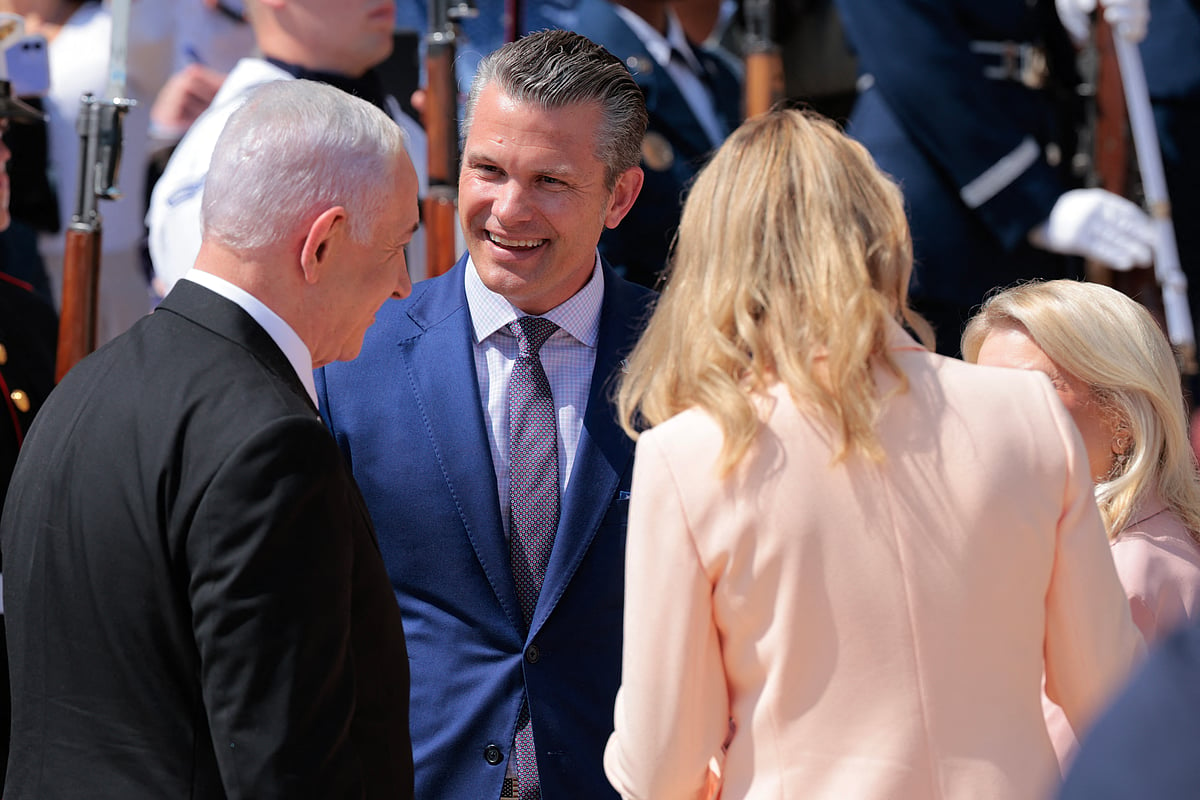
Dubai: An unannounced visit by US Defence Secretary Pete Hegseth to Israel, a lengthy meeting with Prime Minister Benjamin Netanyahu at an airbase hosting American warplanes, and fresh warnings about unfinished military operations against Iran have raised questions about Washington’s next move in the eight-month Middle East war.
The meeting took place on Monday at Ovda Air Base in southern Israel, where US fighter jets and aerial refuelling aircraft are deployed, according to Axios, which cited two sources familiar with the visit.
Reuters subsequently reported, citing three Israeli officials, that Iran was discussed during the meeting. However, neither government has disclosed the details or announced any decisions.
The timing is significant. The visit came just eight days before Israel’s October 27 election, a day after US President Donald Trump endorsed Netanyahu, and amid discussions about potentially resuming major military operations against Iran.
It also followed increasingly forceful rhetoric from Netanyahu, who told Trump in a telephone conversation that the two allies still had unfinished business.
Here are five key questions.
Why did Hegseth make an unannounced visit?
The US defence secretary’s trip was not publicly announced in advance, and the Pentagon declined to comment on reports of his meeting with Netanyahu.
Hegseth later acknowledged visiting American troops in the region but did not identify Israel or disclose his meeting with the prime minister.
In a post on X, he described the troops as being engaged in a historic mission.
The lack of advance notice has attracted attention because the visit came amid sensitive discussions over Iran. However, unannounced visits by senior defence officials are not necessarily unusual during military operations.
There is no public confirmation that the meeting was deliberately concealed to prepare a new attack.
Why did the meeting take place at an airbase hosting US warplanes?
According to Axios, Hegseth and Netanyahu met at Ovda Air Base in southern Israel, where American fighter jets and refuelling aircraft are stationed.
The location is significant because aerial refuelling is an important capability in long-range military operations, allowing combat aircraft to remain airborne longer and operate over greater distances.
Israeli news outlet Ynet reported that Netanyahu travelled from Ben Gurion Airport to Ovda aboard a private aircraft rather than using a helicopter, the more customary means of transport for such journeys.
Ynet also described the meeting as exceptionally lengthy.
These details have drawn attention to the military setting of the talks, although neither the aircraft deployments nor the location establishes that a new strike operation has been approved.
What did Netanyahu mean by ‘We have a job to finish’?
The strongest signal came from Netanyahu himself.
In a video of a telephone conversation with Trump released on Monday, the Israeli prime minister thanked the US president for endorsing him ahead of the election.
“Donald, we have a job to finish. You said it, and we’ll finish it together,” Netanyahu told Trump.
The remarks followed Trump’s own warning that Washington and Israel could finish their military campaign against Iran unless Tehran changed course.
Earlier on Monday, Netanyahu visited Ramat David Air Base in northern Israel, where he highlighted the Israeli Air Force’s readiness and ability to strike its enemies when required.
Taken together, the statements underscore Israel’s willingness to keep military options available as negotiations between Washington and Tehran remain stalled.
However, neither leader has announced a decision to resume large-scale attacks.
Are the US and Israel preparing another major attack on Iran?
The possibility is being discussed, but the timing remains uncertain.
Axios has reported that Washington and Israel have considered resuming major combat operations as diplomatic efforts struggle to resolve disputes over Iran’s nuclear programme, US sanctions and the Strait of Hormuz.
The two countries launched joint strikes against Iran in February, triggering the wider regional conflict.
Netanyahu has previously indicated that he does not intend to launch another major attack before Israel’s October 27 election.
Trump has also said he would not attack Iran before the November 3 US midterm elections.
On Monday, Trump said the United States was in a position to leave the war, arguing that Iran’s military capabilities had been severely weakened and that Tehran would not obtain a nuclear weapon.
The contrasting statements illustrate the uncertainty surrounding Washington’s strategy: whether to pursue a negotiated settlement or retain the option of further military action.
Why does the meeting matter for the Gulf?
Any renewed US-Israeli military campaign against Iran could have significant implications for Gulf security, energy supplies and shipping through the Strait of Hormuz.
The waterway remains at the centre of the dispute between Washington and Tehran, with Iran seeking relief from US restrictions and sanctions while the United States demands substantial limits on its nuclear activities.
The risk of a wider confrontation has also increased as Yemen’s Iran-backed Houthis intensify attacks on Saudi Arabia, raising concerns about further regional escalation.
Meanwhile, diplomatic efforts continue, including Pakistan’s attempts to mediate and Russian Foreign Minister Sergei Lavrov’s talks with Iranian leaders in Tehran on Monday.
For Gulf countries, the central concern is whether the latest military consultations signal preparations for renewed fighting or an effort to strengthen Washington’s negotiating position.
For now, the purpose and outcome of Hegseth’s meeting remain only partly known. What is clear is that military options remain under discussion even as efforts to end the war continue.

Sign up for the Daily Briefing
Get the latest news and updates straight to your inbox
Network Links
GN StoreDownload our app
© Al Nisr Publishing LLC 2026. All rights reserved.