Dr Ghadeer Abu-Shamat, Principal of Al Khaleej International School, says children’s images should be treated with the same care as other personal information.
UAE school photo ban: Parents and educators back children’s privacy safeguards
Educators highlight risks of sharing children's images without permission
Last updated:
5 MIN READ
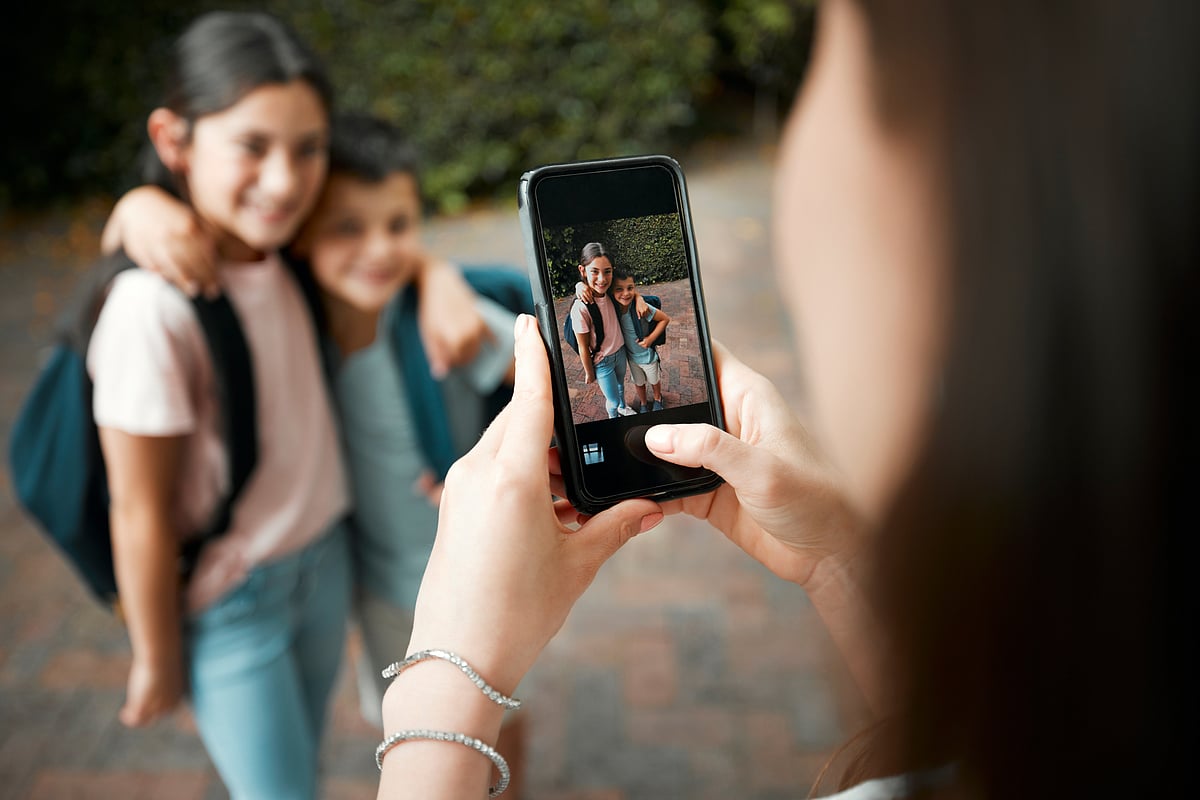
A familiar WhatsApp group can feel private, but images can still be saved, forwarded or shared beyond the intended audience
Shutterstock
Dubai: Parents taking photographs or videos of children on school premises without consent could face fines of up to Dh500,000 under UAE privacy laws if a complaint is raised with the authorities and the conduct is found to constitute an offence, legal experts have said.
The clarification comes after schools in Dubai and Sharjah issued circulars asking parents and visitors not to photograph or film students on campus, or share images containing other children through WhatsApp groups, social media or other digital platforms without appropriate consent.
While photographs help families preserve memories of school performances, celebrations and other milestones, educators say children’s privacy and dignity must remain a priority, particularly when images can be circulated beyond their intended audience.
Nevita Pandya MBE, CEO and Principal of GEMS International School – Dubai Hills, believes clear guidelines help children participate in school life without feeling pressured to have their images captured or shared.
She explains, "Children should be able to participate fully in school life without their images being captured or circulated without appropriate permission." As she adds, a photograph can reveal more than we realise, including a child’s school, location or routine. "Clear guidelines establish that children’s privacy and dignity come before an adult’s wish to record or share a moment.”
She adds that schools and parents should also consider children’s own preferences. “Alongside parental permission, we should listen to children’s views in an age-appropriate way and respect their discomfort. Their participation in school life should never depend on agreeing to publicity.”
Why sharing school photographs can be risky
Even when photographs are shared in familiar WhatsApp groups, parents may have little control over where the images go next.
“It is essential. A familiar WhatsApp group can feel private, but images can still be saved, forwarded or shared beyond the intended audience,” Pandya says.
Before sharing a photograph, she advises parents to consider whose children are visible, whether permission covers that use and whether the image reveals personal information. “Permission to take a photograph should not be assumed to include permission to publish it.”
Dr Ghadeer Abu-Shamat, Principal of Al Khaleej International School, says children’s images should be treated with the same care as other personal information."Once an image is shared, especially online, it can be difficult to control who has access to it or how it may be used in the future. Being mindful helps protect children's safety, dignity, and privacy.”
She adds that knowing photographs of her child are not circulated without her knowledge gives families greater peace of mind.
“It gives families greater control over their child's digital footprint and reduces the risk of images being viewed, copied, or shared beyond the intended audience. It also demonstrates respect for parental choice and children's privacy rights.”
Simon Jodrell, Principal of Jebel Ali School in Dubai, says clear guidance can help parents understand how to share photographs responsibly, even when their intentions are good.
Parents call for a balance between privacy and sharing memories
While supporting safeguards around children's images, parent Suad Saleh, whose child attends GEMS International School, believes the rules should encourage responsible behaviour rather than prevent families from sharing every photograph.
“If it’s a photo of your own children, with no other children visible in the background, and it’s an appropriate and respectful photo, I don’t necessarily see any harm in sharing it. I think the important thing is also to be mindful of who you are sharing it with and the privacy of your children.”
For Saleh, “it’s about using good judgment rather than saying that parents should never photograph or share pictures of their children.”
She believes the guidelines should focus on educating parents about responsible sharing.
“I think that the rules should emphasise more to educate and encourage responsible behaviour rather than simply restrict parents completely.”
Dr Abu-Shamat says the rules can encourage parents to consider the consequences before posting or forwarding images.
“These rules encourage parents to pause and consider the implications before posting or forwarding images. They reinforce the importance of consent, respect for other families, and awareness of digital safety.”
Simon Jodrell, Principal of Jebel Ali School in Dubai, says clear guidance can help parents understand how to share photographs responsibly, even when their intentions are good.
“Often, parents share photographs with the very best intentions, without necessarily considering who else might appear in the background or where those images might eventually end up,” he says. “Simple, sensible guidance encourages parents to think before posting and to respect the wishes of others.”
Teaching children about consent and online responsibility
The guidelines could also help children develop healthier attitudes towards privacy and sharing images online, particularly when parents model the behaviour they expect from their children.
“Asking before taking or sharing a photograph teaches children that their boundaries matter and that other people’s boundaries deserve equal respect,” Pandya says.
She also points to wider digital wellbeing concerns, including appearance-based comparison, the pursuit of online approval, and social media use that displaces sleep or physical activity.
“Effects vary, but those risks deserve serious attention. We should help young people understand that their worth is not measured by likes, and that meaningful experiences do not always need to be photographed, posted or publicly validated.”
Saleh agrees that rules alone are not enough. Children also need to see adults respecting other people's boundaries. “When children see their parents asking permission, respecting boundaries, and being thoughtful about what they share, they learn that digital responsibility is part of everyday life.”
Jodrell believes the guidelines can also open up conversations at home about children’s digital footprints and their right to privacy.
“Children are growing up in a world where sharing photographs and information is part of everyday life, so it is important they understand that not everything needs to be shared publicly,” he says.
He advises parents to ask children how they feel about having their photographs shared, model considerate behaviour and explain why other people’s privacy matters. Schools can reinforce these lessons through teaching about responsible online behaviour.
Dr Abu-Shamat says the guidelines provide an opportunity for families to discuss consent, digital citizenship, privacy and online responsibility, helping children understand that not every moment needs to be photographed or shared.
How parents can support schools
Schools can help families understand the rules by explaining when photography is permitted, what consent covers and how images may be shared, Pandya says.
As she says, families should understand that permission concerning their own child does not extend to other children. School-managed photographs, shared through appropriately restricted channels and in accordance with consent, can help families preserve memories while limiting exposure.
She adds that children whose families decline photography must remain fully included in school celebrations.
“We should also encourage adults to be present and enjoy the occasion. Celebrating achievement and belonging should never require a child to surrender their privacy.”
Parents can support schools by following photography and filming policies, seeking permission before photographing or sharing images of other children, and respecting families who do not consent.
Dr Abu-Shamat also advises parents to avoid sharing school-related photographs in WhatsApp groups or on social media if other students are identifiable, without the necessary consent. Saleh recommends avoiding sensitive personal information when sharing images.
Sign up for the Daily Briefing
Get the latest news and updates straight to your inbox
Network Links
GN StoreAbout Gulf NewsTerms & ConditionsReach by GNSitemapContact usPrivacy PolicyGN FocusHave your sayWork with usAdvertise with usGulf News epaperPrinting Services
Download our app
© Al Nisr Publishing LLC 2026. All rights reserved.