RTA future project
Dubai’s underground transport revolution: How the city will change
RTA plans futuristic underground transport, Metro lines and flying taxis to ease traffic
Last updated:
7 MIN READ
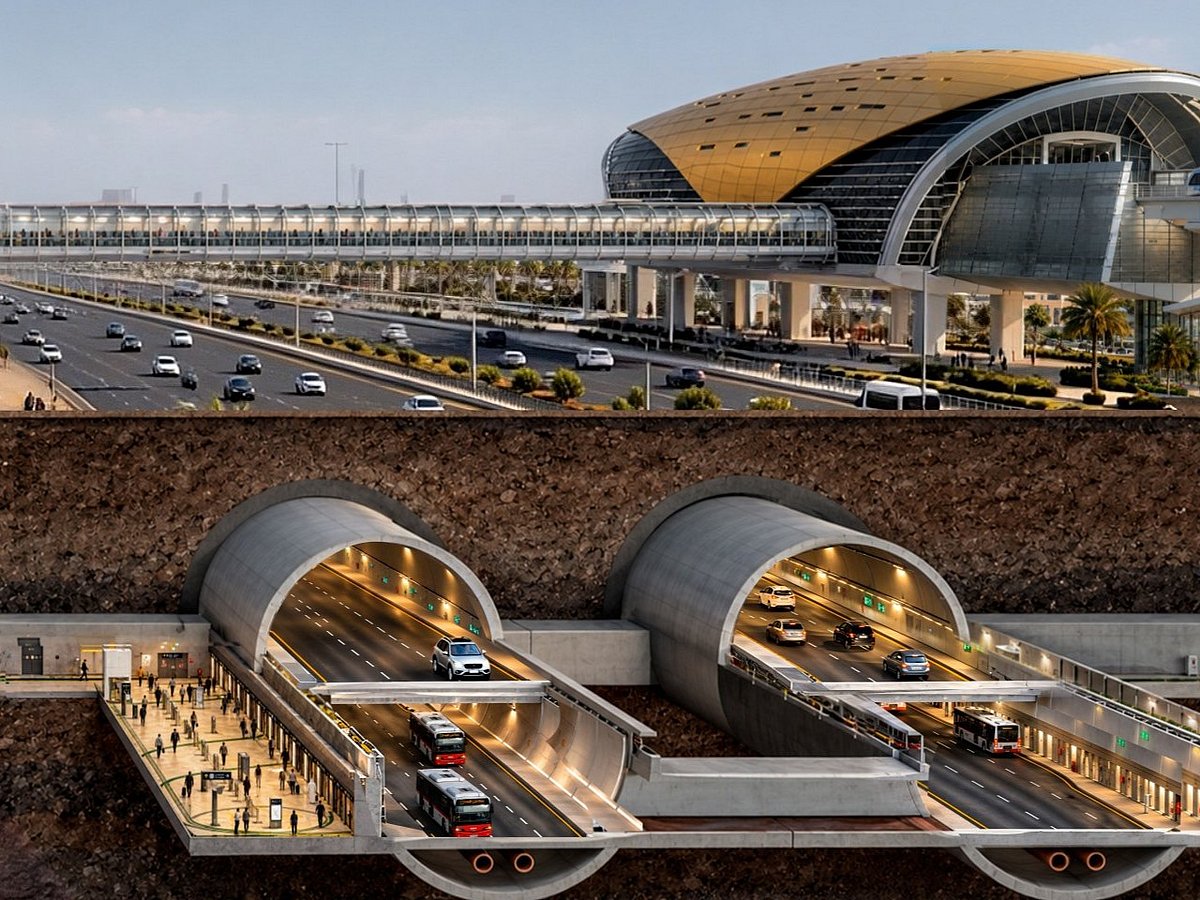
RTA is working on a futuristic integrated underground transport system that could fundamentally change how the city uses space.
RTA
Dubai: Imagine a future Dubai where passengers travel through high-speed underground tunnels, goods and services move beneath busy streets, driverless vehicles navigate roads above, and flying taxis carry commuters across the city in minutes.
This vision of a three-dimensional transport network is taking shape as Dubai prepares for a major transformation in how millions of residents, workers and visitors move around the emirate.
Major initiative
At the centre of the ambitious plan is an integrated underground transport system that could fundamentally change how the city uses space, reduces congestion and connects residential, commercial and business districts.
Dubai’s Roads and Transport Authority (RTA) is studying an underground network designed to carry not only passengers but also goods and services, opening the possibility of shifting some transport activities away from increasingly busy surface roads.
The initiative builds on major transport developments, including the Dubai Loop, Dubai Metro Blue Line and the newly announced Dh34 billion Dubai Metro Gold Line.
The long-term vision was outlined by Mattar Al Tayer, Director General and Chairman of the Board of Executive Directors of RTA, during the Mohammed bin Rashid Leadership Forum 2026 in Dubai. Speaking at a session titled “Shaping Dubai’s Mobility Future in Three Dimensions”, Al Tayer said the emirate was redesigning mobility across three interconnected levels: underground, on the ground and in the sky.
Underground Dubai: A new frontier
For decades, Dubai’s transport expansion has been visible through highways, bridges, flyovers and Metro viaducts. The next phase could increasingly involve infrastructure hidden beneath the city.
Al Tayer said RTA was examining how underground space could accommodate an integrated transport system capable of moving passengers, goods and services more efficiently.
The concept goes beyond conventional road tunnels or underground railway stations. It involves considering how the space beneath Dubai could become another layer of urban infrastructure, supporting economic activity while making more efficient use of land above ground.
Such a system could eventually help reduce pressure on surface roads, support commercial deliveries and create opportunities for more pedestrian-friendly neighbourhoods.
However, the proposed integrated underground network is currently under study. Its routes, capacity, costs and implementation schedule have not yet been announced.
RTA future project
Dubai Loop
One of the projects illustrating Dubai’s underground ambitions is Dubai Loop, a proposed tunnel-based transport system being developed through cooperation between RTA and The Boring Company.
The concept involves transporting passengers through dedicated underground tunnels using electric vehicles, providing an alternative to surface-level travel in selected high-demand areas.
Unlike the Metro, which operates as a high-capacity mass transit system, Dubai Loop is intended to offer a different form of underground connectivity.
It could help passengers bypass some of the busiest roads and provide more direct links between destinations.
The project represents a potential new approach to urban travel, particularly in areas where constructing additional surface roads may be challenging.
Mattar Al Tayer speaking at the Mohammed bin Rashid Leadership Forum 2026 in Dubai.
Its eventual contribution will depend on the routes developed, passenger capacity, integration with other public transport services and the progress of implementation.
The most significant impact of Dubai’s underground transport ambitions could be felt in how residents organise their daily lives. For commuters, additional underground routes could offer alternatives to congested roads, particularly during peak travel periods.
For families, better connectivity could make residential communities more accessible to schools, healthcare facilities, shopping destinations and workplaces.
For businesses, an integrated underground system capable of accommodating goods and services could eventually introduce new approaches to urban logistics and deliveries.
There could also be wider implications for urban planning. By accommodating more movement below ground, Dubai could create greater flexibility to develop public spaces, walking routes, cycling infrastructure and community facilities at street level.
The benefits will depend on how future projects are designed, financed and integrated with the existing transport network.
11 million road trips
Mattar Al Tayer, Director General and Chairman of the Board of Executive Directors of RTA, said the scale of Dubai’s transport requirements illustrated why long-term planning was essential. More than six million people move around the emirate during the day, a figure expected to double by 2040.
Dubai’s roads currently handle more than 11 million trips daily, equivalent to approximately 7,000 trips every minute. If the emirate’s road network were laid end to end, he said, it would stretch nearly halfway around the world.
These figures demonstrate the challenge of maintaining efficient mobility as the city’s population, economic activity and visitor numbers continue to expand.
“Behind every trip is time from a person’s life. This is where our responsibility begins: keeping mobility flowing smoothly in a rapidly growing city and anticipating its needs before they become challenges,” Al Tayer said.
Blue Line
While Dubai examines new underground technologies, work is already progressing on the Dh20.5 billion Dubai Metro Blue Line, one of the emirate’s biggest transport infrastructure projects.
The 30-kilometre line will include 14 stations, with approximately 15.5 kilometres of the route running underground.
It is designed to connect several rapidly expanding residential and commercial communities, improving public transport accessibility and reducing dependence on private vehicles. The line will serve areas including International City, Dubai Silicon Oasis, Academic City, Mirdif and Al Warqa, with interchange connections to the existing Metro network.
Gold Line
Dubai has also announced the Dh34 billion Metro Gold Line, described by Al Tayer as the largest mobility project of the next phase.
He said the project was launched in April 2026 despite the exceptional geopolitical circumstances facing the region.
The announcement reflects Dubai’s decision to continue investing in major infrastructure projects as it prepares for future population and economic growth.
Al Tayer said the leadership had directed that implementation begin immediately, emphasising that future projects would gather pace rather than stop.
The Gold Line is expected to form another important part of the emirate’s expanding rail transport network.
A view of air taxi trial in Dubai.
Flying taxis and driverless vehicles
Dubai’s transport transformation is not limited to underground infrastructure. The second major element involves autonomous mobility at ground level and the third one is in the air.
The emirate aims to make 25 per cent of all journeys autonomous by 2030, supported by advances in artificial intelligence, vehicle technology and digital infrastructure.
Al Tayer said autonomous taxis had already travelled more than four million kilometres in Dubai, reflecting the progress of testing and development.
The emirate began air taxi trials in 2016, when the technology was still largely experimental. According to Al Tayer, progress in 2026 has included an urban test flight and the opening of Dubai’s first air taxi station.
The long-term objective is to introduce journeys that could take minutes instead of considerably longer periods on congested roads.
Together, autonomous ground transport, underground mobility and aerial services are intended to provide passengers with a wider choice of travel options.
Two decades of transport investment
Al Tayer traced the current transformation to decisions taken more than 20 years ago.
Before 2005, Dubai was experiencing rapid development, but its transport infrastructure was struggling to keep pace with urban expansion.
Traffic congestion, accessibility problems, economic losses and road safety concerns highlighted the need for a comprehensive transport strategy.
Al Tayer recalled that His Highness Sheikh Mohammed bin Rashid Al Maktoum, Vice President and Prime Minister of the UAE and Ruler of Dubai, directed him to prepare a comprehensive transport study within two months.
Less than a month later, RTA was established with an initial budget of Dh75 billion.
The decision laid the foundation for the development of Dubai Metro, major highway networks, bridges, tunnels and integrated public transport services.
According to Al Tayer, RTA projects delivered over the past two decades have contributed Dh156 billion to Dubai’s gross domestic product and generated more than Dh319 billion in time and fuel savings. He highlighted how Dubai continued developing transport infrastructure through major global disruptions.
Dubai Metro opened in 2009, during the global financial crisis, while Route 2020 entered service during the COVID-19 pandemic.
Artificial intelligence
Technology will play a central role in managing Dubai’s increasingly complex transport network.
Al Tayer said RTA was developing 100 artificial intelligence products expected to unlock productive capacity equivalent to that of 500 employees.
The objective, he explained, was not to replace employees but to redirect their efforts towards higher-value work. Artificial intelligence could help transport planners anticipate demand, improve operational efficiency, analyse traffic patterns and make more informed infrastructure decisions.
As Dubai moves towards a transport network spanning underground tunnels, surface roads and aerial routes, coordination between different mobility systems will become increasingly important.
Al Tayer summed up the vision by saying: “The Dubai of the future will be a city that moves in three dimensions: journeys in the sky that cut travel times to a matter of minutes; smooth movement at ground level through flexible roads and wider green spaces for walking, social interaction and enhanced quality of life; and an innovative underground system that moves people, goods and services, redefining how space is used, creating new opportunities for investment and prosperity, and enabling more efficient and sustainable mobility,” he added.
At a glance: Dubai’s futuristic transport projects
Integrated underground transport network: Under study by RTA to move people, goods and services beneath the city.
Dubai Loop: Proposed underground tunnel-based electric vehicle transport system
Dubai Metro Blue Line: Dh20.5 billion project covering 30km, including 15.5km underground and 14 stations. Completion: September 9, 2029.
Dubai Metro Gold Line: Dh34 billion project announced in April 2026.
Autonomous taxis: Driverless vehicles have completed more than four million kilometres of travel in Dubai
Air taxis: Urban test flight and first air taxi station in 2026 mark progress towards aerial passenger transport.
Autonomous mobility target: Dubai aims to make 25 per cent of journeys autonomous by 2030.
Growing travel demand: More than six million people move around Dubai during the day, with the figure expected to double by 2040.
Current road usage: More than 11 million trips daily, equivalent to about 7,000 trips per minute.
AI-powered mobility: RTA is developing 100 AI products to improve efficiency, planning and decision-making.

Ashfaq has been storming the UAE media scene since 1997. His insights, analysis and deep understanding of regional dynamics have helped make sense of the unfolding news.
He’s the go-to guy for deep dives into the South Asian diaspora, blending heart, and hardcore reporting into his pieces. Whether he's unpacking Pakistani community affairs, chasing down leads on international political whirlwinds, or investigative reports on the scourge of terrorism and regional drama — Ashfaq doesn’t miss a beat.
He's earned kudos for his relentless hustle and sharp storytelling. Dependable, dynamic, and unstoppable, Ashfaq does not just report the news, he shapes it. He has been in the business since 1991.
Sign up for the Daily Briefing
Get the latest news and updates straight to your inbox
Network Links
GN StoreAbout Gulf NewsTerms & ConditionsReach by GNSitemapContact usPrivacy PolicyGN FocusHave your sayWork with usAdvertise with usGulf News epaperPrinting Services
Download our app
© Al Nisr Publishing LLC 2026. All rights reserved.