Starlink Mobile targets 80,000 US cell sites to bolster emergency, rural communications
New spectrum and satellites to position Starlink as a key backup for communications
Starlink Mobile could become a powerful backup for voice, texting, and basic data when submarine cables fail, but it cannot fully replace the high-capacity fiber networks that carry most global internet traffic.
The reported plan to access 80,000 US cell sites would make it a stronger hybrid satellite-terrestrial carrier, not a cable substitute.
What's with 80,000 cell sites?
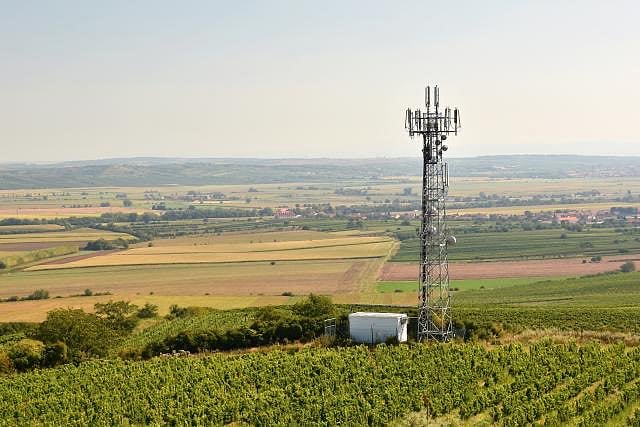
Bloomberg reported that SpaceX is negotiating with tower operators, including Crown Castle, to access at least 80,000 US cell sites for Starlink Mobile.
The deals could be worth "billions of dollars".
It would also position SpaceX as a potential fourth nationwide US mobile carrier alongside AT&T, Verizon, and T-Mobile.
SpaceX has also agreed to acquire up to 14 MHz of paired low-band spectrum in the 800 MHz band from Grain Management, pending regulatory approval.
Low-band spectrum improves indoor coverage and allows Starlink Mobile to work with ordinary phones rather than only specialized satellite terminals.
Elon Musk said new satellites and spectrum would let Starlink Mobile become a major US mobile carrier.
SpaceX plans to deploy its next-generation mobile constellation through next year and integrate the spectrum purchases to begin service in early 2028.
No.
Submarine fiber cables carry the overwhelming majority of intercontinental data because they offer enormous capacity, low latency, and relatively low cost per gigabit.
Satellites are essential when cables are cut, but a constellation cannot instantly replicate the bandwidth of hundreds of terabits per second flowing through global fiber routes.
Starlink can provide redundancy for:
Emergency calls, SMS, and messaging when terrestrial networks fail.
Government, military, shipping, aviation, and disaster-response communications.
Low-bandwidth business continuity, payment authorization, and essential cloud access.
Remote islands, ships, aircraft, and rural areas poorly served by fiber.
But it would struggle with mass video streaming, large cloud transfers, financial-market data feeds, and dense urban internet demand during a prolonged cable outage.
Redundancy
A hybrid Starlink Mobile network would reduce single points of failure. If an anchor, earthquake, sabotage, or ship anchor snaps a cable, traffic could shift to satellite links while repair ships locate and splice the fault—a process that can take days or weeks.
For the Philippines and other archipelagic economies, this is especially relevant.
Satellite direct-to-cell service could keep communities connected after typhoons, earthquakes, or cable damage, though users would still face capacity limits and higher costs.
What's next
SpaceX must finalize tower leases, obtain regulatory approval for its spectrum purchase, launch enough next-generation direct-to-cell satellites, and prove that ordinary phones can connect reliably at scale. Its service is targeted for early 2028.
If successful, expect telecom operators to treat Starlink as both a competitor and a resilience partner — using it for rural coverage, disaster recovery, and backup connectivity rather than as a wholesale replacement for submarine cables.
Also In This Package
Your next phone might connect via satellite
Elon Musk blames ‘oligarchs’ for Starlink's India delay
Starlink in India: Better access needs clearer answers
Starship successfully deploys 26 Starlink V3 satellites
Rahul Gandhi and Musk bond over Starlink licensing row
Space42 targets 2029 launch to end mobile dead zones
Network Links
GN StoreDownload our app
© Al Nisr Publishing LLC 2026. All rights reserved.