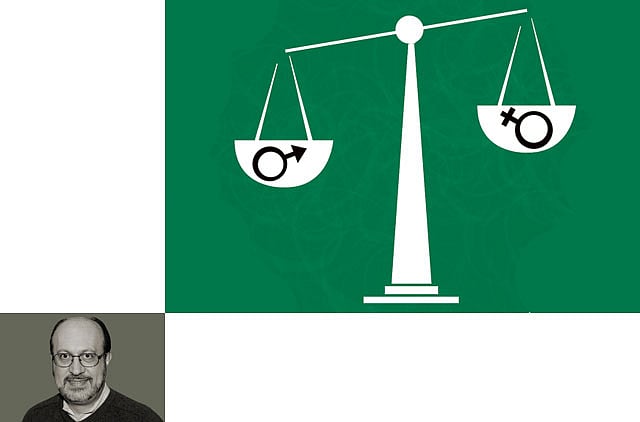
True to his reformist traditions, King Abdullah Bin Abdul Aziz Al Saud of Saudi Arabia surprised everyone when he ordered that women be given the right to vote and run in municipal elections starting in 2015. He also empowered Saudi women to have the right to join the all-appointed Shura Council.
While no one expected that the monarch would use his opening address to the third year of the Council's fifth session, his short speech was almost exclusively devoted to the subject, closing with an admonition to those who might wish to challenge royal authority. "It is our right to seek your opinions and advice," underscored the ruler, warning "those who keep away from these guidelines" as being nothing more than "arrogant persons" who would "have to bear the responsibility of their actions." Strong words indeed.
Compatible with history
"We have decided that women will participate in the Shura Council as members starting the next term," declared the king, emphasising that such participation was compatible with Sharia and, equally important, with Islamic history. This last point was especially intriguing, as past efforts were limited to focusing on compatibility with Islamic law, as local norms and traditions were relegated to a secondary role. Abdullah rejected efforts to "marginalise the role of women in Saudi society", and underscored that his order was issued following extensive "consultations with many … scholars, especially those in the senior scholars council, and others, who have expressed the preference for this orientation and supported this trend."
This too was vintage Abdullah, informing one and all that he consulted with leading scholars, but not all, and that he enlarged his circle of advisers by soliciting other views. In fact, because the king was not prone to emotional decisions, he placed yet another marker on a long list of epochal decisions that were gradually sealing the democratisation process in the kingdom.
It may be worth recalling that over a single week in late 2007, King Abdullah authorised the establishment of a Supreme Court, issued bylaws for his 2006 succession edict that named its permanent members, and ordered his foreign minister to take necessary steps to counter the rise of the kingdom's regional hegemonic foe. Abdullah affirmed his will to power, husbanded new reforms that aimed to refurbish vital institutions, and strengthened the Al Saud ruling family.
Still, no subjects were as sensitive as those related to women, because segregation was still enforced in the country. Against all odds, the monarch was determined to address critical topics, not only in the aftermath of demands to allow women to drive or because of the repercussions of various uprisings throughout the Arab world, but also because of intrinsic Saudi developments that irritated him.
Qatif incident
In fact, the case that literally angered the ruler, and which probably coloured his latest decision, was the mid-2006 fate that befell the so-called "Qatif Girl" which mobilised the Palace after a couple was raped by a gang, with the young woman sentenced to 200 lashes and six months in prison because she was found guilty of being in "isolation" with a man in an automobile.
At the time, Abdullah was furious when he heard of the case, and turned his wrath in private against clerics who appeared to take the law into their hands blaming the two victims as much as the culprits. The monarch deemed that the victim was subjected to "a brutal crime" and issued a full pardon. His clemency, furthermore, ordered the suspension of the trial against both defendants, as well as a full pursuit of the seven young men accused of the rapes — two decisions that went beyond what clerics directed.
Remarkably, the monarch introduced his latest changes a few days ago, in the presence of the Grand Mufti of the Kingdom Shaikh Abdul Aziz Al Shaikh, President of the Supreme Judiciary Council Saleh Bin Humaid, as well as a number of religious scholars and shaikhs. To his credit, Abdullah ensured that his "order", which was the law of the land, would be perceived in line with what his father and founder of the monarchy envisaged for the country. Towards that end he expounded by stating: "The struggle of the father of the nation, the late King Abdul Aziz, and of your grandfathers [mercy be upon their souls], has resulted in the unity of hearts, land, and one destiny."
"Today," he continued, "this destiny imposes on us to preserve this legacy, and not stop there but to develop it further in line with Islamic and moral values."
Abdullah's forward-looking initiative did not introduce full equality between men and women, although the latest royal order accelerated the process. It ensured that Saudi Arabia was not too far away from the day when complete legal equality between genders would become reality, as Riyadh updated traditions, recognised the value that women can and ought to make and, above all else, that Saudi men must and ought to welcome such changes by abolishing the huge anachronism which is segregation.
Abdullah's latest marker guaranteed that such an outcome was within the realm of the possible and sooner than many assumed.
Dr. Joseph A. Kechichian is a commentator and author of several books on Gulf affairs.
Sign up for the Daily Briefing
Get the latest news and updates straight to your inbox
Network Links
GN StoreDownload our app
© Al Nisr Publishing LLC 2026. All rights reserved.