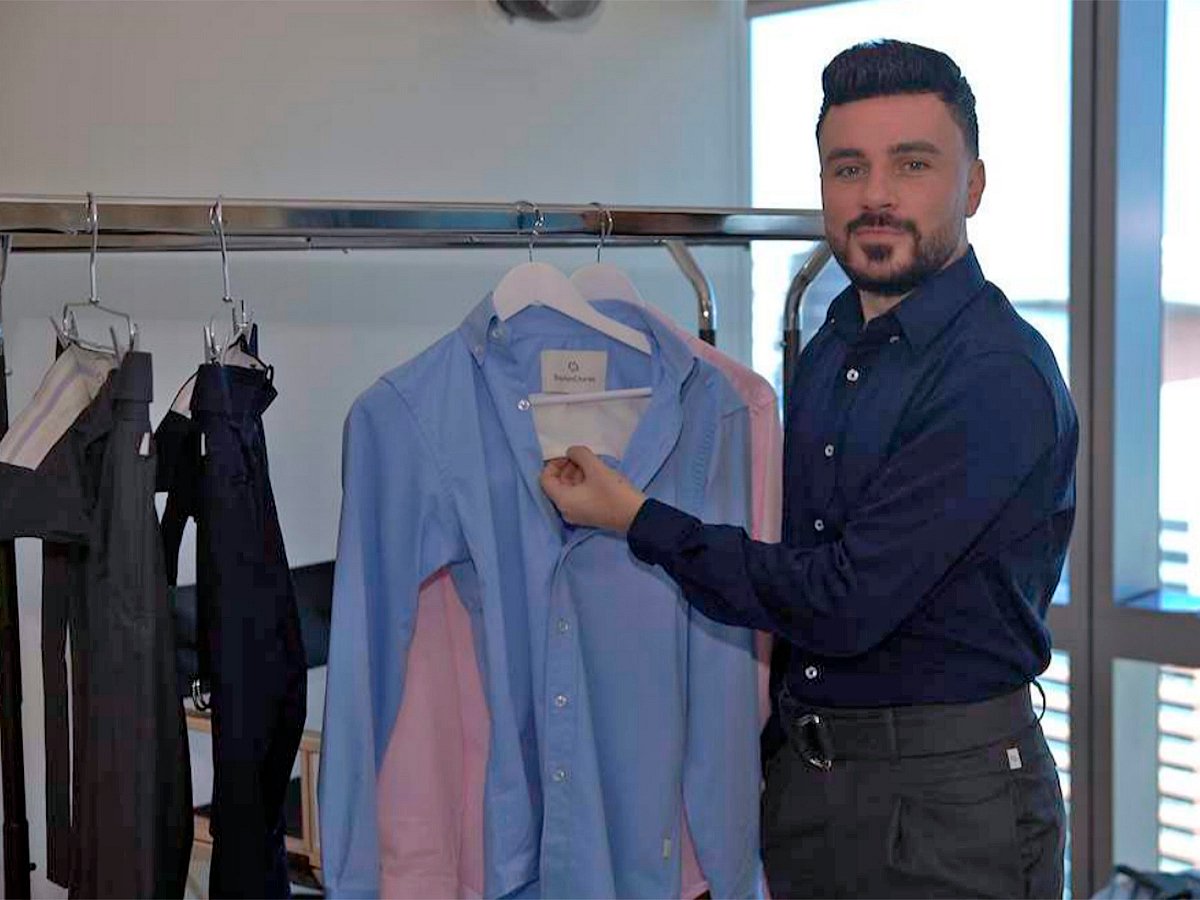
A screen grab from StephenCharles website, a model poses wearing the legacy Shirt and Foundation Trousers
How sweat, doubt and a job interview in Dubai sparked a menswear brand
Liverpool-born Stephen Wanless built StephenCharles on evenings, weekends and his own cash
Last updated:
5 MIN READ
StephenCharles started as a passion project by StephenCharles
Dubai: Picture this, it’s a hot summer afternoon in Dubai and a job interview is underway. Questions, answers and follow-ups move back and forth across the table. But one question kept pulling at Stephen Wanless, and it had nothing to do with the job. It was about first impressions.
In a city where summer afternoons test every collar, how does a man stay composed in a work shirt? Could a classic shirt help manage perspiration without changing how it looked? The idea followed Wanless home. “It got me thinking about how hard it can be to feel put together and composed in a work shirt in the heat, particularly summers in Dubai,” he says.
He went online that evening to see what existed, but nothing matched. “I couldn’t find a shirt that did what I had in mind, so I started researching fabrics to see what might be possible.” A little curiosity turned into two years of work. And finally that question now has a name on it.
Get updated faster and for FREE: Download the Gulf News app now - simply click here.
StephenCharles is a Dubai-founded premium menswear brand, made in the UAE. Its debut collection introduces the Legacy Shirt and the Foundation Trouser. Both pieces pair understated design with practical details developed for life in warmer temperatures.
The Legacy Shirt costs Dh650 and has concealed panels under the arms and across the back yoke to move moisture away from the skin. Engraved buttons finish the design. The Foundation Trouser costs Dh690. It has an integrated shirt grip that keeps the shirt tucked, plus a removable belt.
What's in a name?
The name Charles is Wanless’s middle name, so StephenCharles joins his first and middle names. “I wanted the name to have a personal connection to me,” he explains.
His name on every garment also keeps him honest. He would “not compromise on quality” with it on the label, “as it represents me”. The sound mattered too. Stephen and Charles work together. “It sounded premium and British,” he adds. “It felt like a name I could build a menswear label around.”
From Liverpool to a leap of faith
Wanless grew up in Liverpool. He built a career in sales across events and hospitality, and now works as a Senior Talent Partner.
In May 2021, he moved to Dubai without having visited or knowing anybody here. “It was a leap of faith, but Dubai has since become my home,” he explains. Just over five years later, launching a brand inspired by life in the city feels like “a very personal milestone”.
A retailer’s son
Retail runs in the family. Wanless’s father ran a business in the UK through his childhood, buying discontinued stock from high-street names such as River Island, Next and Topshop. He sold it through his own stores across the North West. Wanless recalls how both his parents worked incredibly hard to give the family a good life. He watched, and learned what a business asks of its owner. “I always knew I wanted to build something of my own,” he notes.
He wanted that business to solve a real problem. He acknowledges the fact that the fashion industry is incredibly crowded, so he needed a clear reason to add another brand. He was specific and selective and more importantly cared enough to chase it.
Stephen Wanless sampling fabrics
Evenings, weekends and his own money
StephenCharles started as a passion project. Wanless worked on it in the evenings and at weekends over two years, building it in small stages. He funded it entirely himself, with no outside investment. Money from his own income paid for product development. He admits he could have launched sooner. He chose not to, because he did not want to burn out or pile unrealistic pressure on himself while working full-time.
Asked whether he ever thought about quitting on his dream, he answers without pause. “So many times!” Imposter syndrome still visits him. He underestimated the emotional rollercoaster, saying that he is “excited about the business one day, and finds himself questioning the next”.
The supplier wall
The shirt proved hard to make. Wanless had a precise idea for the fabrics and construction, and manufacturers struggled with it. Some did not understand what he wanted. Others demanded quantities he could not commit to, or quoted prices beyond his budget. A few agreed to the job, but the results fell short.
He was also new to the industry. He knew how the shirt should look and feel. He did not always know the technical terms, or the right questions to ask.
So he studied fabrics and garment construction until supplier conversations made sense. Patience and learning became his biggest lessons. “Having a clear vision is only part of it,” he said. Communicating that vision takes knowledge.
Made in the UAE
Friends and people he met along the way carried him through the early stage. Some offered encouragement. Others made introductions that opened the next door.
“What I love about doing business in the UAE is the willingness to explore an idea and help make it happen,” he says. Making the collection locally adds meaning. “I’m proud that the investment I’ve put into the brand also supports local craftsmanship,” he confirms. Dubai remains where the story began. He would like to reach customers in other warm climates too. “Ultimately, I want to build something lasting.”
Advice to founders
Wanless shares two learnings from his entrepreneurial journey. “Do not let the first ‘no’ end your idea. Listen and learn, he advises, but remember why you started. Know which details can bend and which sit at the heart of your vision”.
Second, talk about what you are building. “The world is smaller than you think,” he points out, and a conversation with a friend can lead to a connection you never would have found alone.
“You don’t have to have every answer yourself, but you do have to be willing to ask.”
Network Links
GN StoreAbout Gulf NewsTerms & ConditionsReach by GNSitemapContact usPrivacy PolicyGN FocusHave your sayWork with usAdvertise with usGulf News epaperPrinting Services
Download our app
© Al Nisr Publishing LLC 2026. All rights reserved.