US-Iran ceasefire: Trump says 'not satisfied' with new Iran proposal
Tehran threatens retaliation and signals continued control over Strait of Hormuz
Highlights
We are closing this coverage now. For the latest updates, click here.
Trump contends hostilities with Iran have ‘terminated’
The White House asserted to Congress in a letter Friday that hostilities with Iran have “terminated” despite the continued presence of U.S. armed forces in the region.
The message from Trump effectively skirts a May 1 legal deadline for gaining approval from members of Congress to continue the war with Iran. That deadline was already set to pass without action from Republican lawmakers, who are deferring to the president.
The letter brings into stark relief the bold but legally questionable assertion of presidential power at the heart of Trump’s war, which he began without congressional approval two months ago.
Trump says after CENTCOM briefing that he has two options for Iran
Discussing a Thursday briefing with Adm. Brad Cooper, head of U.S. Central Command, Trump said the U.S. has just two options in Iran.
"I mean, do we want to go and just blast the hell out of them and finish them forever? Or do we want to try and make a deal? I mean, those are the options," Trump said.
Asked if he wanted to pursue the former, Trump said: "I'd prefer not. On a human basis, I'd prefer not, but that's the option."
Trump said he believes Iran's leadership has made some progress toward unifying around a resolution.
"They've made strides, but I'm not sure if they ever get there," he said. "There's tremendous discord, they're having a tremendous problem getting along with each other in Iran."
14 Iranian soldiers killed in demining operation
Fourteen members of Iran’s Islamic Revolutionary Guard Corps (IRGC) were killed and two others injured when unexploded ordnance detonated in Zanjan province in the country’s north-west, Iranian media reported.
According to the Fars News Agency, the personnel were part of a specialised unit tasked with clearing unexploded munitions from the area. The agency said around 1,200 hectares of agricultural land had been affected, posing ongoing risks.
Iran supreme leader calls for economic battle to 'disappoint' enemies
Iran's supreme leader Ayatollah Mojtaba Khamenei urged his people to wage economic battle and "disappoint" its enemies, as the war with the United States and Israel and years of sanctions take a toll.
The Islamic republic "has proven to the world in a military battle with the enemies its progress and excellence", Khamenei said in a written statement, but "it must also disappoint and defeat them in the stage of economic and cultural jihad".
He went on to call for "prioritising the consumption of domestically manufactured goods", and said "the owners of damaged businesses should avoid, as much as possible, layoffs and separation of their workforce".
Despite a ceasefire in the Middle East war, the US military has blockaded Iran's ports, disrupting oil shipments, while inflation has risen past 50 percent in recent weeks, according to the national statistics centre.
The Iranian rial plummeted to a record low against the dollar this week, according to currency trackers, and a labour official said 191,000 people had filed for unemployment after losing their jobs due to the impacts of the war.
Trump says 'not satisfied' with new Iran proposal
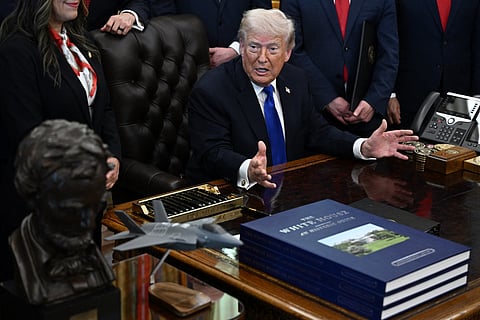
President Donald Trump said on Friday that he's "not satisfied" with Iran's latest proposal in negotiations to end war between the countries.
"They want to make a deal, I'm not satisfied with it, so we'll see what happens," Trump told reporters Friday at the White House.
Trump did not elaborate on what he sees as the proposal's shortcomings.
The president said negotiations have continued by phone after he called off his envoys' trip to Pakistan last week. He expressed frustration with Iran's leadership, which he described as fractured.
"It's a very disjointed leadership," he said. "They all want to make a deal, but they're all messed up."
Lebanon health ministry says six killed in Israeli strikes on southern town
Lebanon's health ministry said six people including a woman and a child were killed Friday in two Israeli strikes on a southern town where Israel's army had issued an evacuation order despite a ceasefire.
The ministry statement said eight other people including a woman and a child were wounded in the strikes on Habboush, where the state-run National News Agency had reported casualties after Israeli warplanes "launched a series of heavy strikes... less than an hour after warning" residents there to evacuate.
US imposes new Iran sanctions, warns against paying Hormuz tolls
The United States imposed new sanctions Friday on three Iranian foreign currency exchange firms, in an effort to target Tehran's "financial lifelines" in the Middle East war.
The US Treasury Department warned in a separate statement against paying a "toll" to Iran's government in exchange for safe passage through the Strait of Hormuz, saying this could trigger sanctions.
Tehran has virtually blocked the Strait of Hormuz, a key waterway for energy transit, since US-Israeli strikes on Iran from late February.
US declines comment on new Iran peace talks proposal
The White House declined to comment Friday on a new proposal from Iran for talks to end the war, saying only that discussions continue.
"We do not detail private diplomatic conversations," deputy press secretary Anna Kelly said in a statement sent to AFP.
"President (Donald) Trump has been clear that Iran can never possess a nuclear weapon, and negotiations continue to ensure the short- and long-term national security of the United States."
Iran delivered the new proposal Thursday evening for talks with the United States via mediator Pakistan, the state news agency IRNA reported earlier, giving no details.
King Charles III wins praise for deft handling of Trump on his US state visit
President Trump sang the praises of King Charles III after the monarch's state visit this week. He even lifted some tariffs on Scotch whisky as a favor to the British monarch.
The king delivered a diplomatic master-class on the trip, mixing praise for his host with subtle criticism. It's unclear, though, whether it will make a major difference to a trans-Atlantic relationship troubled by divisions over issues including the Iran war.
US oil benchmark loses 5% as Iran proposes new US talks
The US oil benchmark fell 5 percent Friday after Iranian media reported that Tehran had delivered a new proposal for talks with the United States via mediator Pakistan.
A barrel of West Texas Intermediate (WTI) was trading at $99.85 down 4.97 percent, after briefly losing more than 5 percent, while Brent North Sea crude dropped 3.10 percent to $106.98.
USS Gerald R. Ford aircraft carrier leaves Middle East
The USS Gerald R. Ford aircraft carrier has left the Middle East after taking part in operations against Iran, a US official said Friday, leaving two of the massive American warships in the region.
The Ford is currently in the US European Command area of responsibility, according to the official, who put the number of remaining US Navy ships in the Middle East at 20, including the USS Abraham Lincoln and USS George H.W. Bush aircraft carriers.
The Ford has been at sea for more than 10 months - a deployment that has already seen it take part in US operations in the Caribbean, where Washington's forces have carried out strikes on alleged drug-smuggling boats, interdicted sanctioned tankers and seized Venezuelan leader Nicolas Maduro.
A fire broke out in a laundry room aboard the carrier on March 12, injuring two sailors and causing major damage to some 100 beds, according to the US military.
The carrier has also reportedly suffered significant problems with its toilet system while at sea, with US media reporting clogs and long lines for restrooms on the ship.
Iran delivered new proposal for US talks via Pakistan: state media
Iran has delivered a new proposal for talks with the US via mediator Pakistan, state media reported on Friday.
"The Islamic Republic of Iran delivered the text of its latest negotiating proposal to Pakistan, as the mediator in talks with the United States, on Thursday evening," the official IRNA news agency reported, without elaborating.
It was not immediately clear what was included in the new proposal.
On Friday, Iran's Foreign Minister Abbas Araghchi held phone calls with counterparts from Saudi Arabia, Qatar, Turkey, Iraq, and Azerbaijan on the latest "initiatives of the Islamic republic to end the war," according to a ministry statement.
US urges meeting of Israel, Lebanon leaders
The US embassy in Lebanon called for a meeting between Lebanese and Israeli leaders as the health ministry said Israeli strikes on the country's south killed at least 15 people despite an ongoing ceasefire.
"Lebanon stands at a crossroads. Its people have a historic opportunity to reclaim their country and shape their future as a truly sovereign, independent nation," the embassy said, adding that "the time for hesitation is over".
Trump has said he hopes to host Lebanese President Joseph Aoun and Israeli Prime Minister Benjamin Netanyahu "over the next couple of weeks" as the two Middle East countries prepare for direct negotiations.
Republicans say they will defer to Trump on Iran war
Many Republicans who have been uneasy with Trump's war in Iran emphasized that there would be a May 1 deadline for Congress to intervene. But the date is now set to pass with no action from GOP lawmakers who continue to defer to the White House.
Under the War Powers Resolution of 1973, Congress must declare war or authorize the use of force within 60 days - a deadline that falls on Friday - or within 90 days if the president asks for an extension. But Congress made no attempt at enforcing that requirement, leaving town for a week on Thursday after the Senate rejected a Democratic attempt to halt the war for a sixth time.
The Trump administration has shown no interest in seeking congressional approval at all. It is arguing that the deadlines set by the law don't apply because the war in Iran effectively ended when a ceasefire began in early April.
Senate Majority Leader John Thune, R-S.D., said Thursday he doesn't plan on a vote to authorize force in Iran or otherwise weigh in.
Tehran signals readiness for talks with US, rejects coercion
Iran's judiciary chief Gholamhossein Mohseni Ejei on Friday said Tehran remained open to talks with the United States but would not accept what he called policy "imposition" under threats.
"The Islamic Republic has never shied away from negotiations... but we certainly do not accept imposition," Ejei said in a video carried by the judiciary's Mizan Online website.
"We do not welcome war in any way; we do not want war, we do not want its continuation," he said.
He however insisted that Iran was "absolutely not willing to abandon our principles and values in the face of this malicious enemy in order to avoid war or prevent its continuation".
Ejei insisted that the United States achieved "nothing" during the war, adding that Tehran would not "back down" in negotiations.
In a written message on Thursday, Iran's supreme leader Ayatollah Mojtaba Khamenei said the United States suffered a "disgraceful defeat" during the war.
He added that Iranians would guard their "nuclear and missile" capabilities as part of their "national capital".
UAE calls for immediate reopening of Strait of Hormuz
The UAE has called for the immediate and unconditional reopening of the Strait of Hormuz, urging the international community to hold Iran fully accountable for the unlawful interference with global maritime navigation.
Speaking at a high-level open debate of the United Nations Security Council on maritime security, chaired by Bahrain, Sheikh Khalifa Shaheen Al Marar, Minister of State, said recent developments posed a serious threat to the safety of international shipping lanes and global trade.
“The Council has taken important steps in recent years to address threats to maritime security,” he said, pointing in particular to the Iranian attacks on Gulf states and Jordan, as well as Tehran’s deliberate obstruction of navigation through the Strait of Hormuz.
He cited Security Council Resolution 2817, which condemns any attempts by Iran to close or disrupt maritime traffic through the vital waterway.
Get updated faster and for FREE: Download the Gulf News app now - simply click here.
Iran official denies reports on Supreme Leader’s health
A senior Iranian official has dismissed claims questioning the health and status of Supreme Leader Ayatollah Sayyid Mojtaba Khamenei, describing them as part of a Western effort to spread misinformation and provoke a response from Tehran.
Ayatollah Mohsen Qomi, a member of the Assembly of Experts and Deputy for International Affairs in the office of the Supreme Leader, said the reports circulating in US media were “a trick” intended to fuel rumours and confusion. Speaking to Fars News Agency, he insisted that the Supreme Leader is in good health and remains actively involved in national affairs.
Qomi said critics were attempting to draw attention to Khamenei’s absence from public appearances and encouraging speculation about his condition. He argued that such questions were designed to pressure Iranian officials into reacting in a way that would serve political objectives abroad.
He also referred to an alleged incident in which the Supreme Leader was present in a building that came under attack. According to Qomi, Khamenei had briefly stepped into a courtyard moments before the explosion, which he said helped him avoid harm. He added that others in the building were killed in the incident.
Despite acknowledging the reported attack, Qomi stressed that Khamenei is “in perfect health” and continues to oversee key national matters, including diplomatic discussions and operational decisions. He further claimed that the Supreme Leader has recently issued instructions to negotiating teams and maintains direct oversight of ongoing issues.
Qomi said Iranian authorities remain focused on protecting the life and leadership of Khamenei, whom he described as central to the country’s stability and decision-making process.
Get updated faster and for FREE: Download the Gulf News app now - simply click here.
Iran FM faces removal pressure amid internal split
Tensions within the Iranian leadership have reached a critical point as President Masoud Pezeshkian and Parliament Speaker Mohammad Bagher Ghalibaf reportedly seek the removal of Foreign Minister Abbas Araghchi. According to Iran International, a UK-based media outlet focused on Iranian affairs, the two leaders have accused Araghchi of bypassing the presidency to follow directives from the Revolutionary Guard.
The discord stems from allegations that Araghchi has acted less as a cabinet minister and more as an aide to Ahmad Vahidi, the commander of the Revolutionary Guards.
Sources familiar with the matter indicated that the Foreign Minister has been operating in full coordination with Vahidi, allegedly implementing policies based on his directives without keeping President Pezeshkian informed.
This internal rift has caused deep dissatisfaction for Pezeshkian, who has reportedly expressed to those in his inner circle that he will dismiss Araghchi if the current situation persists.
As noted by Iran International, the President feels undermined by the Foreign Minister's shift towards the military command during sensitive diplomatic manoeuvres.
Trump hits out at rivals, backs cognitive tests for candidates
US President Donald Trump on Friday lashed out at his Democrat predecessors, saying that any Presidential or Vice Presidential candidate must go through cognitive tests prior to running for the posts.
Trump said that he took the test thrice, and aced it each time.
"Anybody running for President or Vice President should be forced to take a Cognitive Examination prior to entering the Race! By doing so, we wouldn't be surprised at people like Barack "Hussein" Obama, or Sleepy Joe Biden, getting "ELECTED." Our Country would be a much better place! I took the Exam three times during my ("THREE!") Terms as President, and ACED IT ALL THREE TIMES - An Achievement that, even on a single Exam, according to the Doctors, has rarely been done before! President DONALD J. TRUMP," he said in a post on Truth Social.
The comments come after Maryland Democrat representative Jamie Raskin called on the White House physician to conduct a cognitive test of Trump amid his heightened rhetoric about the US war with Iran, as per CNN.
Crude edges up after wild swing, stocks track Wall St rally
Oil prices edged up Friday after the previous day's wild swings, with investors awaiting the next move in the Middle East crisis, while Asian stocks rose in holiday-thinned trade following a tech-led record day on Wall Street.
With peace talks between the United States and Iran stalled for the past week, there appears to be little sign that they will agree a deal to reopen the Strait of Hormuz any time soon, choking off a fifth of the world's oil and gas supplies.
After tumbling early in April on news of a ceasefire between the rivals, crude has spiked in recent weeks amid stuttering negotiations, and they soared Thursday after Axio said Donald Trump would be briefed on potential fresh military strikes.
The report compounded fears after the US president warned the blockade of Iranian ports could last months.
Brent for June delivery hit a peak above $126 before easing back to end at $114, which was down for the day. Its July contract, which had been cheaper, started Friday by rising more than one percent.
West Texas Intermediate's June contract, which was still being traded, was also slightly up.
Investors are now keeping an eye on Washington and Tehran, hoping for fresh moves towards ending the crisis - which is hammering the global economy - with the British and European central banks warning of a spike in inflation.
UAE rejects unilateral approach to Hormuz security
Dr Anwar Gargash, Diplomatic Adviser to the UAE President, said on Friday that ongoing discussions on the security of navigation in the Strait of Hormuz highlight the importance of collective international action and adherence to international law.
In a post on X, Gargash said these principles remain the main guarantee for freedom of navigation through the vital waterway, which is key to regional stability and the global economy in the post-war phase. He added that the current situation underscores the need for a coordinated international approach.
Gargash also criticised any unilateral arrangements, saying they could not be relied upon following what he described as Iran’s aggression against its neighbours.
Get updated faster and for FREE: Download the Gulf News app now - simply click here.
UAE rejects Iran’s bid for NPT leadership role
The UAE has firmly rejected Iran’s nomination for a vice-presidential role at the Non-Proliferation Treaty (NPT) Review Conference, stating that such a move is unacceptable.
During the general debate of the 11th Review Conference, the UAE emphasized that Iran has failed to meet its obligations under the treaty, undermines the authority of the International Atomic Energy Agency, and contributes to regional instability.
The UAE reiterated that allowing Iran to assume such a position would contradict international security efforts and is therefore completely unacceptable.
Iran steps up recovery of buried missiles after strikes, report says
The Iranian government has stepped up operations to recover missiles and various munitions that were "hidden underground or buried in rubble" following aerial bombardments by the United States and Israel, according to a report by NBC News.
Citing a US official and two additional sources acquainted with the situation, the report indicates that Tehran is leveraging the current cessation of hostilities to "quickly rebuild its drone and missile capabilities".
The recovery efforts are focused on extracting weaponry previously concealed or submerged under debris caused by the strikes. US officials reportedly believe these actions are intended to ensure Iran is prepared to "launch attacks across the Middle East" should President Donald Trump opt to restart military engagements.
According to NBC News, the push to excavate these strategic assets is viewed as a move to restore offensive capacity in anticipation of any future shifts in the regional security landscape.
Get updated faster and for FREE: Download the Gulf News app now - simply click here.
Iran warns of accountability for countries aiding attacks
Iran's Permanent Representative to the United Nations, Amir Saeid Iravani, has formally responded to a joint letter sent by six Arab states to the UN and the UN Security Council regarding the ongoing regional tensions.
The Iranian envoy hit back at the signatory states, alleging their complicity in military actions against Tehran. Iravani stated that those countries have participated in the aggression against Iran by "placing at the disposal of the US-Israeli enemy the military bases located on their soil, from which airstrikes were launched against Iran."
Defending Tehran's military responses, the diplomat asserted that the Islamic Republic's actions were consistent with global legal standards. Iravani says Iran has used its "legitimate right to self-defence, as stipulated in the UN Charter, in response to the aggression."
Iravani further cautioned that any nation facilitating strikes against Iranian territory would face repercussions under international accountability. He adds that the countries that have participated in the aggression against Iran or "allowed the use of their bases, airspace, territorial waters, or soil to attack Iran are responsible and must be held accountable."
The Permanent Representative sought to distance Tehran from the initial spark of the current hostilities, emphasising the reactive nature of their military posture. Regarding the onset of the violence, Iravani remarked, "Iran was not the initiator of the conflict and war."
Trump’s China visit shapes Iran war strategy talks
US media reports suggest that President Donald Trump’s upcoming diplomatic visit to China is shaping his approach to the ongoing conflict involving Iran. According to NBC, a White House official said the trip is one of several key factors being weighed as Trump considers both military and diplomatic options.
The visit to Beijing, now scheduled for 14–15 May, is seen as a priority for the administration. It was previously delayed when fighting escalated, and officials are reportedly keen to avoid further postponement.
The trip is also being complicated by wider regional tensions. The New York Times reports that restrictions and disruptions involving the Strait of Hormuz and Iranian ports are creating logistical and security challenges ahead of what is expected to be a high-stakes diplomatic engagement.
China has said it wants to play a “constructive role” in helping bring an end to the conflict. However, relations remain strained as Washington continues to impose sanctions on Chinese shipping companies and oil refineries accused of trading Iranian oil in breach of US restrictions.
Energy security is another major concern, as China depends heavily on oil transported through the Strait of Hormuz. The key shipping route has been largely closed since March, affecting global supply chains and increasing pressure on international markets.
The situation is expected to add further weight to discussions during the upcoming US–China talks, with both economic and geopolitical stakes running high.
Internet blackout in Iran sparks economic and public anger
Iran's 90 million people have been cut off from the internet for most of 2026, one of the world's longest and strictest national shutdowns. That is devastating an online economy that had long defied government restrictions and international sanctions. From fashion to fitness, to advertising and retailers, many have seen their incomes evaporate.
Despite an uneasy truce with the US and Israel, Iran's rulers have refused to reverse the shutdown they have depicted as a wartime necessity. But they are facing an outcry as it adds to mass job losses from strikes on key industries and an ongoing US blockade.
Before January, Iranians could access the internet, but authorities blocked a large amount of content. Now all access to the global web has been shut down. Some workarounds exist, but they have become enormously expensive, out of reach for most Iranians.
The internet cutoff costs the economy an estimated $30-40 million daily, with indirect losses likely twice that much, a member of Iran's Chamber of Commerce, Afshin Kolahi, told a local newspaper. About 10 million people have jobs that depend on internet connectivity, according to the communications minister, Sattar Hashemi.
Trump Iran war powers debate stalls in US Congress
Several Republican lawmakers who had earlier expressed concern over President Donald Trump’s military campaign in Iran had pointed to a May 1 deadline for Congress to act under the War Powers Resolution. However, the deadline is now set to pass without any intervention from GOP leaders, who continue to defer to the White House.
The 1973 War Powers Resolution requires Congress to approve or declare war within 60 days of military action, or 90 days if an extension is requested. That deadline falls on Friday, but no steps have been taken to enforce it. Lawmakers have also left Washington for a week-long break after the Senate repeatedly rejected Democratic attempts to end the conflict.
The Trump administration is not seeking congressional authorisation, arguing that the war effectively ended when a ceasefire began in early April. On that basis, officials say the legal deadlines no longer apply.
Senate Majority Leader John Thune said there are currently no plans to hold a vote on authorising force or formally reviewing the war, adding that he is simply “listening” to colleagues within his party.
The lack of action highlights Republican reluctance to challenge Trump’s wartime decisions, even as concerns grow among the public over the conflict and rising fuel prices. Most GOP senators have either backed the president or said they prefer to give him more time due to the fragile ceasefire. Some, however, have raised constitutional questions about the War Powers law itself.
Trump receives CENTCOM update on Iran strike scenarios
US President Donald Trump received a briefing on new plans of strikes on Iran by the CENTCOM, Axios reported.
Two US officials told Axios that the briefing by CENTCOM Commander Brad Cooper and Chairperson of the Joint Chiefs lasted for around 45 minutes.
Earlier on Thursday, Axios reported that the new possible military operations indicate US's willingness to exert a final blow to Iran amid the fragile ceasefire.
As per Axios, the briefing pertains to a plan prepared by the CENTCOM a "short and powerful" wave of strikes on Iran likely including infrastructure targets to break the ice as the ceasefire has reached a stalemate".
Another plan is to 'take over' the Strait of Hormuz and open it to commercial shipping. The final aspect of the plan is a special forces operation to secure Iran's stockpile of highly enriched uranium.
The report added that while Trump currently views the blockade as his primary leverage, he could consider military action if Iran does not agree to negotiations.
Meanwhile, a study by Think Tank- Institute for the Study of War has pointed out that Tehran is unlikely to bend any further in its fresh proposals to the US on the Strait of Hormuz. According to ISW, the hardline position advocated by IRGC boss Major General Ahmad Vahidi is now the dominating point of view in Tehran.
Get updated faster and for FREE: Download the Gulf News app now - simply click here.
Iran hits back at ‘negative media narrative’ in UK
The Iranian Embassy in London has hit back at what it describes as a "fabricated negative media environment" within the United Kingdom, dismissing claims that suggest Tehran is connected to recent violent occurrences across the country.
In an extensive statement shared via social media platform X, the diplomatic mission asserted that "such baseless accusations against [the] Islamic Republic of Iran lack credible evidence and appear to serve narrow political agendas, mislead public opinion, and distract from the real root causes of terrorism and violent extremism."
Defending its security record, the embassy highlighted that Iran has itself been a "primary victim of terrorism for decades." It cited a history of targeted attacks resulting in the deaths of "innocent civilians, high-ranking officials and scientists," while maintaining that the nation "remains at the forefront of the global struggle against terrorism and violent extremism."
Linking these defensive claims to its diplomatic engagements with British officials, the embassy further revealed that it had previously flagged "suspicious activities" to the government. According to the statement, Tehran had "raised concerns with relevant authorities" regarding these matters, specifically warning against the "potential exploitation of 'false flag' operations on UK soil."
Crude edges up after wild swing, stocks track Wall St rally
Oil prices edged up Friday after the previous day's wild swings, with investors awaiting the next move in the Middle East crisis, while stocks rose in holiday-thinned trade following a tech-led record day on Wall Street.
Brent for June delivery hit a peak above $126 before easing back to end at $114, which was down for the day. Its July contract, which had been cheaper, started Friday by rising more than one percent.
West Texas Intermediate's June contract, which was still being traded, was also slightly up.
Investors are now keeping an eye on Washington and Tehran, hoping for fresh moves towards ending the crisis - which is hammering the global economy - with the British and European central banks warning of a spike in inflation.
Get updated faster and for FREE: Download the Gulf News app now - simply click here.
Hormuz Strait disruption could lead to global recession: Guterres
United Nations Secretary General Antonio Guterres has urged the reopening of the Strait of Hormuz, saying that the longer it is choked, "the higher the cost to humanity."
"My message is clear: Open the Strait. Let all ships pass. Let the global economy breathe again," he said.
The world may face the "spectre of a global recession" if the freedom of navigation through the Strait of Hormuz is not restored by the end of this year, UN chief Guterres told media personnel in New York.
In the scenario where "severe disruptions persist through the end of the year, inflation skyrockets past 6%, growth plummets to 2%, immense suffering takes hold, especially among the world's most vulnerable populations," the UN Secretary General said.
"And we confront the spectre of a global recession with dramatic impacts on people, on the economy, and on political and social stability," he said.
The longer this vital artery is choked, the harder it will be to reverse the damage.Antonio Guterres
Setting out three possible trajectories, he said that even if restrictions on shipping and trade were lifted immediately, "supply chains will take months to recover," with global growth falling from 3.4 to 3.1 per cent, inflation rising to 4.4 per cent and trade slowing sharply.
"And a world still reeling from the shocks of a pandemic and the war in Ukraine will endure further economic distress. This is the best-case scenario," he said.
Trump administration says Iran conflict ended after ceasefire
The administration of Donald Trump is arguing that the conflict with Iran has effectively ended following a ceasefire that began in early April, a position that could allow it to avoid seeking approval from Congress. Officials say there have been no exchanges of fire since the truce took effect, and therefore the “hostilities” should be considered over for legal purposes.
This interpretation builds on remarks by Defence Secretary Pete Hegseth, who told the Senate that the ceasefire has paused the war. Under the War Powers Resolution of 1973, a president must seek congressional approval if military action continues beyond 60 days. The administration maintains that this clock has effectively stopped due to the ceasefire.
However, this view has drawn criticism from lawmakers and legal experts. Several Democrats, along with some Republicans, argue that the deadline is binding and cannot be bypassed. Senator Susan Collins stressed that continued military action requires clear authorisation, defined goals and a strategy for ending the conflict.
Legal analysts have also challenged the administration’s stance. Katherine Yon Ebright of the Brennan Center for Justice said the law does not allow the 60-day limit to be paused or reset due to a ceasefire. She described the interpretation as an overreach compared to past attempts by presidents to sidestep the law.
The debate highlights growing tension between the White House and Congress over the limits of presidential war powers.
Trump gives go-ahead to major new Canada-US oil pipeline
US President Donald Trump granted a key approval for a major new oil pipeline from Canada into the US that’s been dubbed “Keystone Light” over its similarities to a contentious project blocked by the Biden administration. The three-foot-wide (1-metre-wide) Bridger Pipeline Expansion would carry up to 550,000 barrels (87,400 cubic metres) of oil a day from Canada through Montana and Wyoming, where it would link with another pipeline. The pipeline needs additional state and federal environmental approvals before construction. Company officials expect to start buildout next year.
$4.30/gallon: US petrol prices surge to highest level since 2022
As the cost of crude climbs, so do the prices of petrol (gasoline) and other fuel that keep equipment, cars, buses, delivery trucks and airplanes running. Across the US, petrol prices are at their highest level since 2022. The national average hit $4.30/gallon as of April 30, compared with $2.98 before the war started — a 44% increase — according to AAA.
'Iran is dying to make a deal, I don't call it a war': Trump
US President Donald Trump said negotiations with Iran are progressing behind closed doors and insisted that only a small circle inside his administration knows the true status of the talks.
Speaking to reporters in the Oval Office on Thursday (local time), Trump said, "Nobody knows what the talks are, except myself and a couple of other people."
The president acknowledged uncertainty surrounding Iran's leadership structure, adding, "We have a problem because nobody knows for sure who the leaders are. It's a little bit of a problem."
Despite that, Trump maintained that Tehran wants an agreement "badly" and argued that US pressure tactics were severely damaging Iran's economy.
"Their economy is crashing. The blockade is incredible. The power of the blockade is incredible," Trump said, referring to the US-led blockade of the Strait of Hormuz.
Trump also appeared to downplay the prospect of resuming large-scale military strikes against Iran despite the fragile ceasefire currently in place.
"I don't know that we need it. We might need it," he said when asked about the possibility of renewed bombing.
Trump mulls US troop cuts in Italy, Spain over Iran row
President Donald Trump said he may pull US troops from Italy and Spain due to their opposition to the Iran war, a day after proposing a similar reduction in Germany. "Yeah, probably, I probably will. Why shouldn't I?" Trump told reporters in the Oval Office when asked if he would consider reducing American troop numbers in Spain and Italy too.
"Italy has not been of any help to us and Spain has been horrible, absolutely horrible." Trump said on Wednesday that Washington was "studying and reviewing the possible reduction" of US troops in Germany, saying he would decide in a "short period of time." As of December 31, 2025, there were 12,662 active-duty US troops in Italy and 3,814 in Spain. In Germany there were 36,436.
Talks deadlocked: Trump seeks 'options' to force Tehran into a deal
President Donald Trump is exploring more "aggressive options" to pressure Iran into a negotiated settlement, as talks remain deadlocked and Tehran’s leaders continue to reject America's core demands, according to US media. The White House is emphasising “maximum pressure” tactics — especially economic pain — while holding open the possibility of limited military steps if diplomacy stays stalled.
Air defences heard in Tehran, activated to 'counter small aircraft, drones': local media
Air defences were heard in the Iranian capital Tehran on Thursday night after they were activated to counter small aircraft and drones, Iranian media reported.
"The sound of air defence activation has been heard in some parts of Tehran. It is not yet clear whether this sound is related to a defence test or to counter possible 'reconnaissance drones' in the sky over Tehran," the Tasnim and Fars news agencies reported.
"The sound of the air defence stopped after about 20 minutes of activity and countering small aircraft," they reported. Tehran was now in a "normal situation", according to the news agencies.
44 Iran-linked ships directed to turn around or return to port: CentCom
At least 44 commercial vessels have been directed to turn around or return to port as part of the US naval blockade operations against Iran, according to the US Central Command. Washington has framed the blockade as a key "lever" to choke Iranian oil exports and force Tehran back into negotiations. Around 10,000 US troops under CentCom are now engaged in these operations, integrated with a growing fleet of warships and aircraft positioned across the Arabian Sea and the Strait of Hormuz. With unauthorised vessels facing interception, diversion, or capture, the blockade has already stranded 41 tankers carrying roughly 69 million barrels of Iranian crude that cannot be sold, effectively paralysing the Iranian regime's ability to export oil through conventional routes.
From Strait of Hormuz as 'Strait of Trump': Meme reposted
Trump has reposted a meme renaming Strait of Hormuz as "Strait of Trump". The meme, from pro-Trump account @StandWithTrump47, shows Navy ships sailing freely through the strait, which carries 20% of global oil. Trump reshared it without comment as the US blockade — in place since April 13 — turned back or redirected Iran-linked vessels, pushing Brent crude above $120/barrel. Supporters cheered the troll, while critics called it "deranged", all against Iran's failed April 27 offer to reopen if the blockade ends.
US‑Israel war on Iran: Recent developments
Day 62: Iran's supreme leader says, 'US suffered disgraceful defeat'
Day 61: Iran's Ghalibaf mocks Trump's blockade
Day 60: Blockade: US Marines board ship near Hormuz
Day 59: Iran blames US for failure of talks
Day 58: Trump says shooting won't 'deter' him from Iran war
Day 57: Iran sends revised peace plan, Trump calls it insufficient
Day 56: European Union calls for reopening of Strait of Hormuz


