US-Iran conflict: What UAE residents need to know tonight, September 3
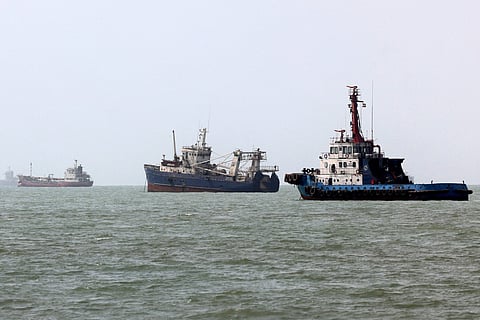
US escorts 40 ships through Hormuz as Iran attacks Kuwait and Gulf tensions intensify
The US-Iran conflict has entered another volatile phase, with Iran launching missile and drone attacks against US positions across the region following a major wave of American strikes on Iranian targets.
Kuwait said it intercepted an Iranian attack early Thursday and condemned Tehran's actions as a direct threat to its security. At the same time, UAE President His Highness Sheikh Mohamed bin Zayed Al Nahyan and US President Donald Trump discussed developments in the Middle East during a phone call.
Get updated faster and for FREE: Download the Gulf News app now - simply click here.
For UAE residents, developments around the Strait of Hormuz and regional air travel remain particularly important, with shipping traffic still well below normal levels and some airlines again adjusting UAE services.
Here are the key developments to follow this afternoon and evening.
Kuwait intercepts Iranian attack
Kuwait condemns strikes as 'direct threat'
Kuwait strongly condemned repeated Iranian attacks on Thursday after its military said air defences were engaging hostile missiles and drones.
Kuwait's Foreign Ministry described the latest attack as a grave breach of its sovereignty and a “direct threat” to the country's security, stability, and the safety of citizens and residents.
It said the attacks violated international law, the UN Charter and UN Security Council Resolution 2817 and undermined diplomatic efforts to reduce tensions.
Kuwait said it reserved the right to take necessary measures to defend its territory and vital infrastructure.
Iranian state television said Tehran was targeting US bases in Kuwait in retaliation for the latest American attacks on Iran.
The latest exchange follows extensive US strikes on Tuesday, after which Iran said it targeted US military positions in Kuwait, the UAE, Bahrain, Jordan and Iraq's Kurdistan region.
UAE President, Trump discuss Middle East
UAE President His Highness Sheikh Mohamed bin Zayed Al Nahyan received a phone call from US President Donald Trump on Thursday.
The two leaders discussed UAE-US cooperation and ways of strengthening bilateral ties in support of their mutual interests.
They also exchanged views on issues of mutual interest, particularly the latest developments in the Middle East and ongoing efforts to address them.
Trump signals latest US strikes may be limited
President Trump has indicated that the latest phase of US military strikes against Iran would not continue for “too long”, while warning that Washington was prepared to strike again.
Trump said US forces had heavily targeted Iranian capabilities around the Strait of Hormuz, including equipment Washington says could threaten commercial shipping and US forces.
The US military said its latest operations targeted IRGC-linked air-defence sites, radar systems, maritime assets, mine-laying capabilities and communications facilities.
Iran says 18 people were killed and 108 wounded in the latest US attacks.
Among the incidents being investigated is a US strike that hit a house where a wedding was taking place in Kuhestak in southern Iran. Iranian officials say four people were killed and dozens wounded there.
The casualty claims have not been independently verified.
Trump has also argued that the Iranian government is becoming “weaker by the day” as Washington combines military action with growing economic pressure.
Hormuz shipping remains under pressure
Only six commodity vessels cross in latest count
Commercial traffic through the Strait of Hormuz remains sharply reduced.
Six commodity vessels crossed the waterway on Wednesday, down from 11 the previous day and below the recent 10-day average of about 13, according to ship-tracking data from Kpler cited by Reuters.
The vessels included two very large gas carriers, two long-range tankers, a Supramax tanker and a Panamax tanker.
The figures may be revised because some vessels turn off their tracking transponders as they pass through the area.
US escorts 40 vessels carrying 18 million barrels
Despite the continuing threat to shipping, the US military carried out its largest escorted oil movement through the Strait of Hormuz since the war began.
US forces escorted 40 commercial vessels carrying about 18 million barrels of oil through the waterway on Tuesday, according to two US officials cited by CNN.
US air, naval and space assets were used to protect the convoy as Washington and Tehran exchanged strikes.
The officials said US forces defended against waves of Iranian drones during the operation and intercepted an anti-ship cruise missile.
The operation highlights the competing claims over the Strait of Hormuz: Iran continues to assert control over the waterway. At the same time, Washington says it will keep international shipping moving through the strait.
US says 86 ships redirected under Iran blockade
US Central Command says it is also continuing to enforce Washington's blockade against vessels travelling to and from Iranian ports and coastal areas.
As of September 2, US forces had redirected 86 commercial vessels, disabled three and boarded two to ensure compliance, according to the US military.
The US says about 10,000 sailors and airmen are involved in enforcing the blockade and securing navigation through the region.
Rubio warns countries over Iran sanctions
US Secretary of State Marco Rubio has warned that countries helping Tehran circumvent American sanctions could themselves face penalties as Washington increases economic pressure on Iran.
Rubio said countries were free to maintain diplomatic contacts with Tehran and acknowledged that Washington itself had communicated with Iranian representatives.
But he said President Trump had made clear that countries should not help Iran evade sanctions or establish mechanisms to generate revenue outside US restrictions.
Rubio also rejected suggestions that India and Iran were preparing a new trade agreement.
Washington says economic pressure remains its primary tool against Tehran, although Rubio said the US reserved the right to use military force when it considered that necessary.
Arab states call for de-escalationArab League warns of threat to regional security
The Arab League has condemned renewed Iranian attacks on Arab countries and warned that further escalation could widen the conflict.
It called the attacks violations of sovereignty and territorial integrity and urged an immediate halt to hostilities.
The organisation called on all sides to exercise maximum restraint and return to political negotiations.
Egypt, China push dialogue
Egypt and China have also called for de-escalation and stronger political dialogue across the Gulf and Middle East.
In a joint statement during Chinese President Xi Jinping's state visit to Egypt, the two countries backed political solutions to regional crises and emphasised respect for sovereignty and non-interference.
They also stressed the importance of freedom of navigation and international trade, particularly as disruption around the Strait of Hormuz continues to affect energy markets.
Israel warns Iran against widening attacks
Israeli Defence Minister Israel Katz said Israel was prepared to respond “with great force” if Iran attacked the country.
Katz said Tehran's latest retaliatory operations had targeted locations elsewhere in the region rather than Israel but warned that an Iranian attack remained possible.
Israeli forces were prepared both defensively and offensively, he said.
Israel has not directly joined the latest exchange of US-Iran strikes, but Katz said Israeli aircraft were ready to respond if the country came under attack.
Israeli forces, meanwhile, carried out strikes in southern Lebanon on Thursday, according to Lebanon's National News Agency, which also reported Israeli drone activity over the Tyre area.
UAE flights face renewed disruption
Air travel across the UAE remains mixed as the renewed US-Iran escalation creates fresh uncertainty for airlines.
Emirates, Etihad Airways and flydubai continue to operate key services, although individual cancellations and delays are being reported. Air Arabia has cancelled several services to Kuwait and Bahrain.
Air France has temporarily suspended flights to and from Dubai until September 4, with departures from Dubai suspended through September 5. Several other international carriers continue to have UAE services suspended or reduced.
Etihad's Bahrain and Kuwait services were largely operating normally in Thursday's update, while Emirates was scheduled to operate selected flights to and from Bahrain and Kuwait. flydubai said its Dubai-Bahrain flights were operating as scheduled.
Passengers should check their individual flight status before travelling to the airport because schedules can change at short notice and not every cancellation or delay is necessarily related to the conflict.
Flight status alert: Always check official airline websites for real-time updates, as flight schedules and conditions can change rapidly.
What UAE residents should watch this evening
The renewed attacks on Gulf countries and the situation in the Strait of Hormuz are the most important developments to monitor this evening.
Kuwait's interception of Iranian missiles and drones highlights the risk of the latest US-Iran exchange spreading across the region, even as governments continue calling for de-escalation.
Shipping through Hormuz also remains volatile. The US has demonstrated that it can move large escorted convoys through the waterway, but overall commercial traffic remains well below normal levels.
For travellers, flight schedules should be checked directly with airlines before heading to the airport, particularly for services involving Kuwait, Bahrain and other affected destinations.
Residents should continue to follow official UAE announcements and trusted government, airline and airport channels for the latest information.destinations.
Residents should continue to follow official UAE announcements and trusted government, airline and airport channels for the latest information.


