US strikes Iran, Tehran retaliates with missile and drone attacks in Kuwait, Bahrain and Jordan
Here's a look at the latest developments in the US-Iran war and the wider Middle East
Highlights
We are closing this live coverage. For the latest updates, click here.
US strikes on Iran would not continue 'too long': Trump
US military strikes on Iran would not continue “too long,” US President Donald Trump said late on Wednesday, after American forces attacked targets along Iran’s southern coast and Tehran launched missiles and drones at US bases across the region.
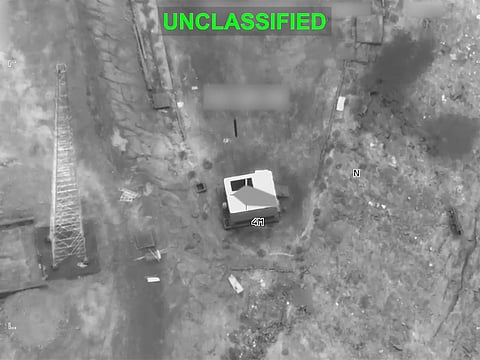
"We hit them very hard last night," he told US media. "We took out all of the new equipment that they tried to build along the Strait of Hormuz... It was a very heavy attack last night, and we're prepared to do another one any time we want.”
The exchange was the largest direct clash between the two countries since July, raising fears that the conflict — which began with US strikes in February — could widen further.
Iran accused the US of striking a wedding gathering in Kuhestak, Sirik, killing four people and injuring dozens. Iranian Health Minister Mohammad-Reza Zafarqandi later said the latest US strikes killed 18 people and wounded 108 others. The claims have not been independently verified.
According to the US military, the strikes targeted IRGC-linked capabilities, including:
Air-defence sites
Radar systems
Maritime assets
Facilities used for mine-laying
Communications sites
Iranian reports said several locations near the Strait of Hormuz were hit, but the US has not released a full list of specific facilities or coordinates.
Sirik is a coastal area close to the Strait of Hormuz. Iran’s Red Crescent initially reported four deaths and dozens of injuries, while other Iranian officials gave higher casualty figures. The US has denied intentionally targeting civilians, BBC reported.
The escalation has further threatened oil and shipping flows through Hormuz.
Iran regime 'getting weaker by the day': Trump
President Trump has refused to tell White House reporters whether or not he'd consider sending the CIA into Iran to arm protesters so they can rise up and fight against the regime. Trump says Iranians aren't directly taking on the Islamic Republic's leadership because they get shot and killed for protesting.
"When they get out to protest, they kill them... They shoot them right between the eyes." Trump says he believes that could eventually change as the regime loses its grip: "The regime is getting weaker by the day."
40 ships, 18 million barrels: US Navy escorts keep Hormuz open
The US military escorted 40 commercial vessels carrying a record 18 million barrels of oil through the Strait of Hormuz, marking the largest such operation since the Iran-US war began more than six months ago, two US officials familiar with the mission told CNN.
The operation took place Tuesday (Sept. 1) as the US and Iran exchanged a new round of strikes, highlighting the risks facing one of the world’s most important energy corridors.
US forces used air, naval and space-based assets to protect the vessels while targeting Iran’s ability to attack commercial shipping.
The military also defended against "waves of Iranian drones" during the escort, the officials said. One official said US forces intercepted an anti-ship cruise missile during the operation.
US Navy turns back 86 Iran-linked ships, disables 3, boards 2
The Central Command, made up of some 10,000 sailors and airmen, continues to strictly enforce the US blockade against Iran. As of Sept. 2, US forces have redirected 86 commercial vessels, disabled 3 and boarded 2 to ensure compliance, according to the US military.
Israel says prepared to 'respond with great force' if Iran attacks
Israel's defence minister said on Wednesday his country was prepared to respond "with great force" if attacked by Iran, after Iranian forces targeted US military positions across the region.
Israel Katz said Israeli forces were prepared for a possible attack over the Jewish high holiday season, which begins in mid-September.
"For now, they are striking throughout the region except us," he told a conference hosted by Israeli news site Ynet and newspaper Yedioth Ahronoth.
"But there is a possibility that they will attack us. We are prepared for that defensively."
If Iran did attack, Israel would "respond with great force, independently of anyone else", Katz said, adding that "our planes are ready to take off".
US Fed says 'positive' economic outlook facing heightened uncertainty
The US Federal Reserve on Wednesday flagged that while the country's general economic outlook was positive, heightened uncertainty due to high energy prices, policy issues and the Iran war was weighing on industry and household sentiment.
Economic activity nationwide increased "modestly" since early July, the Fed said in its "beige book" survey of economic conditions, adding that consumer spending also grew slightly.
Trump says prepared to strike Iran again at 'any time'
US President Donald Trump said Wednesday that the United States was ready to attack Iran again after extensive bombardment of sites across the country left at least 19 Iranians dead.
"We blew up much more than their radar last night. It was a very heavy attack last night, and we're prepared to do another one any time we want," Trump told reporters in the Oval Office.
Get updated faster and for FREE: Download the Gulf News app now - simply click here.
Trump wants to rename Hormuz
US President Donald Trump on Wednesday suggested renaming the Strait of Hormuz as "Trump Strait," asserting US control of the vital waterway even as fighting raged there with Iran.
It is the latest in a series of geographical name changes floated by Trump, and comes after he claimed US sovereignty over the strait that Tehran has effectively shut for six months.
"Now that we have it under U.S.A. control, should we change the name Hormuz Strait to TRUMP STRAIT??? Like America itself, it would be 'hotter' than ever before!" Trump said on his Truth Social network.
Wall Street stocks rise despite bond yields, oil rising
Wall Street stocks pushed higher on Wednesday, taking advantage of a brief lull in rising oil prices and bond yields.
Stocks have dropped and government bond yields have hit fresh multi-decade highs in recent days as elevated oil prices increase the prospect of sustained higher levels of inflation and central banks hiking interest rates in reaction.
But the yield on the 10-year US government bond dipped ahead of the open in New York and oil prices turned briefly lower, helping Wall Street's main indices bounce back in morning trading.
UAE strongly condemns hostile Iranian attacks on Bahrain, Kuwait, Jordan, and Kurdistan Region of Iraq
The United Arab Emirates has condemned in the strongest terms the hostile attacks by Iran targeting the Kingdom of Bahrain, the State of Kuwait, the Hashemite Kingdom of Jordan, and the Kurdistan Region of Iraq, with missiles and drones.
In a statement, the Ministry of Foreign Affairs (MoFA) affirmed that these hostile attacks constitute a flagrant violation of the sovereignty of the brotherly nations and a threat to their security and stability.
Iran arrests 11 foreigners suspected of fuel smuggling: state TV
Iranian authorities have arrested 11 foreign nationals on suspicion of attempting to smuggle fuel out of the Islamic republic, state television reported on Wednesday.
The arrests in the country's south come as Iran faces difficulties importing enough fuel to meet demand as the US maintains a naval blockade of Iranian ports.
"Border guards arrested 11 foreign suspects," state television reported, without specifying their nationalities.
It said the guards acted on intelligence reports of smuggling attempts using a tugboat in Gulf waters.
During a search of the boat, the guards "discovered 382,000 litres of diesel fuel", it added.
Iran security chief says US to face new war strategy after strikes
Iran's security chief on Wednesday warned the United States would face a "new strategy" from Tehran in the Middle East war, after the heaviest exchange of attacks between the foes in weeks.
"With these desperate struggles, you will not only fail to escape the depths of the hell you have created for yourselves," Iran's Supreme National Security Council secretary Mohsen Rezaei posted on X.
"You will soon see that Iran's new strategy on the battlefield, in diplomacy and in confronting the economic blockade will shatter your foundations," he added in his post.
Saudi Arabia condemns Iranian attack on its tanker Sidr in Strait of Hormuz
The Saudi Ministry of Foreign Affairs condemned Iran's targeting of the Saudi tanker Sidr while it was transiting the Strait of Hormuz, which resulted in fatalities among the crew.
In a statement carried by the Saudi Press Agency, the ministry said that Saudi Arabia also condemns the Iranian attacks targeting the Hashemite Kingdom of Jordan, the Kingdom of Bahrain, and the State of Kuwait, and affirms its full solidarity with the brotherly countries and its support for all measures they take to safeguard their security and sovereignty against any threat.
The ministry added that Saudi Arabia stresses the need to halt escalation and respect the security and safety of international navigation, the security of global energy supplies, the principles of good neighbourliness, the sovereignty of states, the Charter of the United Nations, and international law and norms.
Netanyahu, in Gaza, says 'we are not retreating'
Israeli Prime Minister Benjamin Netanyahu on Wednesday visited troops in the Gaza Strip, where he vowed not to withdraw forces from their positions despite a US-declared ceasefire.
"We control the area. We are not retreating. We are staying on this line," Netanyahu said near the so-called Yellow Line which demarcates the areas under Hamas and Israeli military control.
Get updated faster and for FREE: Download the Gulf News app now - simply click here.
China's Xi urges against Mideast interference in Egypt visit
Chinese President Xi Jinping on Wednesday urged countries to oppose "external interference" in the Middle East and said Beijing was ready to work with regional states to safeguard maritime shipping, jeopardised by the US-Iran war.
Xi's remarks to his Egyptian counterpart Abdel Fattah al-Sisi, on his first visit to Cairo in a decade, come as Beijing seeks a greater foothold in the region, expanding investment while managing fallout from the war.
"We must uphold the principle that the people of the Middle East are the masters of their own affairs, oppose external interference (and) support regional countries in strengthening dialogue on peace and security," Xi said in a meeting with Sisi, according to Chinese state news agency Xinhua.
Bahrain condemns Iranian missile and drone attacks
The Kingdom of Bahrain strongly condemned and denounced the renewed Iranian missile and drone attacks targeting the Kingdom of Bahrain, the State of Kuwait and the Hashemite Kingdom of Jordan, describing them as a flagrant violation of state sovereignty, a direct threat to civilian lives, and a dangerous escalation that undermines regional security and stability, in violation of international law, the UN Charter and UN Security Council Resolution 2817.
The Ministry of Foreign Affairs reaffirmed Bahrain’s full solidarity with the targeted countries and their legitimate right to take all lawful measures to defend their sovereignty, security and stability, and protect their citizens and residents, in accordance with international law and Article 51 of the UN Charter.
It also commended the readiness and effectiveness of the Bahrain Defence Force, as well as the armed forces and air defence forces of the targeted countries, in repelling the attacks and protecting civilians.
The Ministry renewed Bahrain’s call on the UN Security Council to uphold its responsibilities and take firm and deterrent measures to compel Iran to immediately and fully cease its acts of aggression.
Israeli strike on Lebanon kills one: state media
An Israeli strike on south Lebanon killed one person on Wednesday, Lebanese official media said, while Israel said it targeted Hezbollah in retaliation for an attack targeting its soldiers in the south.
"One person was killed and another wounded in a strike launched by an enemy drone" in the city of Nabatieh, Lebanon's state-run National News Agency (NNA) said, also reporting other Israeli strikes on the area.
Israel's army said the Iran-backed Hezbollah group overnight "launched two explosive drones" towards Israeli soldiers in Ali al-Taher Ridge area, reporting no troop casualties.
In response, the Israeli military said it struck Hezbollah infrastructure in the Nabatieh area.
Israel has recently increased its attacks on south Lebanon, particularly in the Nabatieh area where the strategic Ali al-Taher ridge is located.
GCC Secretary-General condemns Iran attacks
Secretary-General of the Gulf Cooperation Council (GCC) Jassem Al-Budaiwi strongly condemned on Wednesday the heinous Iranian attacks carried out with missiles and drones targeting Kuwait, Bahrain and Jordan. In a press statement, Al-Budaiwi described the Iranian attacks as a blatant violation of the autonomy of states and a direct threat to their security and stability. He affirmed that the GCC countries stand by Kuwait, Bahrain and Jordan in all measures and steps they take to safeguard their autonomy, protect their security and stability, and ensure the safety of their peoples and residents on their territories.
Iran launched a wave of attacks on US sites in the Middle East
Iran launched a wave of attacks on US sites across the Middle East on Wednesday as violence surged after an extensive American bombardment and the deaths of four people at an Iranian wedding party.
Iran's Revolutionary Guards announced attacks on US bases in Jordan, Kuwait, Bahrain and Iraq's autonomous Kurdistan region, in the six-month conflict's heaviest exchange in weeks.
US President Donald Trump had warned earlier of "much harder and higher" attacks if Iran retaliated to the US strikes, which Iran's military and state media said killed 18 people.
Iran security chief says US to face new war strategy after strikes
Iran's Red Crescent calls for ICC action over alleged US strike on wedding
The Iranian Red Crescent has called for legal action at the International Criminal Court following what it described as a US missile strike on a wedding ceremony in Kohestak, Hormozgan, on Tuesday night.
Israel says prepared to 'respond with great force' if Iran attacks
Israel's defence minister on Wednesday said his country was prepared to respond "with great force" if attacked by Iran, after Iranian forces targeted US military positions across the region.
Israel Katz said Israeli forces were prepared for a possible attack from Iran over the Jewish high holiday season, which begins in mid-September.
"For now, they are striking throughout the region except us," he told a conference hosted by Israeli news site Ynet and newspaper Yedioth Ahronoth.
"But there is a possibility that they will attack us. We are prepared for that defensively," he added.
If Iran attacks, Israel would "respond with great force, independently of anyone else", Katz said, adding that "our planes are ready to take off".
Iran Guards say two oil tankers on fire after hitting mines in Hormuz
Iran's Revolutionary Guards said Wednesday that two oil tankers caught fire after striking mines while transiting the Strait of Hormuz outside a route designated by Iranian forces.
In a statement, the Guards said the oil tankers sought "at the urging of the US military to transit via an illegal route" in the strait before "striking mines and exploding", adding that they "are currently on fire."
Two Filipino sailors killed after Saudi tanker incident in Strait of Hormuz
Two Filipino sailors have died following an incident involving a vessel operated by Saudi Arabia’s national shipping company Bahri while it was transiting the Strait of Hormuz on August 31, the company said.
Bahri said the two crew members died as a result of the incident involving the Saudi-flagged very large crude carrier Sidr. The company had earlier said it was investigating the incident and assessing its impact.
Shipping intelligence firms reported that Sidr was struck by unknown projectiles about 16.6 nautical miles northeast of Khasab, Oman, late on Monday as it was sailing out of the Strait of Hormuz.
Read more here.
US attack on Iranian Gulf island kills three paramilitary personnel
Iran's Revolutionary Guards said Wednesday that three members of the paramilitary Basij force were killed in attacks overnight on an island in the Gulf.
"Three Basij fighters... were martyred in last night's attack by the criminal US on Lavan Island" in the Gulf, a local IRGC commander was quoted by the Mehr news agency as saying.
Iran's top negotiator calls US 'Satan' after wedding attack
Iran's top negotiator Mohammad Bagher Ghalibaf on Wednesday called the United States 'Satan' after an attack on a wedding ceremony in the country's south.
"Minab school: children massacred. Lamerd sports hall: kids slaughtered. Kouhestak wedding: children killed with families. If a power acts like Satan, picks targets like Satan, and kills like Satan, it's Satan. Shields a junior Satan that does the same? It's THE Great Satan," said Ghalibaf in a post on X.
Iran Guards say 4 killed in US attack in western province
Iran's Revolutionary Guards said on Wednesday that four personnel were killed in a US attack on the western province of Kermanshah.
"Four fighters of the IRGC Aerospace Force in Kermanshah province were martyred in an attack by the US regime," the Guards said in a statement carried by Fars news agency, using their acronym.
Get updated faster and for FREE: Download the Gulf News app now - simply click here.
Qatar condemns Iranian attacks on Gulf states, Jordan
Qatar has strongly condemned renewed Iranian attacks on Jordan, Bahrain and Kuwait, calling them a violation of their sovereignty and international law.
Qatar’s Foreign Ministry said the attacks risk further escalating regional tensions and undermining diplomatic efforts. It held Iran legally responsible for the attacks and their consequences.
Qatar reaffirmed solidarity with the three countries and called for an immediate halt to military operations, urging a return to dialogue and negotiations.
Kuwait says extinguished fire after Iranian drone targets 'residential complex'
Firefighting teams in Kuwait contained a fire that broke out at a residential complex in the capital at dawn on Wednesday after the building was targeted by an enemy drone, the Public Fire Force said.
Brigadier General Mohammed Badar Ibrahim, the force’s official spokesperson, said teams from the Al Helali and Al Madeenah centres responded immediately and brought the fire under control.
No injuries were reported, while the damage was limited to property, Ibrahim said.
Bahrain: Air defences intercept Iranian attacks
Bahrain’s air defence systems intercepted and destroyed several Iranian aerial attacks on Wednesday, according to the Bahrain Defence Force General Command.
The command said Iran continues to target civilians in the Kingdom, adding that all weapons and military units remain at the highest levels of readiness and on high alert to protect Bahrain.
Residents were urged to exercise caution, avoid approaching any suspicious or unfamiliar objects that may be remnants of the attacks, and report them immediately.
The command said the deliberate targeting of civilians with missiles and drones constitutes a violation of international humanitarian law.
Gold hits over 3-week low
Gold fell on Wednesday to its lowest in more than three weeks.
Spot gold was down 0.6 percent at $4,304.01 per ounce by 00:17 GMT, its lowest since 7th August.
US gold futures for December delivery fell 1 percent to $4,350.80.
Among other metals, spot silver lost 1 percent to $63.60 per ounce, platinum edged 1 percent lower to $1,722.23 and palladium fell 1.4 percent to $1,292.21.
UAE flights disrupted again as Iran tensions escalate
Flying from the UAE today? Passengers should prepare for a mixed picture of operating, delayed and cancelled flights, with Emirates, Etihad Airways, flydubai and Air Arabia continuing to operate key services while some routes remain disrupted following a fresh escalation between the US and Iran.
Airlines are also warning passengers to check individual flight status before travelling, as schedules can change at short notice.
The latest escalation came after US forces struck Iranian military targets on September 1, followed by Iranian missile and drone attacks targeting American interests in Bahrain, Kuwait and Jordan. Iran has also reported deaths from US strikes on its territory.
UAE and regional flight updates: Latest here
Iran says 11 dead in US strikes on its territory: state media
Iran said Wednesday that US strikes on its territory killed 11 people, state media reported, after a fresh attack in the southwestern province of Khuzestan.
"The Deputy Governor of Khuzestan Province for Security and Law Enforcement Affairs said that last night's US missile attack on three locations in the province left seven people dead and eight injured," state-run IRNA said.
It came after the Iranian Red Crescent said Tuesday that four people including a child were killed and more than 50 people wounded by a US attack at a wedding in southern Sirik county.
US aircraft carrier arrives in Thailand after months at sea
A US aircraft carrier at the centre of controversy over conditions on board arrived in Thailand on Wednesday for its first port call in nine months.
The 5,000 sailors and Marines on board the USS Abraham Lincoln, arriving from the war in the Middle East, are headed for the Thai resort of Pattaya, a rest-and-recreation stop for US troops since the Vietnam War.
Tugs guided the huge nuclear-powered carrier, dozens of warplanes lined up on its flight deck, towards the port of Laem Chabang on Wednesday morning, AFP reporters saw.
"Our arrival in Laem Chabang provides a well-deserved opportunity for our Sailors and Marines to rest and recharge," Rear Admiral Robert Loughran, commander of the US Carrier Strike Group 3, said in a statement.
Bahrain sounds sirens, urges public to seek safety amid threat alert
The Bahraini Ministry of Interior activated emergency sirens across the country early on September 2, urging citizens and residents to remain calm, proceed to the nearest safe location, and follow updates only through official channels for their safety, amid a potential threat linked to the wider regional escalation.
UN chief urges US-Iran talks
UN Secretary-General Antonio Guterres has called for renewed negotiations as military activity continues across the Middle East, saying the return of strikes between the United States and Iran makes “maximum containment” essential. He said earlier diplomacy had appeared close to a breakthrough and urged both sides to restart talks.
Guterres also called for "freedom of navigation" to be fully restored in the Strait of Hormuz and Bab al-Mandab — two key maritime routes whose disruption can affect global energy and trade flows.
Iran says targeted US forces at Bahrain air base
Iran's army said Wednesday it targeted US forces at an air base in Washington-allied Bahrain, as Tehran launched strikes targeting American interests across the Middle East.
"The Army of the Islamic Republic of Iran, several hours ago, targeted radar installations and assembly points of US terrorist forces at Sheikh Isa Air Base in Bahrain through intensive attacks carried out by suicide drones," state media reported.
Iran has no control over Hormuz, in a 'death spiral': Bessent
US Treasury Secretary Scott Bessent said Iran was attempting to rebuild a network of radar installations along the Strait of Hormuz before the US military struck and destroyed the emerging system, in a move to deny Tehran a grip of the strategic waterway.
Bessent described Iran's effort in unusually dismissive terms, referring to what he called a “patchwork tinker toy erector set radar” that Iranian forces were trying to reconstruct along the shores of the Strait.
“Iran does not have control of the Strait. And they are in a death spiral,” Bessent said.
He said Iran had been rebuilding “some patchwork of tinker toy erector set radar” along the Strait before US forces targeted the installations.
The comments came after the US military launched a new wave of strikes against Iranian targets on Tuesday, including air-defence systems, radar sites, maritime assets, mine-laying capabilities and communications facilities, as per the US Central Command.
Radar is critical to Iran's ability to monitor shipping and military activity through the Strait, detect aircraft and ships, and support anti-ship and air-defense operations.
Iran Guards say struck US bases in Erbil with missiles, drones
Iran's Revolutionary Guards said Wednesday that they struck US bases with missiles and drones in Erbil in Iraq's autonomous Kurdistan region, state media reported.
The Guards said they "carried out a coordinated missile and drone attack on US bases in Erbil" that destroyed a maintenance centre, warehouses and the "guidance system of a US surveillance aerostat", according to a statement carried by the state-run IRNA.
2 tankers attacked in the last 48 hrs near Hormuz as Iran steps up maritime pressure: JMIC
Two attacks on commercial tankers were reported in the past 48 hours around the Strait of Hormuz, as Iranian forces continued what a regional maritime security centre described as persistent "surveillance, harassment and attempted disruption" of shipping.
The Bahrain-based Joint Maritime Information Center (JMIC) said its latest assessment recorded two incidents corresponding to UK Maritime Trade Operations (UKMTO) warnings 122-26 and 124-26.
The first incident, UKMTO 122-26, involved the oil tanker Burgan, which reported a security incident while transiting the waterway. The vessel subsequently anchored at a position about 1 nautical mile northwest of Jazirat Um Al Ghanam.
The second incident, UKMTO 124-26, involved a tanker that reported being struck by three unknown projectiles while completing an outbound transit of the Strait, about 17 nautical miles east of Khasab, Oman. UKMTO said there were no reported casualties or environmental impact and that authorities were investigating.
JMIC said the incidents came alongside continued activity attributed to Iran's IRGC, including unmanned aerial vehicle overflights, targeted surveillance of merchant ships and occasional VHF radio hailing.
The pattern, the centre said, indicates an Iranian effort to maintain a visible military presence along the critical shipping lane and keep pressure on vessels attempting to navigate the Strait.
The latest incidents involve both inbound and outbound commercial traffic, underscoring the continuing risk to ships approaching or leaving the world's most important oil chokepoint.
US confirms Iran strikes as Trump warns Tehran of harsher retaliation
The US launched a new wave of strikes against Iranian military targets, escalating a confrontation that had entered a period of relative calm and raising fresh fears that fighting could again spread across the Gulf.
The latest strikes followed Iranian attacks and attempted attacks on commercial shipping, US forces and strategic targets around the region. Washington has framed the operation as a response to threats against shipping and US personnel, particularly Iran's apparent efforts to deploy naval mines in the Strait of Hormuz.
President Donald Trump warned Tehran that any further retaliation would bring a much stronger US response, signaling that Washington is prepared to escalate rather than return immediately to the earlier ceasefire arrangement.
Kuwait air defences intercept hostile missiles, drones
Kuwait said its air-defence systems are responding to hostile missile and drone threats, following what the Army described as "Iranian aggression".
The General Staff of the Kuwaiti Armed Forces confirmed that any explosions heard in the country are likely the sound of air-defence systems intercepting incoming targets.
Authorities urged residents to remain calm and follow safety and security instructions issued by the relevant authorities.
US‑Israel war on Iran: Recent developments
Day 180: Trump warns of more strikes on Tehran
Day 179: UAE strongly condemns missile attacks on Jordan
Day 178: Iran supreme leader calls for unity among Muslim countries
Day 177: 82 ships redirected under US blockade
Day 176: Iran urges countries not to join US 'illegal' sanctions
Day 175: Trump hints US could sanction Chinese banks over Iran links
Day 174: Middle East War: Iran, Oman propose temporary Hormuz shipping corridor


