US-Iran war: What UAE residents need to know this evening, September 4
Hormuz remains subdued as US tightens pressure on Iran; UAE flights face disruption
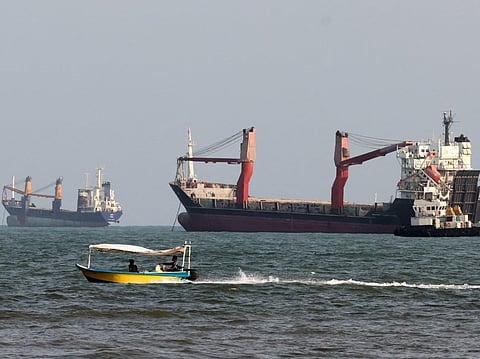
The US-Iran conflict remained tense on Friday, with Washington keeping military, economic and covert options open against Tehran while maritime security risks around the Strait of Hormuz remained severe.
South Korea is also considering whether to contribute to US-led security efforts around the strategic waterway, although Seoul stressed that no decision has been made.
Get updated faster and for FREE: Download the Gulf News app now - simply click here.
For UAE residents, Hormuz remains the key regional flashpoint, while airline schedules continue to be affected by the wider security situation.
Here are the main developments to follow this afternoon and evening.
Hormuz security risks remain severe
Shipping traffic still heavily depressed
Maritime security risks across the Gulf remain “severe”, with commercial traffic through the Strait of Hormuz still well below normal levels, according to the Joint Maritime Information Centre.
The Bahrain-based JMIC said Iranian surveillance and harassment of commercial shipping continued around the strait, alongside navigation-system interference and wider military activity.
Independent vessel-tracking data showed single-digit numbers of ships passing through Hormuz in both directions at times during the period covered by the advisory.
US Naval Cooperation and Guidance for Shipping data showed higher traffic, averaging more than 20 transits a day over the previous week, reflecting differences in tracking systems.
No confirmed attacks or disruptions were reported in the Arabian Gulf during the latest 48-hour assessment, but commercial operators were advised to remain cautious.
South Korea weighs role in Hormuz security
South Korea said Friday it was considering possible contributions to US efforts to secure the Strait of Hormuz, provided doing so did not undermine its own military readiness.
A South Korean presidential official said contributions could be made within limits that protected the country's defence posture.
Options discussed included combat and non-combat roles as well as search operations, but the presidential office stressed that no decision had been made.
The statement followed local reports suggesting Seoul was leaning towards sending military personnel to the region.
South Korea is particularly exposed to disruption in the Strait of Hormuz because much of its imported crude oil and liquefied natural gas passes through the waterway.
Iran's oil lifeline comes under pressure
Iran's oil exports have fallen sharply as the US naval blockade restricts tanker movements through the Strait of Hormuz.
Reuters reported that Iranian crude loadings dropped from about 2 million barrels a day in March to roughly 220,000–255,000 barrels per day in August.
Iran has now gone for around seven weeks without shipping meaningful volumes of crude through the Strait of Hormuz, an unprecedented disruption to one of Tehran's biggest sources of foreign currency.
For years, Iran was able to keep exports flowing despite sanctions by using shadow fleets, ship-to-ship transfers and alternative payment networks.
The naval blockade has made that strategy significantly harder because the problem is no longer simply finding buyers — but physically moving oil out of the country.
Iranian President Masoud Pezeshkian has acknowledged that exports and imports have fallen sharply, while inflation and the weakening rial are increasing pressure on households and businesses.
Washington keeps all options open
Vance: Economic, military and covert pressure possible
US Vice President JD Vance said the Trump administration continued to have a wide range of options for dealing with Iran.
Vance said economic, military, diplomatic and covert pressure were all among the tools available to President Donald Trump.
He declined to say which measures Washington might use next, arguing that publicly revealing plans would restrict the president's options.
Vance also downplayed the description of the confrontation as a conventional war, saying there was no sustained active fighting despite periodic flare-ups.
He acknowledged, however, that Washington did not know when Iranian attacks on commercial shipping would stop.
Trump says US has 'virtually unlimited' ammunition
Trump rejected reports that months of fighting had strained US ammunition stockpiles.
In a Truth Social post, he claimed the United States had “virtually unlimited” quantities of mid- to high-grade ammunition. He warned that Washington remained capable of carrying out further strikes against Iran.
The comments followed the latest round of US attacks on Iranian military targets near the Strait of Hormuz and Iranian retaliation against US-linked facilities across the region.
US says Europe backs economic pressure campaign
US Treasury Secretary Scott Bessent said the European Union had joined Washington's Operation Economic Outcast campaign against Iran.
The US programme is designed to cut off Tehran's remaining access to international financial networks and revenues from sectors including oil, shipping, aviation and digital assets.
The EU's own language has been more cautious. It said it was prepared to support further economic pressure on Iran where necessary, including measures linked to the US-led campaign, while continuing to call for diplomacy and de-escalation.
The bloc said Iran should curb its nuclear and ballistic missile programmes, end destabilising regional activity and respect freedom of navigation through the Strait of Hormuz.
Washington launched Operation Economic Outcast on August 24 and has warned governments, banks and companies that continued dealings with Iran could expose them to secondary US sanctions.
Iran demands investigation into deadly wedding strike
Iran has accused the United States of committing a war crime after a strike hit a home where a wedding celebration was being held in Kuhestak, southern Iran.
Four people were killed and at least 68 wounded, according to Iranian authorities.
Reuters analysis of verified imagery and assessments by weapons experts found that the building was likely directly struck by a US munition. The wedding venue was around 135 metres from a telecommunications tower targeted during US operations.
The US has not said the wedding gathering was deliberately targeted.
Vance confirmed that Washington was investigating the incident, while saying he remained sceptical of some Iranian claims.
Iran's Red Crescent has called for an international investigation.
UAE flights: Cancellations and delays continue
UAE travellers continue to face a mixed picture on Friday, with Emirates, Etihad Airways and flydubai operating selected regional services. At the same time, Air Arabia has cancelled several flights to Kuwait and Bahrain.
Some international services from Dubai are also cancelled or delayed. Air France's Dubai flights remain suspended through September 4, with departures from Dubai suspended through September 5.
Several other international airlines continue longer suspensions of UAE services, although some regional and international carriers have resumed operations.
Passengers are advised to check their individual flight status before travelling to the airport, as not all cancellations or delays are necessarily related to the conflict.
Travellers should generally arrive at least three hours before departure, while flydubai recommends allowing at least four hours.
Flight status alert: Always check official airline websites for real-time updates, as flight schedules and conditions can change rapidly.
What UAE residents should watch this evening
The Strait of Hormuz remains the most important development to monitor.
Overall shipping activity is still heavily suppressed despite efforts by the US military to keep commercial traffic moving. At the same time, South Korea's consideration of a possible contribution shows that Washington continues to seek more international support for maritime security.
Iran's sharp fall in oil exports also adds another layer of economic pressure on Tehran as Washington expands sanctions and maintains its naval blockade.
For travellers, flight schedules remain fluid, and passengers should continue checking airline and airport updates before leaving home.
Residents should also follow official UAE announcements and trusted government channels as regional military and diplomatic developments continue to change quickly.


