Abu Dhabi steps up healthcare readiness for emergencies and disasters
Medical command systems and emergency plans aim to protect lives during major crises
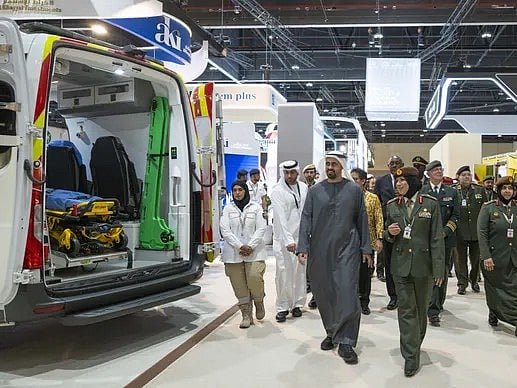
The exhibition held alongside the World Congress on Military Medicine in Abu Dhabi attracted wide participation from medical and military organisations and institutions. Participants showcased a range of specialised projects, initiatives and innovations in healthcare and military medicine, highlighting the latest technologies and medical solutions aimed at improving treatment services, strengthening emergency response and enhancing preparedness for crises and disasters.
The exhibition provided participating organisations with a platform to present their projects to an international gathering of experts, specialists and decision-makers in military medicine. It also offered an opportunity to showcase technologies and solutions designed to improve healthcare quality and modernise the delivery of medical services, particularly in field settings and exceptional circumstances.
The Abu Dhabi model
Dr Salama Al Tamimi, Executive Director of the Emergency Preparedness and Response Sector at the Abu Dhabi Public Health Centre (ADPHC), said: "In Abu Dhabi, we believe that the readiness of a healthcare system is measured not only by the speed of its emergency response, but also by its ability to anticipate, prepare for and manage risks efficiently.
"With this in mind, we continue to work with our partners to develop a smart, interconnected healthcare ecosystem that brings together different medical functions, from technology to emergency services. This enables early intervention, improves the quality of care and protects the health and safety of our community."
The Unified Medical Operations Command system
The Department of Health – Abu Dhabi (DoH), in collaboration with government entities and public and private healthcare institutions, developed the Unified Medical Operations Command (UMOC) system. It serves as a central hub for coordinating medical responses and managing emergencies across the emirate.
In February 2025, His Highness Sheikh Khaled bin Mohamed bin Zayed Al Nahyan, Crown Prince of Abu Dhabi and Chairman of the Abu Dhabi Executive Council, reviewed the system. It is designed to create a smart, integrated healthcare model capable of managing emergencies, crises and disasters efficiently and accurately.
The system connects every stage of medical response, from the initial emergency response outside hospitals and patient transport to referrals, hospital admissions and the coordination of treatment services within healthcare facilities. This helps ensure that all relevant organisations work together effectively.
It also supports the monitoring and coordinated use of strategic medical resources, allowing authorities to make timely, informed decisions. This is particularly important during major incidents that require several healthcare institutions to deploy their resources at the same time.
Medical supplies: Testing the system's resilience
An important measure of healthcare readiness is the availability of strategic reserves of medicines, medical supplies and equipment. Healthcare institutions must also be able to secure essential supplies during crises that disrupt supply chains, transport and distribution.
Major emergencies can require large quantities of medicines, intravenous fluids, antibiotics, surgical and anaesthesia supplies, ventilators and protective equipment. Specialised supplies are also needed to treat burns and serious injuries.
Keeping healthcare services running during a crisis also depends on backup arrangements for electricity, water, communications and digital systems. These are essential to ensure that laboratories, intensive care units (ICUs) and operating theatres continue functioning even when basic services are disrupted.
The UMOC system plays an important role in this area by helping coordinate strategic medical resources and monitor the healthcare sector's needs.
However, assessing the sector's true level of preparedness also requires examining the size of available stockpiles, how long they would last under different emergency scenarios, how quickly supplies can be replenished and what alternatives are available if a supply source is disrupted. These factors are essential when measuring healthcare readiness.
The medical ship
Marwan Al Koumi of Gulf Pharmaceutical Industries (Julphar) said the company presented several major medical projects and initiatives at the World Congress on Military Medicine.
One of the key projects was the "Medical Ship", a fully equipped floating hospital fitted with advanced medical facilities and technology. The vessel can sail to any country and be deployed according to operational requirements and directives.
Al Koumi said participation in the congress was particularly important because it brings together military medical experts and professionals from around the world. It provides an opportunity to learn about the latest developments in the field and showcase projects that go beyond traditional healthcare delivery.
He added that such initiatives can expand access to medical services in areas where they are needed most, while highlighting the humanitarian role of military medicine, its contribution to healthcare systems and the importance of international cooperation in responding to health emergencies.
A floating hospital with 100 beds
Al Koumi said the medical ship has a capacity of 100 beds and offers a range of medical and treatment services comparable to those found in specialised hospitals.
The vessel includes three operating theatres, 10 intensive care units and a dedicated helipad to support the rapid evacuation of critically ill and injured patients.
The project aims to strengthen medical and relief capabilities, providing healthcare and emergency response services to regions and countries in need of support, wherever they may be.
Urgent medical services
Amr Al Najjar of MEAD Medical said the company showcased its Urgent Medical Services unit at the exhibition.
The specialised unit is designed to handle injuries and medical emergencies, particularly at disaster sites and during crises where rapid response and on-site treatment are essential.
He said the unit has a practical design and can be equipped with essential medical tools, including an electric stretcher to help transport patients and injured people, a defibrillator for emergency cardiac treatment, and a respiratory support and resuscitation device.
Flexible solutions for field operations
Al Najjar said one of the unit's main advantages is its flexibility. Additional medical equipment can be installed depending on the nature of the mission and the needs of the field team.
This allows it to handle different types of medical emergencies while bringing several essential capabilities together in a single mobile unit.
Crisis management: Beyond the healthcare sector
Healthcare preparedness also depends on close coordination between medical institutions and the emirate's wider emergency, crisis and disaster management system. Major emergencies cannot be handled by hospitals and health authorities alone.
The Emergencies, Crises and Disasters Management Centre Abu Dhabi (ADCMC) plays a key role in developing policies, strategies and plans, coordinating the work of relevant organisations and monitoring their preparedness.
Its work includes studies, field visits, audits and assessments to ensure that different entities are ready to respond when needed.
Established under Law No. 22 of 2019, the centre reflects Abu Dhabi's wider strategy to strengthen its ability to prepare for risks, respond to emergencies and recover from their effects.
Building a system before a crisis strikes
Abu Dhabi's initiatives, policies and standards in recent years point to a clear effort to build a more connected and resilient healthcare system. The focus is not limited to treating patients but also includes anticipating risks, preparing for emergencies, coordinating medical responses, protecting the community and keeping essential services running.
From the UMOC system and hospital emergency plans to business continuity standards and reference laboratories for infectious diseases, Abu Dhabi is developing a network that brings together planning, regulation, technology, skilled professionals and cooperation between institutions.
Healthcare preparedness, however, is not something that can be achieved simply by opening a centre, introducing a new standard or conducting an emergency drill. It requires continuous investment, regular training, modernisation, testing and assessment.
As health, environmental and technological risks continue to grow, a city's strength is increasingly measured by its ability to protect its residents during extraordinary circumstances, not just in everyday life. When a crisis strikes, saving lives depends on effective leadership, a coordinated response and the ability to maintain medical services.
This is the central principle behind Abu Dhabi's approach to healthcare preparedness: building a system that is ready before a crisis strikes, can continue operating during an emergency and can recover quickly afterwards.
Sign up for the Daily Briefing
Get the latest news and updates straight to your inbox
Network Links
GN StoreDownload our app
© Al Nisr Publishing LLC 2026. All rights reserved.