Ahmed Soliman, Head of DIFC Office, CMC Markets Middle East
Beyond liquidity: How resilience is reshaping institutional trading in MENA
Technology, execution quality and operational resilience are priorities for institutions
Last updated:
4 MIN READ
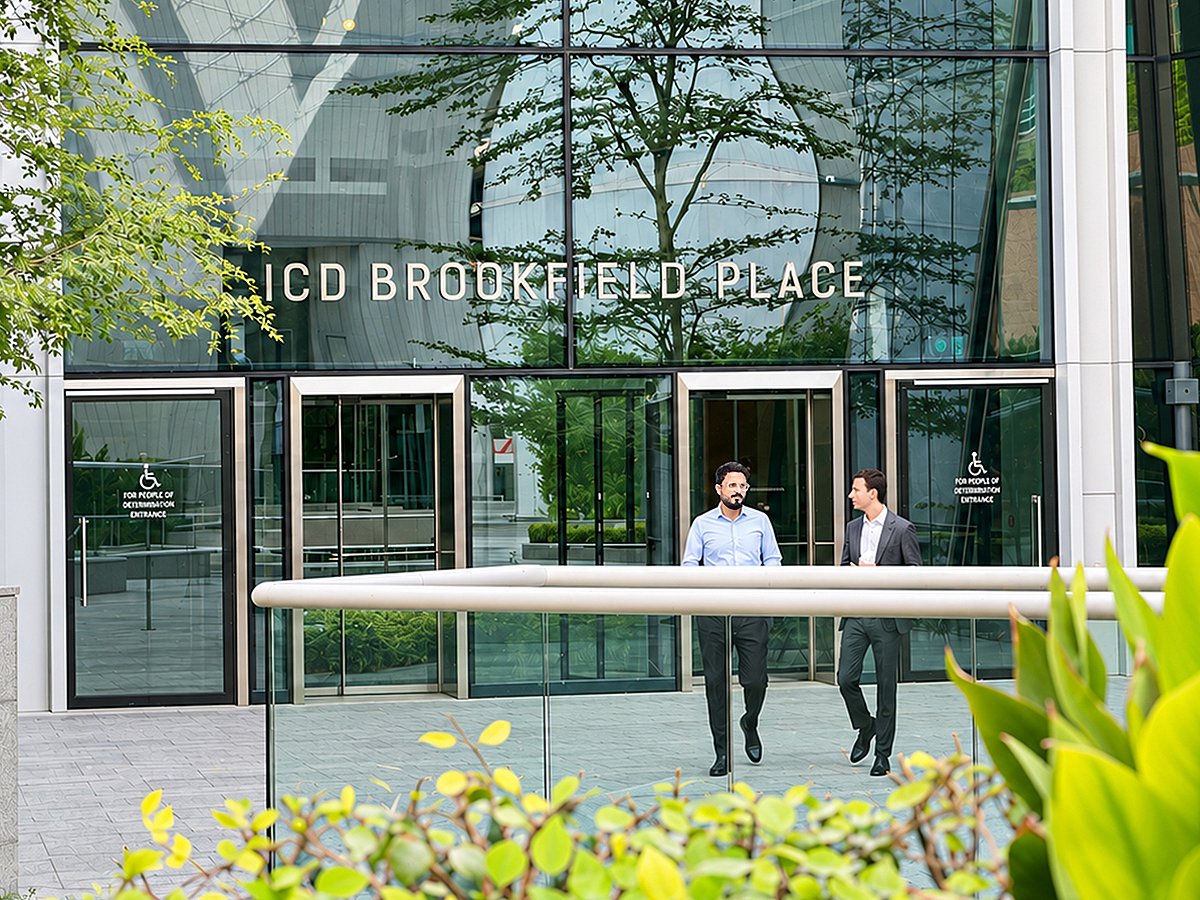
CMC Markets Middle East is located at ICD Brookfield Place at DIFC. Trading leveraged products carry significant risks. CMC Markets Middle East Limited is regulated by the DFSA.
For financial institutions operating in increasingly interconnected markets, access to liquidity when trading any asset is only part of the equation. The ability to execute orders reliably, integrate technology seamlessly and maintain business continuity when disruption occurs is becoming just as important. Across MENA, where commodities and foreign exchange activity remain significant, these demands are shaping how institutions evaluate their trading infrastructure and the partners behind it.
For CMC Markets Middle East, regulated by DFSA (CMC Markets ME) and part of the B2B division of CMC Markets group, serving banks, brokerages, hedge funds, asset managers, family offices and trading desks globally, this unique landscape places technology, execution and operational resilience at the centre of its proposition.
“Demand has moved beyond market access alone,” says Ahmed Soliman, Head of DIFC Office, CMC Markets Middle East.
He says institutions increasingly seek a connected operating model that brings together access to multiple markets and asset classes, integration with trading and risk systems, dependable execution and greater control over capital and exposure.
The challenge is particularly relevant in MENA, where liquidity conditions and regulatory frameworks differ across jurisdictions. “MENA is not one market; liquidity, market structure and rules vary by country and instrument,” Soliman explains. For institutions, the implication is clear: infrastructure must be flexible enough to accommodate local requirements while supporting growth across markets.
Technology, execution and the institutional proposition
CMC Markets ME brings together API liquidity, FIX connectivity and white label trading technology, alongside prime services, partnered solutions, professional services and reporting drawing on CMC Markets group’s capabilities and infrastructure. The proposition is designed to help institutions align trading infrastructure with their business models rather than rely on a one-size-fits-all approach.
“Institutions need a partner that can align execution, technology and platform capabilities with the way they run their business,” he says.
FIX/API connectivity enables institutions to integrate market data and execution into their own front ends, risk controls and operating workflows. White label technology, meanwhile, allows banks and brokers to launch branded trading propositions using CMC Markets ME’s infrastructure, potentially reducing the development and maintenance burden. Connectivity can be established directly or through technology hubs, depending on the institution’s requirements.
At group level, CMC Markets constructs its own prices and tailors pricing and risk settings by client and asset. Execution and available depth remain dependent on the instrument, order size, trading session and prevailing market conditions, but as a price maker – not just a price taker – CMC Markets can present its clients with a material advantage.
It’s essential to remember that a competitive spread alone does not necessarily translate into a favourable trading outcome. Institutions must also consider effective spread, total execution cost, fill and rejection rates, slippage, latency and market impact, particularly during periods of volatility. Assessing these measures across comparable orders can provide a more meaningful picture of execution quality, says Soliman.
Resilience: The test beyond normal trading conditions
Operational resilience is not simply a technology consideration for institutional clients. Any disruption can affect execution, exposure management, client operations and the ability to respond to rapidly changing markets. Continuity arrangements, clear escalation routes and timely communication therefore form an important part of the relationship with a trading infrastructure provider.
CMC Markets ME approach spans technology, connectivity and people, focusing on critical services, dependencies, recovery arrangements and testing, says Soliman. Multiple data centres, remote working capability, periodic business continuity and disaster recovery testing, and incident management procedures are all part of its measures.
When disruption occurs, the priorities are to assess client impact, restore affected services or activate workarounds, and coordinate recovery and communication. “In extreme scenarios, we pick up the phone and keep business moving – the original voice API,” he says.
Technology, operations and relationship teams coordinate incident responses, escalating to senior owners and external providers where required. Institutional clients receive updates through agreed channels as information is confirmed, including the issue’s scope, available workarounds and the timing of subsequent communication.
Recovery, however, is not the end of the process. Post-incident reviews examine causes and client impact, identify improvements to monitoring, procedures, recovery arrangements or testing, and track corrective actions to completion. For institutions, this process helps establish not only how a provider responds to disruption, but how it learns from it.
Trust, oversight and the next phase
Assessing a provider requires scrutiny beyond product capabilities and pricing. Soliman advises institutions to review the contracting entity and wider group separately, examining financial disclosures, capital and liquidity, regulatory permissions, client money or collateral treatment, recovery testing, third-party dependencies and incident communication.
Soliman points to CMC Markets regulatory standing and wider group credentials as part of the due diligence picture. The group brings more than 30 years of experience in multi-asset trading technology, with over 700 employees across 12 international offices and more than 150 institutional partners. It has a retail base of more than 2 million active traders and investors as of November 2025, reflecting its wider international scale.
“For MENA clients, we should identify the relevant provider, counterparty, service scope and local escalation contact clearly,” says Soliman.
Over the next three to five years, Soliman identifies the diversification of regional pools of capital, greater cross-border investment and trading, and rising expectations for automated connectivity, risk controls and measurable execution as developments likely to influence institutional trading in MENA.
As firms expand across markets and products, the challenge will be to increase capability without adding disproportionate operational complexity. CMC Markets is developing its institutional capabilities across API liquidity, trading technology, white label solutions and prime services, while its Middle East office focuses on regional requirements and connecting clients with appropriate solutions.
Ultimately, institutions must evaluate not only the markets a provider can access, but how effectively its technology integrates, how consistently it executes and how clearly, it responds when services are disrupted. In an increasingly demanding institutional environment, liquidity, technology and resilience are no longer separate considerations; they are increasingly interconnected measures of a provider’s value.
In association with CMC Markets
Sign up for the Daily Briefing
Get the latest news and updates straight to your inbox
Network Links
GN StoreAbout Gulf NewsTerms & ConditionsReach by GNSitemapContact usPrivacy PolicyGN FocusHave your sayWork with usAdvertise with usGulf News epaperPrinting Services
Download our app
© Al Nisr Publishing LLC 2026. All rights reserved.