Ramadan 2026: Likely start date, Eid Al Fitr and UAE public holidays
Fasting start dates to expected long weekend, what early moon-sighting predictions reveal
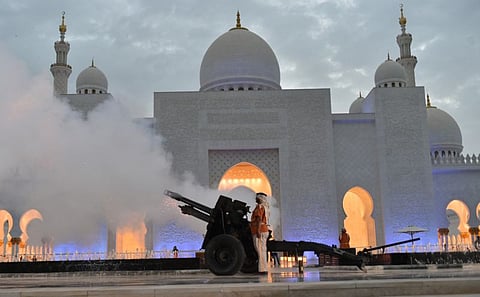
Dubai: Ramadan is only a few weeks away, with the holy month of fasting, reflection and charity expected to begin in mid-February based on early astronomical predictions, though its official start will depend on the traditional sighting of the crescent moon.
When does Ramadan 2026 begin?
According to Dubai’s Islamic Affairs and Charitable Activities Department (IACAD) Hijri to Gregorian Date Conversion tool, Ramadan is expected to start between February 17 to 19, 2026. According to Dubai's Islamic Affairs and Charitable Activities Department (IACAD), Ramadan is expected to fall on February 19 (official confirmation will depend on the traditional moon sighting).
Recently, Sharjah Academy for Astronomy, Space Sciences and Technology (SAASST) forecasted that there is stronger chance of the holy month to begin on Thursday, February 19, 2026. But the official announcement is made on the eve of the month by the UAE Moon-Sighting Committee.
Ramadan, the ninth month of the Islamic calendar, is observed by fasting from dawn to dusk, engaging in spiritual reflection, and performing acts of charity. Like all Hijri months, its start is confirmed only after the crescent moon is sighted.
How long will Ramadan last?
Ramadan can last 29 or 30 days, depending on when the crescent moon is sighted. The latest calendar issued by Dubai’s Islamic Affairs and Charitable Activities Department suggests a 29-day month this time.
When is Eid Al Fitr 2026?
The end of Ramadan ushers in Eid Al Fitr, a festival celebrating the completion of fasting. In the UAE, Eid Al Fitr 2026 is expected to fall on the evening of Thursday, March 19 to Friday, March 20, marking the start of the country’s first long weekend of the year.
The UAE designates the first three days of Shawwal, the month following Ramadan, as public holidays. The length of the holiday could be extended depending on whether Ramadan lasts 29 or 30 days.
If Ramadan lasts 29 days, the holiday will run from Friday, March 20, to Sunday, March 22 (Shawwal 1–3), giving those with a Saturday–Sunday weekend three days off.
Should the month extend to 30 days, one extra day would be added, creating a four-day weekend including Ramadan 30 (Thursday, March 19).
The UAE does have a provision to ‘transfer’ certain public holidays to create longer breaks, but it does not apply to Eid holidays. Due to the recent astronomical forecasts there is a strong outlook for Ramadan lasting for 29 days.
Will fasting hours be shorter in Ramadan 2026?
Muslims in the UAE will observe shorter fasting hours during Ramadan in 2026, marking a noticeable shift from the longer daylight fasts of recent years.
As the holy month moves earlier in the Gregorian calendar, the time between dawn and sunset will shrink, easing the physical demands of fasting and subtly reshaping daily routines across the country.
Astronomical calculations show that Ramadan in 2026 will fall at the transition between winter and spring, when daylight hours are still relatively moderate.
Are work hours shorter in UAE during Ramadan?
Working hours for both public and private sector employees in the UAE are set to be reduced during Ramadan, in line with the country’s labour rules and regulations.
According to MOHRE, private sector employees must receive a mandatory reduction of two working hours per day during Ramadan. The rule applies to all private sector workers, regardless of their religion.
For the public sector, circulars are usually issued by federal and local government entities to announce specific Ramadan timetables closer to the start of the month. These usually include shorter daily hours, flexible start times
Ramadan and school holidays in UAE
For families, the timing of Ramadan aligns with school spring breaks. Private schools in Dubai beginning their academic year in September will start spring break on March 16 and resume classes on March 30. Ministry of Education (MOE) curriculum schools will observe spring break from March 16 to March 29. This overlap allows families to enjoy the final days of Ramadan and Eid celebrations together, creating a longer festive period.


