The science behind fasting: Shocking findings from Japanese Nobel winner
Fasting makes body 'eat' damaged cells, cuts inflammation, triggers 'autophagy'
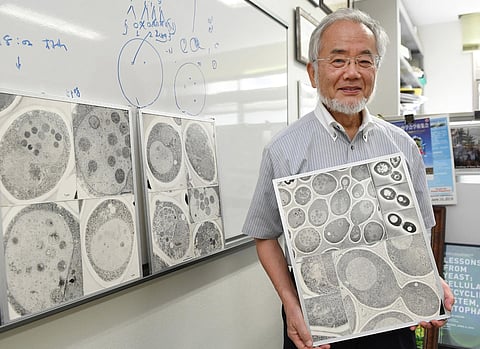
This year, Ramadan falls at the same time as Lent, when Christians also observe a season of fasting, giving, and prayer.
While giving, prayer and mindfulness do help the soul; fasting, too, helps the body. That help is immense, and scientific evidence to back it up is mounting.
Also In This Package


There's an even a bolder claim on fasting: If you want to live longer, claims by Johns Hopkins Medicine researcher Mark Mattson, fasting would go a long way.
Mattson, a neuroscientist, has studied intermittent fasting for 25 years.
He says our bodies have "evolved" to be able to go without food for many hours, or even several days or longer.
Mattson echoes the shocking findings of Japanese cell biologist Prof. Yoshinori Ohsumi, who discovered the biochemical mechanism of action behind it: "autophagy".
This phenomenon was discovered and published in a breakthrough study by Ohsumi, for which he won a Nobel in 2016.
Prehistoric norms: feast-famine cycle
Fasting was indeed the evolutionary default for Homo sapiens, shaping our biology over millennia as hunter-gatherers.
Before agriculture around 10,000 BC, humans foraged opportunistically, enduring involuntary fasts of days or weeks between successful hunts or gathers due to scarce, seasonal food.
This feast-famine cycle — hunting game or foraging berries took immense effort — trained our bodies for metabolic flexibility, activating survival mechanisms like autophagy during nutrient scarcity to recycle cells and sustain energy.
Ohsumi, following decades of research, won the Nobel Prize in Medicine for discovering the mechanisms of autophagy ("self-eating"), a fundamental cellular process that degrades and recycles damaged or unnecessary components.
How?
Using baker's yeast cells (simple single-celled organisms used to study basic cellular processes), he identified key genes that trigger autophagy, which acts as a "quality control" mechanism and survival response to stress — or "starvation".
Ohsumi figured out how cells recognise damaged parts, wrap them in membranes, and break them down for recycling.
Before his work, scientists knew autophagy happened but had no idea how it actually worked at the molecular level.
Modern shifts
Just 50 years ago, smaller portions, no 24/7 screens, and active outdoor lifestyles mimicked this better.
Today, constant internet, streaming, Netflix binging and gaming extend wakefulness, snacking, fuelling sedentary snacking and excess calories that spike obesity, type 2 diabetes (via insulin resistance), and (worse) heart disease risks — reversing our fasting-adapted resilience.
Reversal potential
Intermittent fasting echoes prehistoric patterns, restoring "autophagy" to clear cellular damage, lower inflammation, and boost insulin sensitivity —studies link it to countering these modern epidemics by mimicking ancestral stresses productively.
Key Benefits of Fasting
Following are the key benefits of fasting
Weight management: Fasting, particularly intermittent fasting, helps with weight loss and reduction of body fat (including harmful visceral fat) by creating a shorter eating window and encouraging the body to use fat reserves for energy.
Improved metabolic health:
Blood Sugar and Insulin: Fasting can lower blood sugar levels and improve insulin sensitivity, which may help prevent or manage type 2 diabetes.
Cholesterol and Blood Pressure: It can lead to lower blood pressure and reduced "bad" (LDL) cholesterol and triglyceride levels, contributing to better heart health.
Reduced inflammation: Fasting has been shown to reduce markers of inflammation in the body, which is linked to a lower risk of chronic diseases like heart disease and arthritis.
Enhanced brain function: Studies, primarily in animals, suggest that fasting may boost memory and cognitive function, and offer neuroprotective properties that could reduce the risk of neurodegenerative diseases like Alzheimer's and Parkinson's.
Cellular repair and autophagy: Fasting stimulates a cellular "cleanup" process called autophagy, where the body removes damaged cells and recycles old components, which may contribute to longevity and a healthier immune system.
Improved gut health: Fasting can alter the gut microbiome, promoting beneficial bacteria and allowing the digestive system to rest and repair.
Longevity: By promoting adaptive cellular responses and stress resistance, fasting may have the potential to delay aging and extend lifespan.
These benefits often stem from a metabolic switch where the body changes from burning glucose to burning stored fat for energy.
Ohsumi found that autophagy counters inflammation by removing inflamed, dysfunctional cells and pathogens, dialing down inflammatory signals like cytokines.
How fasting triggers autophagy
Ohsumi discovered the pathway through which fasting triggers autophagy, which acts like your cells' recycling crew.
More shockingly, he found that when nutrients run low (like during fasting), cells break down damaged proteins, organelles, and debris, clearing out junk that builds up from daily stress, aging, or poor diet.
This "self-eating" process recycles components into energy and new cell parts, promoting renewal.
Inflammation fits in as the troublemaker. Chronic inflammation — fuelled by constant eating, processed foods, or toxins — creates oxidative stress, damaging cells and piling up waste.
Ohsumi found that autophagy counters inflammation by removing inflamed, dysfunctional cells and pathogens, dialing down inflammatory signals like cytokines.
Studies, including those in Nature and Cell Metabolism, show fasting-induced autophagy reduces markers like NF-κB and IL-6, easing systemic inflammation.
For example, in intermittent fasting (e.g., 16:8 method), people often see lower C-reactive protein levels after weeks.
Triple action
Think of it as hitting "reset" on your cellular factory — less constant fuel means more time for cleanup, not production.
The trio links like this: Fasting activates autophagy, and clears inflammatory debris. This is proven to lower chronic inflammation, boost resilience against diseases like diabetes, Alzheimer's, and heart issues.
What is the optimal fasting protocol?
Most academic sources cite daily or extended fasting protocols for maximising autophagy.
This typically involves durations that deplete glycogen stores and shift the body into a deep repair state, based on research.
Daily protocols
Intermittent fasting like 16:8 (16 hours fast, 8-hour eating window) offers moderate autophagy activation after 14-17 hours. It is suitable for beginners, supporting routine cellular cleanup and inflammation reduction.
Early time-restricted feeding (eTRF), eating within 6-8 hours early in the day, enhances this by aligning with circadian rhythms for stronger autophagic flux.
Extended protocols
For peak autophagy, 24-48 hour fasts trigger significant cellular recycling, clearing more inflammatory debris and boosting resilience against diabetes, Alzheimer's, and heart disease — animal studies show heightened markers here.
Up to 72 hours maximises benefits like deep neuroprotection. This, however, is not for everyone.
More importantly, this requires medical supervision to avoid risks like hypoglycaemia.
Combine with hydration (water, black coffee) and avoid calories; individual factors like metabolism vary onset, so start gradually. Always consult a doctor, especially with conditions like diabetes.
[This content is for informational purposes only and is not intended as medical advice. Please consult your doctor or a qualified healthcare professional for proper guidance.]


