Ramadan in UAE: When should children start fasting?
Health experts weigh in on the right age and how parents can ensure safety during Ramadan
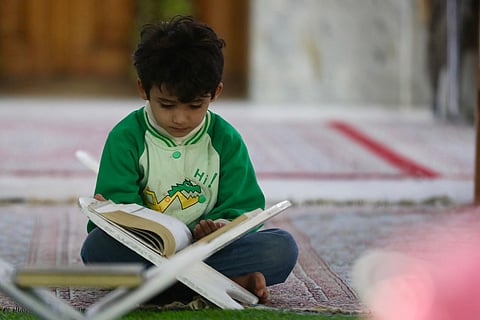
Dubai: A viral video of a doctor has stirred debate on social media after a 7-year-old boy reportedly almost died from low blood sugar while fasting for the whole day.
Various reports have revealed that the child began fasting in the morning and later went out to play around noon. He subsequently collapsed and was rushed to the hospital, where doctors found that his blood sugar had dropped below 70.
With this, the incident has raised an important question for families: At what age should children start fasting, and how can it be done safely?
Is fasting obligatory for children?
Religious scholars note that fasting during Ramadan is not mandatory for young children.
According to Islam Q&A, an educational platform that provides answers based on religious texts, fasting is not obligatory for children.
"The age at which parents should start to teach their children to fast is the age at which they are able to fast, which will vary according to each child’s physical makeup."
Similarly, Islam Stack Exchange, a website dedicated to scholarly discussions on Islam, said several factors determine when a child can begin fasting.
“The right age a child should experience fasting is really depending on the child, its health, culture, customs, etc."
What do doctors in the UAE say?
Paediatricians in the UAE have stressed that health must come first. Dr. Sparsh Pasi, paediatrician at Mediclinic Al Sufouh, has warned that poor eating habits during Ramadan can lead to dietary gaps and nutrient deficiencies that may affect a child’s growth and development.
"Children can fast during Ramadan as long as their parents closely monitor their eating habits. If the child has an underlying medical condition, however, it is advised to consult a physician before allowing him/her to fast," stated Pasi on Mediclinic's website.
"It’s best to start your children’s fasting no earlier than nine years old with the optimum age to begin fasting being between nine and 14 years for boys and girls."
Pasi has also stressed the importance of monitoring children throughout the holy month, particularly their energy levels and signs of fatigue.
Gradual approach
From a medical standpoint, the appropriate age for fasting depends on the child’s overall health and build. Generally, healthy children may start fasting from around 10 years of age but should never be forced if they feel unable to continue.
Dr. Abeer Khayat, paediatrician at American Hospital Dubai, has noted that readiness varies from child to child.
"If a child shows interest in fasting at younger age, he or she can be encouraged to try. However, in the presence of illness or poor general health parents should not allow them," said Khayat on the American Hospital’s blog.
Moreover, she has mentioned that by puberty or around 15 years of age, children can fast as adults according to their faith and beliefs.
Khayat has also highlighted that fasting ability is closely linked to a child’s overall lifestyle.
“It includes a healthy diet and eating habits, establishing sleep hygiene, staying physically active and avoiding a sedentary lifestyle throughout the year,” explained Khayat.
She added, “If the parents are not sure about their child’s nutrition status, it would be advisable to have him or her checked by a paediatrician before allowing the child to fast.”
How to introduce fasting to children
In an exclusive interview with Gulf News, Dr. Vishrut Singh, specialist paediatrician at Aster Clinic Bur Dubai, has introduced four steps to familiarize children to fasting.
The half-day method: Start by allowing children to fast from breakfast until lunch, or from lunch until sunset. This helps them understand the sensation of hunger without risking dehydration or hypoglycemia.
Weekend trials: Introduce fasting on weekends or holidays first. This allows parents to monitor the child’s energy levels closely without the added physical or mental strain of a school day.
Focus on fluid intake: Before the fast begins (at suhoor), emphasise the importance of drinking water and eating slow-release carbohydrates (like oats or whole grains) to maintain energy levels.
The practice fast: Encourage younger children to participate in the traditions of Ramadan such as waking up for suhoor or breaking the fast at iftar without necessarily abstaining from food and water all day. This fosters a spiritual connection without physical risk.
“The transition to fasting should be a positive, gradual experience that builds confidence rather than causing physical distress,” Singh told Gulf News.
“Fasting should never compromise a child’s safety. If a child collapses or becomes unwell, the fast should be broken immediately. A balanced, medically informed, and spiritually supportive approach is always best.”
The bottom line
While many families encourage children to participate in Ramadan fasting as part of their spiritual upbringing, experts agree that there is no fixed age that applies to all.
Medical professionals have recommended a gradual approach and only if the child is healthy and willing. Above all, doctors have stressed that a child’s safety and wellbeing should always be the priority.