Trump says Iran ‘collapsing’ as Xi urges diplomatic Mideast solution
Iran faces expanded US pressure while Gulf oil markets brace for potential shocks

Highlights
We are closing this live coverage. For the latest updates, click here
'Unknown projectile' hits oil tanker off Oman
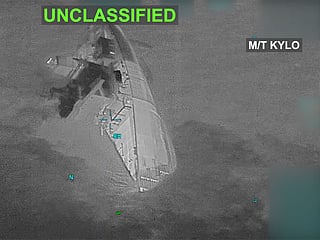
The UK Maritime Trade Operations (MTO) reported (via advisory/warning, referenced as Warning 120-26 in related posts) that an oil tanker was struck by an unidentified/unknown projectile about 9 nautical miles northeast of Ash Shishah, Oman.
The impact damaged the engine room, disabling the vessel reportedly transiting the US-protected lane. The crew was reported safe; environmental impact was not immediately known.
This fits a pattern of multiple projectile strikes on commercial vessels (especially tankers) off Oman near the Strait of Hormuz / Musandam area throughout 2026 amid US-Iran hostilities. UKMTO has issued repeated warnings of such incidents.
Iran predicts 'another defeat' for US after Washington's new sanctions
Iranian Economy Minister Ali Madanizadeh predicted on Monday "another defeat" for the United States, saying the Islamic republic had a "two-year plan" to counter Washington's new sanctions.
"They have done everything they could to test the determination of the Iranian people and the country's officials, but they have failed every time. It seems they wished to suffer yet another defeat," Madanizadeh told state television.
"We've been waiting for these plans for a long time, and the government is and was ready and has a two-year plan to manage these events," he added.
Pakistan army chief meets with Iran president in Tehran
Pakistan's powerful army chief Asim Munir met with Iranian President Masoud Pezeshkian in Tehran on Monday, state television reported, as Islamabad tries to mediate a resolution to the Middle East war.
The meeting took place after US President Donald Trump spoke last week with Munir, a US source familiar with the matter told AFP earlier on Monday.
Pakistan has played a key role in efforts to halt the conflict between Iran and the United States, brokering a memorandum of understanding in June, but peace negotiations currently appear stalled.
Munir also met in Tehran with Iran's parliamentary speaker and chief negotiator Mohammad Bagher Ghalibaf, as well as Mohsen Rezaei, head of the country's highest national security body, according to Iranian state television.
Iran's foreign ministry had said on Sunday that Munir's visit would be part of "Pakistan's ongoing efforts to help consolidate peace and security in the region".
US Treasury Secretary Scott Bessent on Monday laid out plans for the "economic asphyxiation" of Iran, expanding Washington's secondary sanctions threats and warning of dire consequences for countries that do not join the campaign.
US forces enforce Iran blockade as 71 vessels redirected
US forces aboard the USS George HW Bush remain on round-the-clock alert while enforcing the US blockade against Iran, US Central Command (CENTCOM) said.
As of August 24, CENTCOM forces had redirected 71 commercial vessels, disabled three and boarded two to enforce compliance.
More than 40 vessels carrying humanitarian aid have been allowed to pass, CENTCOM said.
UN offers to facilitate fertilizer transit through Hormuz
The United Nations offered on Monday to facilitate the transport of fertilizer that has been hampered by the disruption of shipping through the Strait of Hormuz due to the Iran war.
"The purpose is simple: to reduce immediate risks, support more orderly and predictable transit, and help rebuild the confidence necessary for diplomacy and de-escalation," Secretary-General Antonio Guterres told a press briefing.
He insisted that the UN "would not authorize passage" through the strait or "alter the rights or obligations" of states under international law.
The world body would rather serve as a "neutral facilitator," registering and verifying ships carrying fertilizer and related products.
Read more here.
Get updated faster and for FREE: Download the Gulf News app now - simply click here.
US to impose new Iran sanctions on tech, gold, aviation, shipping
The United States on Monday vastly expanded the sectors of the Iranian economy it is targeting with secondary sanctions, bringing five new areas under the threat of such actions.
"Treasury has issued determinations against five critical sectors - digital assets, technology, gold, aviation, and shipping - that the Iranian regime uses to try to prop up its failing economy," the Treasury Department said in a statement.
US to cut Iran money launderers from dollar system
US Treasury Secretary Scott Bessent said Monday that Washington would end access to the US dollar system for those laundering Iranian money, as he sought to ramp up pressure targeting Tehran months into war.
"Any entity that facilitates money laundering on behalf of Iran will be removed from the US dollar system. The clock just started ticking," Bessent told reporters at a press conference.
US sanctions to 'sever every economic lifeline' sustaining Iran
US Treasury Secretary Scott Bessent vowed Monday to destroy Iran's economy as he gave a major address on a new pressure campaign against Tehran almost six months into a war that has ground to a stalemate.
"Around the globe, our objective is to sever every economic lifeline that sustains this tyrannical regime until Tehran stands alone," Bessent said.
Iran’s rial falls past 2 million per dollar, Bessent says
US Treasury Secretary Scott Bessent said Iran’s currency had continued to plunge, crossing the 2 million rial-to-dollar exchange rate on Monday.
In a post on X, Bessent said: “Iran’s currency keeps plummeting: today, crashing through the exchange rate of 2 million rials to the US dollar.”
Over the weekend, Iran’s Central Bank Governor Abdolnaser Hemmati said falling oil revenues, tax income and social security contributions were affecting the country’s economy.
Israel's Netanyahu says Iran 'tried to kill' one of his sons
Israeli Prime Minister Benjamin Netanyahu said Monday that Iran attempted to assassinate one of his two sons, without offering further details.
Something incredible happened: Iran targeted one of my sons. Iran tried to kill one of my sonsBenjamin Netanyahu | Israeli Prime Minister
"Something incredible happened: Iran targeted one of my sons. Iran tried to kill one of my sons," Netanyahu said during a phone interview with Israel's Channel 14.
Trump spoke to Pakistan army chief ahead of Iran mediation: source
US President Donald Trump spoke last week to Pakistan's powerful army chief, who is visiting Tehran in a fresh attempt at mediation, a US source familiar with the matter told AFP on Monday.
The call between Trump and Asim Munir comes despite Trump saying last week that US talks with Iran were on hold for now, as the Iran war nears its six-month mark.
The source did not give further details of the call.
Pakistan said army chief Munir was leading a delegation traveling to Tehran on Monday as part of Islamabad's "ongoing efforts to help consolidate peace and security in the region."
Pakistan has played a key role in efforts to halt war between Iran and the United States, brokering a memorandum of understanding in June that subsequently broke down.
But the call with Trump also comes as Washington prepares to launch an "economic war" on Iran that would target Tehran's trading partners - which include neighboring Pakistan.
Stocks, oil slip ahead of US threat of economic war against Iran
Oil prices eased after strong gains last week while stock markets mostly faltered on Monday as investors awaited details of a US plan to impose massive economic pressure on Iran to end the Middle East war.
Wednesday's earnings report from chip giant Nvidia and Thursday's opening of the annual gathering of central bankers in Jackson Hole were also adding to caution on stock markets.
In New York, the Dow was trading higher at late-morning trading, but the wider S&P 500 and the tech-heavy Nasdaq were lower.
In Europe, London closed up, with Paris and Frankfurt both ending the session lower.
"Trade tensions are back in the headlines this morning following the US and Canada's failure to reach a trade agreement, tensions in the Middle East continue to disrupt oil flows, and debt levels across the so-called developed world keep rising," said Ipek Ozkardeskaya at Swiss Quote.
Saudi Arabia's shipping company confirms Red Sea vessel incident
Saudi Arabia's national shipping company, Bahri, confirmed that the vessel AMZAN (IMO: 9693745) was involved in a security-related incident in the Red Sea on August 24.
Bahri said all crew members are safe and accounted for, with no injuries reported.
The company said it remains in continuous communication with the vessel and is coordinating with relevant authorities and maritime stakeholders while monitoring developments.
Houthis claim attack on Saudi oil tanker in Red Sea
Yemen's Houthis said on Monday their forces hit a Saudi oil tanker in the Red Sea with a ballistic missile, as the Iran-backed rebels pursue a maritime blockade of the kingdom.
"The strike was accurate and direct, resulting in a fire breaking out aboard the vessel and causing a number of other ships that were present in the target area to flee," the Houthis said in a statement.
"This targeting comes as part of the implementation of the Armed Forces' decision to ban maritime navigation by the Saudi enemy."
Vessel traffic remains active through Hormuz and Bab El Mandeb
Traffic through Hormuz and Bab El Mandeb rose last week, but the underlying mix showed shifting risks, according to Kpler data.
Hormuz crossings increased 2.5 per cent to 121, while laden transits fell 27 per cent. Sanctioned crossings rose to 16, with Iran’s unilateral routing scheme accounting for 46.3 per cent.
Bab El Mandeb crossings rose 3.1 per cent to 269. Dark transits declined, while sanctioned and shadow fleet crossings remained broadly flat at 74 combined.
The data point to weakening commercial activity in Hormuz, while Bab el-Mandeb remains resilient despite ongoing threats.
Trump says Iran 'collapsing' ahead of sanctions announcement
President Donald Trump said Monday that Iran is "collapsing" hours before the US government was set to announce details of what it says will be crushing sanctions against Tehran.
"IRAN IS COMPLETELY COLLAPSING!!!" Trump posted in his trademark all-caps style on his social media platform Truth Social.
China's Xi urges 'diplomatic' Mideast solution in talks with Jordan's king
Chinese President Xi Jinping urged a "diplomatic" solution to the Middle East crisis as he told the King of Jordan on Monday that the sovereignty of countries in the region should be respected.
Xi told King Abdullah II during talks in Beijing that China values Jordan's "unique and important role in the region", which was thrown into crisis after the United States and Israel launched strikes against Iran on February 28.
"China has always advocated for a comprehensive ceasefire (and) resolving disputes through political and diplomatic means," Xi said, according to a Chinese foreign ministry statement.
"(China) believes the sovereignty and security of regional countries including Jordan should be respected," Xi said.
The Jordanian king has been on an official visit to China since August 18 - his ninth trip to the country since taking the throne in 1999.
Iran central bank chief says currency weakness 'temporary'
The governor of Iran's Central Bank Abdolnaser Hemmati on Monday said the depreciation of the country's national currency was "temporary" as the Iranian Rial, already battered by war, plummeted further in value.
The currency has lost nearly 10 per cent of its value over the last two weeks, having already plunged early in the war, with the United States set on Monday to lay out its plans for "economic warfare" against Tehran.
"These increases (in prices of foreign exchanges) are temporary, meaning they fluctuate," Hemmati said, according to the video of his remarks aired on state TV.
He blamed "American political propaganda" for much of the economic pain affecting Iran, adding that he was sure "the situation will improve and the problems will be resolved."
Iraq pushes back deadline for factions to disarm
A senior Iraqi official pushed back a September 30 deadline for pro-Iran factions to hand over their weapons, without offering an explanation for the move or providing a new date.
Iraq has come under pressure from the United States to rein in armed factions, particularly those close to Iran.
The US and Iran have been at war since February 28, drawing in other countries in the region as well as non-state groups backed by the Islamic republic.
Trump’s ‘economic D-Day’: Who gets hit harder in Iran?
The rial is collapsing, inflation is eating into incomes and ordinary Iranians are struggling to afford everything from food to medicine. Yet decades of sanctions have taught Tehran not only how to evade Western pressure, but how to shift much of its cost onto its own population while protecting the institutions essential to the regime’s survival.
That uncomfortable reality lies at the heart of US President Donald Trump’s latest attempt to bring Iran to its knees economically.
US Treasury Secretary Scott Bessent declared on Monday that an “economic D-Day” had begun against Tehran, promising the “single greatest financial offensive ever” and warning that countries continuing to enable the Islamic Republic risked becoming “global pariahs”, AFP reported.
Iran responded with defiance. Read full story here.
South Korea says US cancels joint marine drill over Iran war
South Korea said on Monday that the United States had cancelled a large joint amphibious landing exercise scheduled for next month due to constraints on force availability caused by the war with Iran.
The biennial Ssangyong drills involve marine forces from South Korea and the United States and are designed to strengthen combined operations, typically involving warships, aircraft and ground forces rehearsing amphibious landings.
The cancellation follows US President Donald Trump's order last week to scale down the separate annual Ulchi Freedom Shield exercises, cutting the joint drills from 11 days to five.
Trump at the time cited their high cost and said they sent an "inappropriate and hostile" signal to North Korea, while highlighting his relationship with its leader, Kim Jong Un.
"The US Marine Corps formally notified our forces in June that its ability to deploy forces during this year's Ssangyong exercise would be constrained due to the situation in the Middle East," Han Seung-jeon, a spokesman for the South Korean Marine Corps, told reporters at a news briefing.
Tanker struck by unknown projectile off Saudi Arabia
The UK Maritime Trade Operations (UKMTO) said it received a report of an incident involving a tanker about 63 nautical miles west of Yanbu, Saudi Arabia.
According to the vessel’s Company Security Officer, the tanker was struck by an unknown projectile, causing a fire on the main deck.
All crew members are safe and accounted for, while no environmental impact has been reported, UKMTO said.
Iran's rial currency hits new record low
Iran’s currency hit a new record low Monday as Washington prepared to announce new sanctions it said would be an “economic D-Day” and would add further pressure on an economy already battered by previous sanctions and a US naval blockade.
The rial dropped to 2.02 million to the U.S. dollar as trading opened on informal currency markets. Iran’s official Central Bank rate stood at around 1.5 million rial to the dollar, but the informal rate is what most Iranians pay.
The currency had already been under pressure before the US and Israel attacked Iran on Feb. 28, with double-digit inflation and negative growth, but has been hitting new record lows as nearly six months of war have taken an even greater toll.
Iran dismisses US threat of 'economic D-day'
Iran on Monday dismissed Washington's declaration of a massive economic pressure campaign, saying it disproved US claims to have dismantled Tehran's military and nuclear capabilities.
"Your narrative doesn't add up: you say that Iran's military power has been 'dismantled', 100% of its military factories 'destroyed' and its nuclear program 'buried'," Kazem Gharibabadi, deputy foreign minister, said in a post on X.
Yet, he added, "there is a need for 'the largest financial invasion in history' and the mobilisation of 'all institutions and powers' of the United States! Is this a victory or an admission of America's defeat?"
Earlier, US Treasury Secretary Scott Bessent wrote in the Financial Times that Washington was launching the "single greatest financial offensive marshalled against an adversary" -- calling it an "economic D-Day".
Iran says France's move to expel two of its diplomats 'illegal'
Iran's foreign ministry said on Monday that France's move to expel two Iranian diplomats in response to Tehran's ban on two French diplomats was "illegal".
"The action that France took is an illegal action in response to Iran's legal action, and is in no way helpful to bilateral relations," said ministry spokesman Esmaeil Baqaei in a weekly press conference.
Iran warns of 'consequences' for countries joining US economic pressure
Iran's foreign ministry on Monday warned countries of "consequences" if they join an economic pressure campaign against the Islamic republic by the United States.
"The necessary warnings have definitely been given, because any complicity with America in carrying out its aggressive actions against Iran will definitely have its own consequences," ministry spokesman Esmaeil Baqaei said in a weekly press briefing.
Greece moves Patriot system over reported Iran threats to US bases: media
The Greek military on Monday moved one of its Patriot missile interceptor systems to the island of Crete in response to Iranian threats to hit US military bases in Europe, media reports said.
The battery was moved from the eastern island of Karpathos to Crete, where there is a major US base at Souda, the reports said. Media images showed the Patriot system on a truck waiting to be loaded on a barge.
Oman top diplomat to visit Iran to discuss Hormuz Strait
Oman's foreign minister will travel to Iran on Tuesday, Iran's foreign ministry said, as Tehran and Muscat seek a way to regulate the passage of ships through the Strait of Hormuz.
Badr al-Busaidi will hold the "ongoing political consultations between the two sides, as two littoral states of the Strait of Hormuz, to help strengthen peace and security in the region," Iran's foreign ministry spokesman Esmaeil Baqaei said in a statement on Monday.
"The visit is aimed at strengthening Iran-Oman bilateral cooperation and al-Busaidi will meet with Iran's Foreign Minister Abbas Araghchi to discuss bilateral and regional issues," Baqaei added.
Oil falls as Trump pledges economic war on Iran
Oil prices fell on Monday as investors braced for details of a US plan to isolate the Iranian economy that President Donald Trump billed as the "most crushing" financial operation ever against Tehran.
Asian stocks were mostly down in early trading, with South Korea's tech-rich Kospi falling 1.4 percent after Samsung Electronics said it spent a massive $80 billion to buy back its own shares following weeks of turbulent trading.
Iran touts regional security bloc, alternative trade to blunt US pressure
Iranian Parliament Speaker and chief negotiator Mohammad Bagher Ghalibaf sarcastically derided the economic and foreign policy strategies of the US, asserting that Iran will bypass these "unjust sanctions" by deepening economic ties with neighbouring countries and moving toward bilateral trade using national currencies rather than the US dollar. He also announced that Tehran has already received "numerous messages" from neighbouring countries regarding a new, independent regional security order that bypasses US influence entirely.
Iran is also trying to link security with trade. Ghalibaf's latest statement specifically mentioned economic cooperation alongside security arrangements.
Tehran wants neighbouring states to have an economic stake in keeping regional trade, energy flows and transportation networks functioning, of which the proposed regional approach to the Strait of Hormuz is the foremost example.
Oman has proposed a regional management system involving Iran and other parties, with voluntary fees for navigation and safety services, modeled partly on arrangements around the Strait of Malacca, Reuters reported.
US‑Israel war on Iran: Recent developments
Day 170: US-Iran tensions: Trump calls Hormuz ‘American territory’, warns Iran on nuclear weapons
Day 169: Oman, Iran discuss resuming talks on Strait of Hormuz
Day 168: US-Iran conflict: Trump says Iran situation is ‘so good
Day 167: Trump says no talks planned; UAE detects Iranian missiles
Day 166: Israel strikes Lebanon; Oman holds Hormuz talks
Day 165: US-Iran tensions rise over Trump’s Hormuz claim
Day 164: Iran demands faster US exit from Middle East
Day 163: 2 ADNOC vessels attacked in Hormuz; no injuries
Day 162: Trump says US has ‘total control’ of Strait of Hormuz
Day 161: Tehran: Hormuz stays shut as US-Iran diplomacy push continues
Day 160: Tehran reshuffles military