The Egyptian Nightjar returns after five years to confirm the importance of Wadi Wurayah as a key stopover for migratory birds
Long-term monitoring reveals remarkable site loyalty among migratory birds
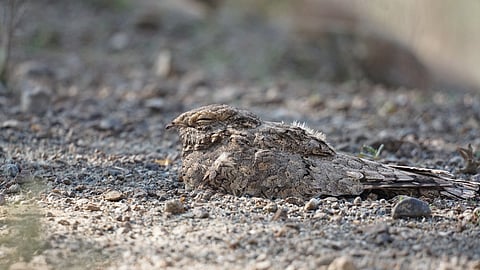
Fujairah: The Fujairah Environment Authority (FEA) has recorded a major environmental milestone at Wadi Wurayah Biosphere Reserve, reinforcing its standing as one of the UAE’s most important habitats for migratory and nocturnal birds, particularly within the Hajar Mountains.
During routine environmental monitoring in January 2026, field teams successfully re-sighted the Egyptian Nightjar — a rare migratory species — five years after it was first documented at the reserve in December 2021.
When the bird was initially recorded, it was fitted with an identification ring, fully documented, and its vital data — including weight and physical measurements — were registered before it was released at the same location to continue its migration. Remarkably, the monitoring team recaptured the exact same bird during this year’s survey.
The rediscovery was made possible through FEA’s long-term bird ringing and monitoring programme, which enables scientists to track individual birds over extended periods and study their movement patterns and site fidelity.
Environmental experts said the return of the Egyptian Nightjar after such a long interval provides strong scientific evidence that Wadi Wurayah functions as a secure and reliable stopover and roosting site along regional migration routes.
The Egyptian Nightjar is a nocturnal, ground-nesting species that relies on undisturbed gravel plains and open wadis. Its repeated return highlights the ecological stability of the reserve and reflects the success of long-term protection and environmental management measures implemented in line with international best practices.
Officials noted that the discovery also challenges previous assumptions about bird migration in the region, confirming that many migratory species do not merely pass through the eastern Arabian Peninsula, but repeatedly return to Wadi Wurayah as part of their seasonal journeys.
This strong site fidelity underscores the reserve’s role as a critical biodiversity hotspot, supporting essential ecological processes such as migration and sustaining wildlife in arid mountainous environments.
The finding forms part of a comprehensive wildlife monitoring programme conducted by FEA, which documents migratory, transient and resident bird species that depend on the reserve’s permanent water pools, wadis and gravel plains.
Collectively, the results provide important scientific evidence of Wadi Wurayah’s international ecological value and further strengthen its nomination file for inclusion on the UNESCO World Heritage List. Detailed scientific analyses of the monitoring data are currently being prepared for publication in peer-reviewed scientific journals.


