Rain alert in UAE: Seven weather-related traffic fines every motorist must know
Authorities have urged drivers to exercise maximum caution and reduce speeds
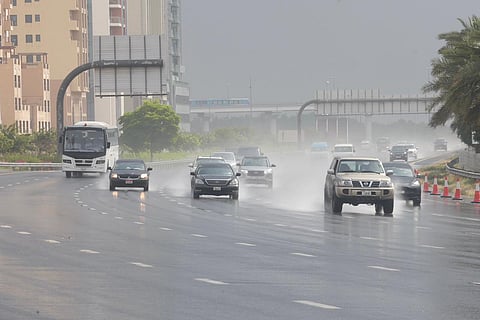
Dubai: Rain, strong winds and unstable weather conditions are expected across the UAE through Friday, according to the National Centre of Meteorology (NCM), prompting authorities to urge residents and motorists to exercise caution.
With changing road conditions and reduced visibility, officials have warned of strict penalties for unsafe behaviour, particularly near flood-prone areas and emergency response zones. During such weather, motorists should also be aware of specific traffic fines to avoid violations and ensure safe driving.
1. Using your mobile phone to take photos
Fine: Dh800, four black points
It may be tempting to capture photos but police strictly prohibit using phones while driving or taking or publishing photos while driving. Taking pictures of accidents or victims carries harsher penalties, including six months in jail or fines between Dh150,000 and Dh500,000, or both.
In 2024, Abu Dhabi Police highlighted eating while driving as one of the most dangerous habits, alongside mobile phone use, which remains the leading cause of distracted driving incidents. Even a brief lapse in attention can cause swerving, delayed reactions, or missed signals, endangering all road users
2. Obstructing authorities during emergencies
Fine: Dh1,000, four black points, 60-day vehicle impoundment
Obstructing traffic, ambulance, or rescue operations during emergencies, disasters, rains, or floods is a serious offence.
3. Not abiding by changed speed limits
Police recommend that drivers slow down when it rains, often communicated via official social media channels and Variable Message Signs (VMS). VMS alerts take priority over posted speed limits and inform drivers about accidents, congestion, construction, or adverse weather.
Exceeding the adjusted speed limit can result in fines. For instance:
Driving 20km/h over the limit: Dh300 fine
Driving over 80km/h above the limit: Dh3,000 fine, 23 black points, 60-day impoundment
4. Driving with hazard lights on
Fine: Dh500, four black points
Using hazard lights while driving is unsafe in low visibility, as all four indicators turn on, making it impossible to signal lane changes. Only use hazard lights when stationary or in a breakdown situation. If visibility is extremely poor, pull over safely until conditions improve.
5. Changing lanes without an indicator
Fine: Dh400
Failing to indicate lane changes in poor visibility or wet conditions is highly dangerous. Police regularly run awareness campaigns to improve driving behaviour across the UAE.
6. Entering flooded valleys or water-logged areas
• Fine: Dh2,000
• Penalty: 23 black points and 60-day vehicle confiscation
Authorities urge motorists to avoid valleys, flood-prone locations and areas with accumulated water during heavy rain. Poor visibility, strong downdrafts and fast-moving water significantly increase the risk of serious accidents.
Under Ministerial Resolution No. 227 of 2023, entering a valley while water is flowing carries a fine of Dh2,000, 23 black points and vehicle impoundment for 60 days.
Drivers are also warned not to approach open or elevated areas during lightning and thunderstorms. Ignoring safety instructions while driving in rainy conditions can result in severe accidents and heavy penalties.
7. Gathering near valleys, dams or flooded areas
• Fine: Dh1,000
• Penalty: 6 black points
Stopping or lingering near valleys, dams or flooded areas during rain, including for taking photos or watching water flow is considered an offence and poses a serious safety risk.
Important note: Motorists are advised to stay updated on traffic and weather alerts issued by local police authorities, the Ministry of Interior (MOI), the National Centre of Meteorology (NCM) and the National Emergency Crisis and Disaster Management Authority (NCEMA).


