US-Iran war: What UAE residents need to know today (July 19)
US-Iran confrontation spreads across Gulf as UAE condemns attacks, urges calm
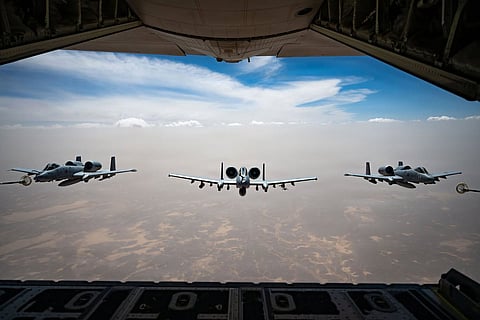
The security situation across the Gulf remains closely monitored as the US and Iran exchange fresh strikes and warnings, with developments affecting regional travel, shipping and diplomatic efforts.
The UAE has called for immediate de-escalation, condemned attacks on civilian infrastructure and urged restraint as tensions continue to rise.
Get updated faster and for FREE: Download the Gulf News app now - simply click here.
Here are the key updates UAE residents need to know:
UAE calls for immediate de-escalation
The UAE has expressed deep concern over the latest regional developments and called for an immediate halt to the escalation.
The Ministry of Foreign Affairs urged all parties to exercise maximum restraint, warning that continued military action could push the region towards further instability.
The UAE called for:
An immediate end to hostilities.
A return to negotiations.
Safe and uninterrupted navigation through the Strait of Hormuz, which is vital to global trade and energy supplies.
The UAE also condemned attacks on civilian infrastructure, including schools, hospitals, desalination plants, energy facilities, transport hubs and residential areas, saying such actions violate international law.
UAE condemns attacks on Bahrain, Kuwait and Jordan
The UAE strongly condemned renewed Iranian missile and drone attacks targeting Bahrain, Kuwait and Jordan.
The Ministry of Foreign Affairs said the attacks represented a violation of the sovereignty of the three countries and threatened regional security and stability.
The UAE expressed full solidarity with Bahrain, Kuwait and Jordan and backed measures aimed at protecting their security.
US launches new strikes on Iran
The US military launched a fresh wave of airstrikes on Iran, saying the operation targeted the Islamic Revolutionary Guard Corps (IRGC) following Iranian attacks that killed two US service members in Jordan.
US Central Command (CENTCOM) said the strikes began at 2200 GMT on Saturday and aimed to:
Reduce Iran’s ability to threaten commercial shipping through the Strait of Hormuz.
Target IRGC forces linked to attacks on US troops.
The strikes followed Iranian missile and drone attacks on Al-Azraq Air Base in Jordan, which killed two US service members, left one missing and injured four others.
Iran warns US after ending MoU commitments
Iran said it is no longer bound by the 14-point Memorandum of Understanding (MoU) signed with Washington last month, accusing the US of violating the agreement through renewed military action.
Iranian Foreign Ministry spokesperson Esmail Baghaei said the agreement was based on reciprocal commitments and claimed the US had failed to meet its obligations.
Iran said its military actions were carried out in self-defence and targeted US military assets, while accusing the US and Israel of striking civilian infrastructure.
Iran’s leader warns of ‘unforgettable lessons’
Iran’s Supreme Leader Mojtaba Khamenei warned that the US would face “unforgettable lessons” if attacks continued.
He said Washington had shown that its commitments could not be trusted.
Iranian military adviser Major General Mohsen Rezaei warned that Tehran would go beyond proportional retaliation if US strikes continued.
Gulf tensions increase
The conflict has spread across the Gulf, with reports of strikes affecting military and civilian infrastructure.
Recent developments:
Jordan said its air defences intercepted multiple Iranian missiles.
Bahrain reported repelling fresh attacks.
Kuwait accused Iran of targeting an oil facility, water plants and power infrastructure.
Iran also claimed it launched drone attacks on two US military facilities in Kuwait, targeting Camp Udairi and Ali Al Salem Air Base. The claims have not been independently verified.
UAE investigates false Dubai explosion report
The UAE Public Prosecution has expanded its investigation into the publication and circulation of a false report claiming explosions were heard in central Dubai.
UAE Attorney-General Counsellor Dr Hamad Saif Al Shamsi said authorities have questioned the reporter and summoned those involved in preparing, approving and publishing the report.
The investigation will examine:
The roles of those involved in producing the report.
The verification process followed before publication.
Compliance with legal and professional standards.
The Attorney-General said the withdrawal of the report and publication of an apology does not prevent further legal action if responsibility is established.
UAE-Kuwait flights disrupted
Air travel between the UAE and Kuwait has been affected amid rising regional tensions, with Etihad Airways, Emirates and Air Arabia cancelling several services.
Etihad Airways: Cancelled flights EY653 and EY654 between Abu Dhabi and Kuwait on July 19 and 20 due to operational reasons.
Emirates: Cancelled multiple flights operating between Dubai and Kuwait.
Air Arabia: Cancelled several services between Sharjah and Kuwait as well as Abu Dhabi and Kuwait.
flydubai: No updates have been issued on Kuwait flights. The airline reported a cancellation on the Dubai-Abha route.
Passengers have been advised to check directly with airlines for the latest updates as regional developments continue to affect flight schedules.
Iran reports rising casualties and damage
Iranian officials said US strikes have hit civilian infrastructure, including airports, railway stations, bridges, power facilities and desalination plants.
Iran’s Health Ministry said:
At least 50 people have been killed.
More than 500 people have been injured since the latest phase of fighting began.
Authorities also reported electricity and water disruptions in parts of southern Iran following strikes on power and desalination facilities.
US issues worldwide travel caution
The US Department of State has issued a global travel caution, warning Americans about a complex security environment and the possibility of further escalation.
The advisory warned that:
Flight cancellations and temporary airspace closures could disrupt travel.
US diplomatic facilities have previously been targeted.
Groups supportive of Iran could target US interests and locations linked to Americans worldwide.
Americans, especially those in West Asia, have been urged to monitor developments and follow guidance from US embassies and consulates.
What UAE residents should look out for
As regional tensions continue, UAE residents should rely on official announcements, avoid sharing unverified information and monitor updates from authorities, airlines and relevant organisations. Residents and travellers should remain aware of possible changes to flight schedules, regional airspace restrictions and travel advisories, while essential services in the UAE continue to operate normally.
The UAE has reiterated its commitment to regional stability and called for restraint, dialogue and the protection of civilian infrastructure.


