Big Nafis changes: Unlimited child support, new salary perks for Emiratis
Expanded benefits aim to boost Emirati jobs, family stability and growth
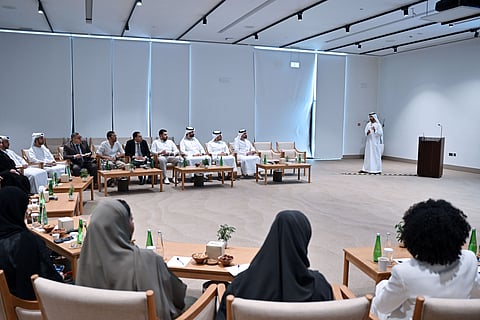
The Emirati Talent Competitiveness Council (ETCC) has announced sweeping enhancements to the Nafis Program, following its extension through 2040. The reforms introduce expanded financial benefits, broader eligibility, and new mechanisms aimed at strengthening family stability, boosting Emirati workforce participation, and enhancing national talent competitiveness in the private sector.
The updates align with the objectives of the Year of Family 2026, reinforcing a policy direction that places family wellbeing at the centre of economic development.
Expanded child allowance with no cap
Among the most significant changes is the removal of the cap on the number of children eligible under the Child Allowance Scheme for Emiratis working in the private sector. The revised policy enables families to receive financial support without limitation on family size, a move designed to enhance quality of life and promote long-term social stability.
Get updated faster and for FREE: Download the Gulf News app now - simply click here.
In addition, the scheme now includes children of Emirati mothers employed in the private sector, offering up to Dh3,000 per month in financial support—broadening the programme’s inclusivity and impact.
New salary support for families
The updated framework introduces a Salary Support Scheme for wives of Emirati men working in the private sector, with monthly support of up to Dh3,000. Eligibility criteria include a salary range of Dh6,000 to Dh15,000, a minimum of a bachelor’s degree, and specific family conditions such as having at least two children or five years of marriage. Exceptions apply to key professions, including healthcare workers, educators, and PhD holders from top-ranked global universities.
A parallel scheme has also been introduced for children of Emirati mothers, with eligibility requiring a salary between Dh6,000 and Dh20,000 and an accredited bachelor’s degree.
Standardised salary threshold and updated support packages
To enhance financial and career stability, the minimum salary threshold for eligibility across all Nafis support schemes has been standardised at Dh6,000 per month.
Under the revised Salary Support Scheme:
Bachelor’s degree holders may receive up to Dh6,000 monthly
Diploma holders up to Dh5,000
High School graduates up to Dh4,000
Individuals below High School level may receive up to Dh4,000 (married or with dependents) or Dh3,000 (single)
These adjustments reflect a more structured and equitable approach to supporting Emirati employees across varying qualification levels.
Phased implementation starting September 2026
The new policies will come into effect in September 2026 for new beneficiaries, while existing recipients will transition gradually over a period of up to three years. Under the revised mechanism, current support levels will be reduced incrementally by Dh500 every six months until they align with the new structure.
Special provisions will also apply to employees in free zones and sectors outside the oversight of the Ministry of Human Resources and Emiratisation and the Central Bank of the UAE, ensuring a smooth adjustment process tied to compliance with the Dh6,000 minimum salary requirement.
Pension contributions and employer role
The Nafis programme will continue to cover pension contributions for Emiratis in the private sector under the “Subscription” scheme. However, from September 2026, employers will assume responsibility for their share of pension contributions, reinforcing private sector accountability and sustainability.
Leadership perspective
His Excellency Ghannam Al Mazrouei stated that extending Nafis to 2040 reflects the UAE leadership’s forward-looking vision, emphasising investment in people as a cornerstone of national development.
He noted that the programme has played a critical role in strengthening Emiratisation, enhancing the competitiveness of national talent, and supporting labour market readiness for future demands. The latest updates, he added, represent a more inclusive and flexible framework that integrates social and economic priorities.
Strong track record and national impact
Since its launch in September 2021 with a budget of Dh24 billion, Nafis has exceeded expectations:
Over 176,000 Emiratis have benefited from the programme
More than 152,000 are currently employed across 32,000 private sector establishments
Women account for 74% of beneficiaries
More than 38,000 children have received support through the Child Allowance Scheme
Additionally, thousands of Emiratis have participated in specialised training and employment programmes, including healthcare and skills development initiatives, further strengthening workforce readiness.
A strategic shift towards inclusive growth
The latest reforms signal a strategic evolution of Nafis into a more mature, adaptable, and inclusive national framework. By integrating financial support with social considerations such as family structure and professional qualifications, the programme is positioned to play a central role in advancing sustainable economic growth and social cohesion in the UAE.
Nafis extended to 2040
A press conference was held to announce the details of extending the Nafis program through 2040, reinforcing its role as a cornerstone initiative for empowering Emirati talent and strengthening private sector participation.
Empowering National talent
Building a highly skilled and competitive workforce capable of innovation, while enhancing readiness to lead vital and future-oriented sectors.
Establishing a sustainable, high-quality Emiratisation ecosystem
Transitioning from quantitative Emiratisation to a model driven by competence and productivity, thereby increasing added value within the labor market.
Enhancing job and economic stability
Providing integrated support packages that ensure the continuity of Emiratis in the private sector, while improving quality of life and financial stability.
Supporting family stability and social cohesion
Implementing policies and programs that consider family needs and link workforce empowerment with the overall well-being of Emirati families.
Aligning National talent with future economy demands
Developing future-ready skills and enhancing workforce preparedness in line with ongoing economic and technological transformations.
Exceptional achievements
The number of Emiratis employed in the private sector has exceeded 176,000, including 16,271 holding work permits from other entities.
More than 32,000 private sector companies have hired Emirati nationals.
Since the launch of Nafis in 2021, over 159,000 Emiratis have joined and remained employed in the private and banking sectors.
Since the beginning of 2026 alone, more than 11,000 Emiratis have joined the private sector.
Over 160,000 citizens have benefited from financial support programs between 2021 and 2026.
A journey of success since launch
High-impact programs and initiatives
46 graduates completed the Nafis Leaders Program, designed to develop leadership capabilities in the private sector.
The Nafis International Program enrolled 30 participants, offering global training opportunities for Emirati talent.
Training and qualification programs
More than 3,500 students and graduates participated in the medical and healthcare sector development program.
Over 7,700 beneficiaries enrolled in programs such as Kafa’at, Khibra, and employment-focused training initiatives.
More than 65,000 individual career guidance sessions were delivered to support job seekers and private sector employees.
Key enablers
Around 90,000 job opportunities were posted on the Nafis platform to facilitate private sector employment.
A total of 235 winners were recognized across individual and corporate categories in the Nafis Awards, celebrating excellence in the private sector.
The Nafis Youth Council includes 15 members, serving as an active bridge of communication with young professionals in the private sector.

