Abu Dhabi completes global child research ethics project to protect children in studies
ECA project sets global standards for involving children in research and decision-making
The Abu Dhabi Early Childhood Authority (ECA) has completed a three-year global research project aimed at strengthening ethical standards for involving children in research and ensuring their voices are heard throughout the process.
Known as the Child Assent Project, the initiative is among the first of its kind and focuses on improving how researchers seek children’s informed agreement to participate in studies, while respecting their rights and abilities according to their age.
Get updated faster and for FREE: Download the Gulf News app now - simply click here.
The Authority said the project has helped expand global knowledge in child research ethics and produced practical tools and guidelines that support child-centred research in Abu Dhabi and beyond.
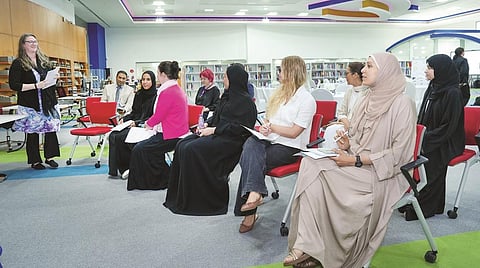
To mark the project’s completion, ECA organised a specialised workshop under its Research Grants Programme, bringing together more than 20 researchers to explore how the findings can be applied in future studies and policymaking.
The workshop is part of the 2026 Research Grants Cycle, which is supporting five research projects focused on early childhood development.
Saleha Al Azri, Director of Research and Knowledge Solutions at ECA, said the Authority views research grants as more than financial support.
“We see them as part of an integrated system that develops knowledge, builds researchers’ skills and connects research outcomes with policymaking,” she said.
Al Azri explained that the workshop was based on long-term research carried out in Abu Dhabi and included practical sessions, role-playing exercises and discussions to help researchers incorporate child assent into their work.
She added that the project fills an important gap in early childhood research by developing practical approaches that can be used locally and adapted internationally.
According to Al Azri, this year’s research grants focus on several priorities, including understanding the views of children and parents on education, exploring the role of Emirati culture in shaping children’s identity, using artificial intelligence and interdisciplinary research methods to better understand children’s experiences, and strengthening cooperation between families and schools.
She said the Research Grants Programme has supported dozens of research projects since its launch, produced scientific publications and trained more than 100 early-career Emirati researchers.
Dr Qasim Abdullah, Associate Professor at the United Arab Emirates University, said the workshop provided researchers with valuable knowledge and practical tools that will improve the quality of future studies involving children.
Dr Nadira Ghanimi, Assistant Professor and Head of the Family Medicine Department at the College of Medicine and Health Sciences at UAEU, said the programme highlighted the importance of treating informed assent as an ongoing process that respects children’s opinions and wellbeing.
She added that giving priority to children’s rights helps improve both the quality of research and the outcomes it delivers for families and society.


