Dubai gold slips as elevated US yields blunt safe-haven demand
The 24-karat rate fell to Dh495.75 as high yields continued to weigh on demand
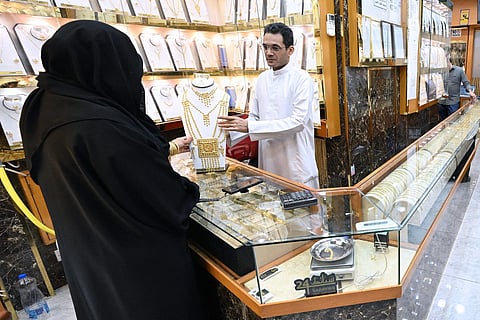
Dubai: Gold prices in Dubai fell on Friday, giving back part of this week’s recovery as elevated US Treasury yields and renewed tensions around the Strait of Hormuz kept investors cautious. (Check latest UAE gold prices here, alongside prices in Saudi Arabia, Oman, Qatar, Bahrain, Kuwait, and India.)
The 24-karat variety stood at Dh495.75 per gram at 12.47 pm, down from Dh497.25 on Thursday. The 22-karat rate slipped to Dh459 from Dh460.50.
Get updated faster and for FREE: Download the Gulf News app now - simply click here.
Friday’s decline leaves prices below the month’s peak but still above the lowest levels recorded at the beginning of July.
Prices remain volatile in July
The 24-karat rate began the month at Dh489.75 on July 1 before climbing to Dh503 on July 4 and July 5, its highest level so far this month.
Prices then fell to Dh490 on July 8, recovered to Dh497.25 on Thursday and eased again on Friday.
The 22-karat variety followed a similar path, rising from Dh453.50 on July 1 to a monthly high of Dh466 on July 4 and July 5. It fell back to Dh453.75 on July 8 before recovering to Dh460.50 on Thursday.
“Gold's recovery has lost steam after a brief rally with the market shifting back into a more cautious tone. The renewed escalation in geopolitical tensions surrounding the Strait of Hormuz has weighed on broader market confidence, and gold retreated back towards the 4,100 level," said Ahmad Assiri, Research Strategist at Pepperstone. "At the same time, crude oil has moved higher as markets price a greater probability of supply disruptions and hence feeding into greater inventories shortage.”
International gold traded near $4,115 an ounce after ending a three-day losing run in the previous session.
Renewed fighting in the Middle East has raised concerns over the movement of energy and other commodities through the Strait of Hormuz, while higher oil prices have added to inflation risks.
High interest rates limit gold’s appeal
Assiri said investors remained hesitant to build large positions while US Treasury yields stayed elevated and uncertainty continued over the Federal Reserve’s next move.
“Precious metal investors remain reluctant to build strong long positions as US Treasury yields stay elevated and uncertainty over the Federal Reserve's policy path persists. Adding to the pressure, higher energy prices resulting from the renewed tensions could delay the global disinflation process, and in turn, keeping yields elevated.”
Minutes from the Federal Reserve’s June meeting showed that some policymakers believed there was a case for raising interest rates, although borrowing costs were ultimately kept unchanged.
Higher interest rates generally reduce the appeal of gold because the metal does not pay interest.
Gold caught between rates and geopolitics
Gold has fallen by more than a fifth since the Iran war began in late February, with heavy profit-taking briefly pushing prices below $4,000 an ounce for the first time since November.
Assiri said the medium-term outlook remained constructive, although the market lacked a clear catalyst for a sustained recovery above $4,200.
“In my view, gold medium term outlook remains constructive relative to the significant selling pressure seen in recent weeks, but the near-term bias is still cautious. The market appears to have moved away from expectations of a decline towards the 3,900 region, yet it also lacks a convincing catalyst for a sustained move back above 4,200.”
Central bank purchases continue to provide support, with China adding to its gold reserves in June and extending its longest buying run since at least 2015.
“Until the market gains greater confidence on the direction of US interest rates, gold is likely to remain caught between geopolitical and the headwind of elevated rates,” Assiri said.
- With inputs from Bloomberg.