US-Iran crisis: What UAE residents need to know today (Sept. 1)
UAE intercepts Iranian drone as Hormuz tensions remain elevated
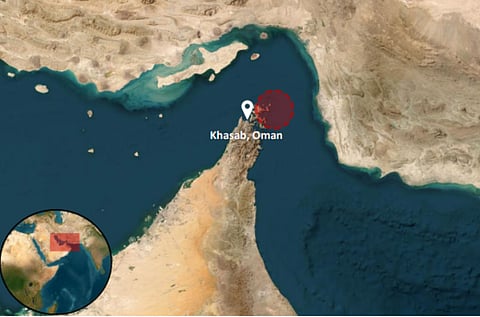
Security risks around the Strait of Hormuz remain elevated as renewed US-Iran military exchanges raise fresh concerns over shipping, oil and the safety of commercial vessels transiting the strategic waterway.
The UK Maritime Trade Operations (UKMTO) agency reported on Tuesday that a tanker was hit by three unidentified projectiles while completing an outbound transit of the Strait of Hormuz, about 17 nautical miles east of Khasab, Oman.
No casualties or environmental damage were reported, as authorities investigate. UKMTO urged vessels in the area to proceed with caution and report suspicious activity.
The incident shows why any new clash between Washington and Tehran can pose threats in the waterway, increase insurance and freight costs while driving up crude prices.
The developments follow US strikes on two Iranian rocket launchers on Larak Island near Hormuz and Iranian retaliatory claims involving ballistic missiles at American military positions in Jordan and the UAE.
The UAE says it intercepted a drone approaching from Iran over its territorial waters and has rejected Tehran’s claim that it successfully attacked Al Minhad Air Base near Dubai.
The escalation has renewed concerns over security, commercial flights and shipping through one of the world’s most important energy chokepoints.
The UAE Ministry of Defence said reports of a missile attack on Al Minhad were “false,” while separately confirming that the UAE Air Force dealt with an unmanned aerial vehicle approaching from Iran.
No casualties or damage have been publicly reported by UAE authorities.
Latest updates so far:
Oil prices extended gains on Tuesday after renewed US-Iran military exchanges and President Donald Trump’s warning that the United States would hit Iran “hard.”
The renewed conflict is raising concern that higher energy prices could keep inflation elevated and pressure central banks, including the US Federal Reserve, to maintain tighter monetary policy.
The market reaction has weighed on equities while supporting crude oil prices.
Iranian President Masoud Pezeshkian said Tehran would “immediately” take reciprocal action if the US returned to the terms of a June memorandum of understanding intended to end the US-Iran war.
Pezeshkian made the statement at a Shanghai Cooperation Organisation summit in Kyrgyzstan, according to the Iranian presidency.
He said: “I state explicitly that if the United States returns to its commitments under the aforementioned memorandum of understanding (MOU), the Islamic Republic of Iran will immediately take reciprocal action.”
Gold came under short-term pressure in early Asian trade, slipping to about $4,440.34 an ounce after trading near $4,454.68 earlier in the session; gold’s decline is attributed to rising oil prices and expectations of a more hawkish Federal Reserve, which can hurt non-yielding assets such as bullion.
Gulf oil exports have recovered to roughly two-thirds of pre-war levels, according to Goldman Sachs estimates reported by Bloomberg.
Important note: the 15 million to 16 million barrels-per-day figure refers to total oil exports from the Arabian Gulf, not necessarily all cargoes physically transiting the Strait of Hormuz, as per Goldman Sachs.
The rebound shows that Iran’s ability to disrupt global energy markets through Hormuz may be weakening, but flows remain below pre-war levels and the route remains exposed to attacks, military escalation and shipping-insurance risks.
What UAE officials said
The UAE Foreign Ministry called the latest Iranian drone incident a “dangerous escalation” and a blatant violation of the country’s sovereignty, security and stability.
It said the incident posed a direct threat to the safety of citizens and residents, and reserved the UAE’s right to respond.
The Defence Ministry said the armed forces remain on high alert and urged the public to get updates only from official government channels.
Iran’s army had claimed it used dozens of drones.
What residents should do
UAE authorities have specifically cautioned against circulating unverified claims, videos and social-media posts.
Residents should also continue to follow official instructions if the security situation changes.
Rely on updates from the UAE Ministry of Defence, Ministry of Foreign Affairs, NCEMA, police authorities and state news agencies.
Do not share videos or claims of attacks, explosions, airspace closures or security orders unless confirmed by UAE authorities.
Do not travel to an airport without checking the live status of the exact flight with the airline.
Keep phones charged and maintain normal family, school and workplace emergency contacts.
Call 999 for police, 998 for ambulance and 997 for civil-defence/fire emergencies.
Avoid visiting military sites, ports or other sensitive locations, and do not post their locations or security activity online.
Flights and schools
Flight schedules remain fluid.
UAE airports are operating, but carriers are making rolling adjustments to routes, timings and cancellations because of regional airspace restrictions and changing security assessments.
Passengers flying from Dubai, Abu Dhabi or Sharjah should check directly with Emirates, Etihad, flydubai, Air Arabia or their specific airline before setting out.
Schools reopened on Monday under a phased return plan, with more than 1.27 million pupils returning nationally. The Ministry of Education’s reduced-hours schedule remains in effect through Sept. 3, unless authorities issue a new directive.


