US-Iran conflict: Oil prices ease as Trump signals possible path to talks
US President signals talks while sanctions, vetoes and arms deals reshape Iran standoff

US warns Iranian officials against luxury shopping during UNGA visit
US State Department spokesperson Tommy Pigott on Thursday (local time) warned Iranian officials against using their visit to New York for the UN General Assembly to go on luxury shopping sprees, saying, "not on our watch", even as the US has approved visas for Iran's delegation to attend the UNGA High-Level Week.
Pigott tried to compare the claimed plight of an average Iranian against the officials who will be visiting New York for the 81st UNGA High-Level Week and, according to him, will use the opportunity to go on "shopping sprees". He also claimed that the "shopping sprees" will be done on money that is paid for by the "Iranian people's suffering."
In a post on X, Pigott said, "While ordinary Iranians endure brutal repression, water and electricity shortages, and soaring inflation, the regime's officials want to go on shopping sprees in New York. Not on our watch. We will not let the Iranian regime’s elites exploit UNGA for a luxury retail splurge paid for by the Iranian people's suffering, all while the regime funnels Iran’s wealth to support its terrorist proxies."
He added, "The US will continue to ban Iranian UN Mission officials, visiting officials, and their dependents from buying wholesale club memberships or luxury goods here. New York-area retailers: be on guard, don’t become complicit in these violations."
Get updated faster and for FREE: Download the Gulf News app now - simply click here.
The remarks came as the US State Department issued visas to Iran's delegation to attend next week's UN General Assembly High-Level Week in New York, according to Anadolu news agency.
“Consistent with our host country obligations, the core delegation from the Iranian regime will be able to attend UN General Assembly High Level Week,” a State Department spokesperson said in an emailed statement.
“The delegation will be under travel restrictions and will face prohibitions on the purchase of luxury and other goods per our policy. The delegation is smaller than last year,” the spokesperson said on condition of anonymity.
Iran's delegation reportedly includes President Masoud Pezeshkian and Foreign Minister Abbas Araghchi.
Oman, UK FMs discuss efforts to de-escalate tensions in region
Sayyid Badr bin Hamad Al Busaidi, Foreign Minister of Oman, and his British Foreign Secretary Ed Miliband discussed on Thursday the latest regional developments and diplomatic efforts aimed at reducing tensions and creating conditions for addressing outstanding issues through dialogue and negotiations.
According to the Oman News Agency (ONA), the two ministers exchanged views during a phone call on ways to overcome obstacles facing political efforts. They stressed the importance of building on opportunities for understanding and translating them into practical steps toward consolidating de-escalation, while taking into account the security of the countries in the region and their legitimate interests.
Seoul says will not deploy troops for military intervention in Iran war
South Korea will not deploy troops to intervene militarily in the Iran war, President Lee Jae Myung said Friday, following reports that Seoul was weighing a possible deployment to the Strait of Hormuz.
"There will be no involvement or intervention in the war. We will not deploy troops or military assets in that manner," Lee told reporters at a press conference at the presidential Blue House.
Get updated faster and for FREE: Download the Gulf News app now - simply click here.
Iran says struck oil tanker in Strait of Hormuz
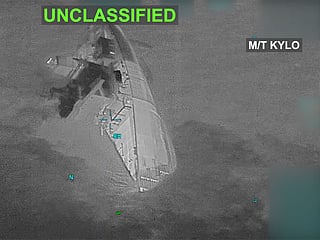
Iran's Revolutionary Guards said Friday they struck an oil tanker sailing under the Togolese flag in the Strait of Hormuz, state news agency IRNA reported.
"The Togo-flagged oil tanker 'Trend' had been targeted and detained after a fire broke out on board," the statement said, referring to an attempted "illegal passage" through the vital waterway.
The United Kingdom Maritime Trade Operations (UKMTO) announced Thursday a "security incident in the Strait of Hormuz, 16 nautical miles (29.6 km) northeast of Khasab, Oman".
UKMTO did not provide details about the vessel involved, and it is unclear whether it is the same mentioned by the Revolutionary Guards.
Saudi pipeline repairs underway
Anxiety over a recent drone attack that disabled Saudi Arabia's vital East-West pipeline to the Red Sea terminal of Yanbu has lessened. Traders responded positively to comments from US Energy Secretary Chris Wright, who indicated the outage would be "temporary".
Reports of Saudi pipeline repairs gave Wall Street some relief. The decline in crude helped cool soaring US Treasury bond yields, triggering a relief rally on Wall Street that marked its strongest session in six weeks on Thursday.
Despite the relief, energy analysts note that the market remains highly volatile. Both benchmarks continue to trade substantially higher than their early 2026 averages, as the conflict keeps key shipping corridors like the Strait of Hormuz highly contested.
Reuters reported that three pumping stations serving the vital East-West Pipeline in Saudi Arabia were damaged in an attack last week, citing satellite imagery and three industry sources.
Saudi Aramco operates the 1,200 km (745-mile) pipeline running across the Arabian Peninsula. While the repair timeline remains unclear, US Energy Secretary Chris Wright indicated the outage would be a temporary disruption measured "in days".
Oil prices extend decline, Brent down to $103.7, WTI slips to $100.9
Crude oil prices extended their decline on Friday (September 18, 2026), building on a two-day losing streak as immediate Middle East supply anxieties eased.
As of 9:25 am Tokyo time, international benchmark Brent crude hovered near $103 a barrel, while US West Texas Intermediate (WTI) remained near the $101 mark, pulling back from the multi-month highs of nearly $110 hit earlier in the week. Murban crude stood at $121 per barrel, down 1.95%.
The pull-back in global energy markets is driven by strategic logistical workarounds and infrastructural recovery, cushioning a market heavily pressured by the ongoing US–Iran conflict.
Supply panic cooled significantly after reports revealed that Saudi Arabia has begun offering additional crude cargoes to Asian refiners via ship-to-ship transfers outside the Gulf, near Oman’s Sohar port.
Trump: ‘Iran wants to make a deal’ but Tehran ‘not ready’ yet
US President Donald Trump has said Iran wants to reach a deal with Washington but is not yet prepared to accept the terms he considers necessary, signaling that diplomacy remains possible even as the US-Iran war continues.
“Iran wants to make a deal; they're not ready, in my opinion. We're gonna either make a deal that's good, or we're not gonna make a deal at all,” Trump said in a statement posted by the White House @RapidResponse47 X account.
The comments came as Trump has increasingly portrayed the conflict as approaching a possible diplomatic end while simultaneously warning that the US could resume or intensify military action.
Trump said Thursday that the US was “hopefully toward the end” of the war and claimed that he had communicated directly with Iranian officials. Tehran has not publicly confirmed the details of the contact.
US targets Iran’s crypto lifeline: BitBank sanctioned over alleged IRGC, Hormuz payments
The US has sanctioned Iranian cryptocurrency exchange BitBank and its alleged network, accusing the platform of moving hundreds of millions of dollars to Iran’s Islamic Revolutionary Guard Corps and processing payments tied to shipping access through the Strait of Hormuz.
The Treasury Department announced the action under 'Operation Economic Outcast', Washington’s broader campaign to isolate Iran’s financial, commercial and logistical networks. The move targets what US officials describe as Tehran’s growing use of digital assets to bypass sanctions and maintain access to international finance.
Russia, China veto US proposal for UN experts to keep monitoring sanctions on Iran
Russia and China vetoed a United Nations resolution that would have authorised UN experts to keep monitoring sanctions that were reimposed against Iran last year over its nuclear programme.
The UN Security Council sanctions are still in effect, which freeze Iran’s assets abroad, halt arms deals with Tehran and penalise any development of Iran’s ballistic missile program, among other measures.
Using a provision in the 2015 nuclear deal between Iran and major powers France, Germany and the UK triggered the “snapback” mechanism, which reimposed the sanctions on Sept. 27, 2025. It restored the Security Council sanctions committee and authorised a panel of UN experts to monitor implementation.
US approves sale of 48 F-35 jets to Saudi Arabia: State Dept
The United States has approved a $24.3 billion sale of 48 F-35 stealth warplanes and related equipment to Saudi Arabia, the US State Department announced Thursday, in a significant boost to the kingdom's forces.
Saudi Arabia has long sought to buy F-35s, but officials from Israel -- the only country in the region to operate the jets -- have voiced concern about their sale to Riyadh despite a push for the kingdom to normalize relations.
"The proposed sale will improve Saudi Arabia's capability to deter current and future threats by strengthening its homeland defense, and improving interoperability with US forces," the State Department said in a statement.