‘Mass killing’ warning: What we know as Iran protesters defy crackdown — and what’s next
Govt declares 3 days of mourning for 'martyrs', calls for nationwide marches Monday
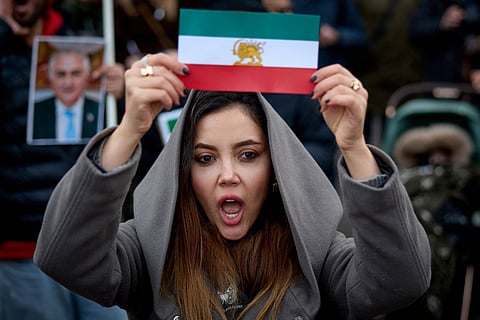
Dubai: Iran is facing its most serious unrest in years as protests spread nationwide, evolving from anger over the rising cost of living into an open challenge to the country’s theocratic system.
Rights groups warn that the authorities have carried out a “mass killing” of protesters as security forces move decisively to crush demonstrations now entering their second week.
United Nations Secretary-General Antonio Guterres on Sunday said he was “shocked” by reports of violence against protesters in Iran and called on the government to show restraint.
Guterres “is shocked by the reports of violence and excessive use of force by the Iranian authorities against protesters,” his spokesperson Stephane Dujarric said in a statement, adding a call “to exercise maximum restraint and to refrain from unnecessary or disproportionate use of force.”
Iran government, meanwhile, called for nationwide marches on Monday backing the Islamic republic and declared three days of national mourning for “martyrs” including members of the security forces killed in two weeks of protests, state television said.
President Masoud Pezeshkian urged people to take part in a “national resistance march” of nationwide rallies on Monday to denounce the violence, which the government said was committed by “urban terrorist criminals”, state television reported.
The protests represent one of the biggest challenges to Supreme Leader Ayatollah Ali Khamenei’s rule since the 1979 Islamic Revolution.
What do we know about the death toll?
The Norway-based NGO Iran Human Rights (IHR) says it has confirmed at least 192 protesters killed, but warns the true number could already be several hundreds — or even more.
According to IHR, unverified reports suggest that more than 2,000 people may have been killed, a claim that cannot be independently confirmed due to Iran’s near-total communications blackout. The group has described the crackdown as a “mass killing” and a “major international crime against the people of Iran”.
The US-based Center for Human Rights in Iran (CHRI) says hospitals are overwhelmed, blood supplies are running low, and that many protesters have been shot in the eyes, a tactic it says is being used deliberately to disable demonstrators.
Why is it so hard to verify information?
Iran has imposed an internet shutdown that has lasted more than 60 hours, according to Netblocks. The blackout has cut off messaging apps, disrupted phone lines and severely limited contact with the outside world.
Despite this, videos have filtered out showing large demonstrations in Tehran and other cities. Some unverified footage appears to show relatives identifying bodies inside Tehran morgues, underlining fears that the death toll is far higher than confirmed figures.
What triggered the protests?
The unrest was initially sparked by anger over the rising cost of living amid Iran’s deepening economic crisis. But it has since transformed into a broader political movement questioning the legitimacy of the system established after the 1979 revolution.
Chants calling for the return of the monarchy — including “long live the shah” — have been heard at protests, signalling how far public anger has shifted beyond economic grievances.
How has the Iranian leadership responded?
Authorities have drawn a sharp distinction between what they describe as legitimate economic protests and what they label “riots”.
President Masoud Pezeshkian accused the United States and Israel of attempting to escalate unrest by bringing “terrorists from abroad” into Iran. In a televised interview, he urged Iranians not to allow “rioters” to destabilise society, insisting the government seeks to establish justice.
State television has broadcast images of burning buildings — including a mosque — and funeral processions for security personnel, with officials saying members of the security forces have been killed.
Judiciary chief Gholamhossein Mohseni Ejei has warned that arrested protesters will be dealt with “decisively”, while police chief Ahmad-Reza Radan reported “significant” arrests overnight.
IHR estimates that more than 2,600 people have been arrested since the protests began.
What is happening on the streets?
An AFP journalist in Tehran described a city close to paralysis. Many shops remain shut, while those that open are forced to close by late afternoon — around 4 or 5pm — as security forces deploy in large numbers.
Prices have surged sharply, with the cost of meat nearly doubling since the protests began, deepening public anger and economic distress.
Who is trying to lead or shape the movement?
Reza Pahlavi, the US-based son of Iran’s ousted shah, has emerged as a prominent voice backing the protests. He has called for renewed demonstrations and said he is prepared to return to Iran to lead a transition to a democratic government.
“I’m already planning on that,” he told Fox News, as chants in support of the monarchy surface inside Iran.
How is the international community reacting?
Solidarity protests have taken place in several countries, including France, Britain and Austria, with several thousand people gathering in London alone.
Among the Iranian diaspora, fear and uncertainty dominate. “We don’t know anything about our family members now, in Iran,” said Fahimeh Moradi, a 52-year-old in Britain whose son remains inside the country. “I don’t know if he’s alive or not.”
What role are the US and Israel playing?
US President Donald Trump has voiced support for the protesters and warned of military action against Iranian authorities “if they start killing people”.
Israeli Prime Minister Benjamin Netanyahu said he hoped Iran would soon be freed from what he called the “yoke of tyranny”.
Iran’s leadership has responded with threats. Parliament speaker Mohammad Bagher Ghalibaf warned that any US military attack would trigger retaliation against Israel and US military and shipping interests in the region, which Iran considers legitimate targets.
What are the possible outcomes?
Three paths now appear possible:
Escalation: A continued crackdown, rising deaths and wider unrest could push Iran into its most violent internal crisis in decades.
Containment: Authorities may succeed in suppressing protests through force, arrests and information control, at the cost of deeper public resentment.
Regional fallout: Direct US or Israeli involvement — even rhetorically — raises the risk of a broader regional confrontation.
For now, Iran remains gripped by uncertainty — with protesters defying fear, authorities tightening control, and the outside world watching closely as the crisis unfolds.


