Gulf states bolster defences in face of Iranian aggression
More missiles and drones intercepted; Qatar to continue efforts to contain conflict
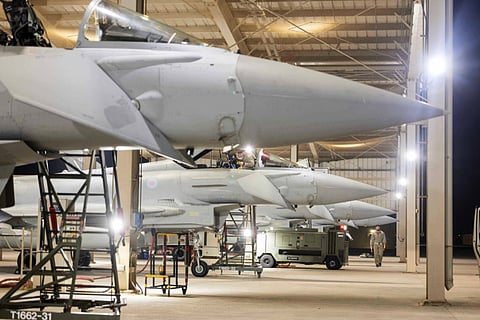
Dubai: Missile and drone attacks across the Gulf continued Tuesday as regional governments said dealing with Iranian aggression had become a top priority amid a widening Middle East war.
Qatar’s Defence Ministry said its armed forces intercepted a missile attack targeting the country, after an elevated alert was issued and multiple explosions were heard above the capital Doha as air defence systems responded.
Foreign Ministry spokesman Majid Al Ansari said Qatar remained committed to diplomacy but would defend itself against any attack.
“Dealing with Iranian aggression is a priority,” he said, adding that while communication channels with Tehran remain open, Qatar had taken measures to protect vital facilities and would respond appropriately to threats.
He warned that attacks on energy infrastructure “could have consequences far beyond the region,” with oil prices already surging and supply concerns spreading globally.
He said Qatar would continue efforts to contain the conflict while prioritising defence against Iranian attacks.
Al Ansari said Doha had repeatedly warned against escalation and the risk of the conflict turning into a wider regional war.
He added that while Qatar has alternative supply routes, the closure of the Strait of Hormuz and threats to its security would negatively affect the entire region.
Elsewhere in the Gulf, Bahrain’s Defence Force said it had intercepted and destroyed 105 missiles and 176 drones since Iran began retaliatory strikes against countries hosting US forces and military assets.
The military said its air defence systems continued to respond to what it described as “heinous” Iranian attacks.
Bahrain’s national carrier Gulf Air announced all flights remained temporarily suspended as the kingdom’s airspace stayed closed amid the security situation.
Saudi Arabia said its air defences intercepted and destroyed a drone east of Al Kharj governorate, hours after two other drones were shot down near the same area.
Authorities also reported a drone falling on a residential site in Az Zulfi city, north of Riyadh, causing limited material damage but no injuries.
Woman killed in Bahrain
In Kuwait, the National Guard said it shot down six drones approaching the country.
Meanwhile in Bahrain, a woman was killed when a projectile struck a residential building.
Energy infrastructure has also come under attack. Bapco’s oilfield in Bahrain was hit by a drone, forcing the company to declare force majeure, a legal clause used when extraordinary circumstances prevent companies from meeting contractual obligations.
Saudi Arabia’s Shaybah oilfield has also been targeted in recent attacks.
The strikes have raised fresh concerns about the security of energy supplies from the Gulf, a region responsible for a significant share of the world’s oil exports.
The attacks, along with tensions around the Strait of Hormuz — through which about 20% of global oil shipments pass — have pushed oil prices sharply higher, raising fears of broader economic disruption.
Despite international calls for de-escalation, Iran’s parliament speaker Mohammad Bagher Qalibaf said Tehran was not seeking a ceasefire and vowed the country would respond forcefully to its adversaries.


