New community ‘paw-ntry’ launched in Philippines as pantries return amid rising fuel costs
Grassroots food shelves once again emerge to help
Dubai: Five years after a simple bamboo cart on Maginhawa street in the Philippines became a symbol of hope during the Covid-19 pandemic, community pantries are making a comeback in the country, driven by new challenges.
Community pantries are volunteer-run stations where people can donate and take essential goods based on need. This concept has gained attention back in 2021, when Ana Patricia Non has set up the stall to help families survive lockdowns and job losses.
Get updated faster and for FREE: Download the Gulf News app now - simply click here.
Why are they coming back now
As global fuel prices surge, transport workers and daily commuters are once again finding relief through community-led initiatives.
Jeepney, bus, taxi, tricycle, and delivery drivers are among the hardest hit. Many of them have been earning less while spending more just to stay on the road. For commuters, this has translated into higher fares and fewer transport options.
These community pantries have been built to ease that burden by providing free food and basic supplies, allowing drivers to redirect their limited income toward fuel and daily expenses.
What makes it different this time
The setup has been similar to the original with shelves filled up with vegetables and sacks of rice along a sidewalk. However, today’s pantries have been more targeted.
Handwritten signs have read “Laban ng Drayber, Laban ng Komyuter” (the fight of drivers is the fight of commuters), showcasing how the situation has affected both those who provide and those who rely on public transport.
Moreover, the pantry has continued to carry its well-known guiding principle to “give what you can and take what you need.”
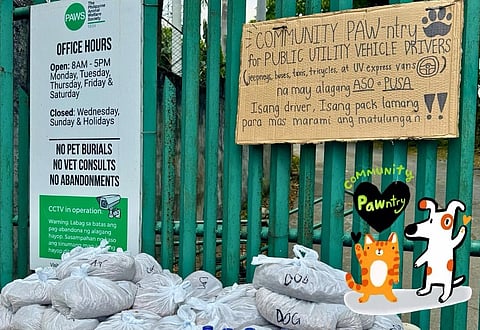
Support has also been expanded beyond human needs. The Philippine Animal Welfare Society (PAWS) has launched its own “community paw-ntry,” offering free pet food to public utility vehicle drivers with dogs or cats.
Located at its rehabilitation centre in Loyola Heights, the initiative allows drivers to pick up supplies for their animals.
Additionally, PAWS has called for donations such as pet food and treats in order to serve more beneficiaries.
How does it help
Though small in scale, community pantries provide immediate relief through trust and shared responsibility, especially during times of crisis.
For many drivers, even a few kilos of rice or basic groceries can mean the difference between getting through the day or falling deeper into financial strain.
Notably, it has also reflected the Filipino value of bayanihan or the collective action in times of need.
What it really means
The return of community pantries has highlighted both resilience and solidarity. While it has demonstrated strong community spirit, it has also underscored the ongoing economic challenges faced by ordinary Filipinos.
As fuel prices remain volatile, these efforts have become a support system, not just for survival, but for sustaining livelihoods in difficult times.