Philippines: 2,500 EV taxis, $333 million 'emergency fund' released as diesel skyrockets to ₱121/litre
EV taxis flagged off: Marcos OKs 'emergency fund', Russian tanker arrives
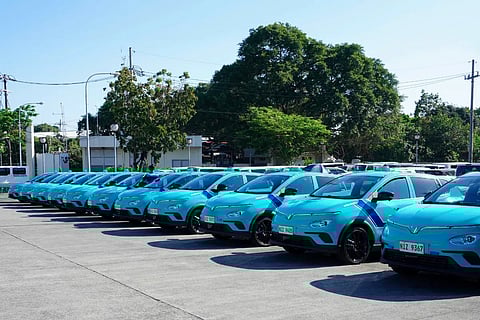
Manila: An initial 500 units of 2,500 electric vehicle (EV) taxis have been flagged off on Tuesday (March 24), as part of a raft of measures to cushion the knock-on effects of the current global oil supply crunch.
Green Xentro CEO Noel Ignacio said the electric taxis will serve the Greater Manila area, and would assure a more affordable, cleaner transport for the riding public, insulated from suddent pricing surges.
The group's charging infrastructure is also being expanded across the metropolis.
The rollout of EV taxis made by Vietnam's VinFast comes under a strategic partnership with the global mobility platform Green GSM.
This marks one of the largest BEV taxi rollouts in the Philippines to date, as well as the first large-scale implementation of a partner-led expansion model designed to accelerate electric mobility adoption across emerging markets.
WORLD FIRST: Ferdinand Marcos Jr. has declared a national energy emergency as the Iran conflict threatens fuel supplies. Under Executive Order No. 110, the Philippines faces “imminent danger” from volatile oil prices and supply disruptions.
Energy Secretary Sharon Garin said the country has just 45 days of fuel left as of March 20 and is scrambling to secure 1 million more barrels.
To curb soaring LNG costs, the government will temporarily ramp up coal-fired power generation starting April 1, despite coal already providing 60% of electricity.
Oil emergency powers approved
Meanwhile, President Ferdinand R. Marcos Jr. was set to sign emergency powers legislation on Wednesday (March 25) allowing the suspension — or reduction — of excise taxes on fuel products.
The move, greenlit by Philippine legislators, aims to ease the burden on consumers from war-induced oil price spikes.
Oil prices in the Philippines have been deregulated since March 1998, following the enactment of Republic Act No. 8479, also known as the Downstream Oil Industry Deregulation Act of 1998, signed on February 10, 1998. The law, whiuch took effect on March 14, 1998, removed government control over pricing, allowing market forces to determine local petroleum prices.
Policy moves
Meanwhile, the chief executive has also directed the release of a ₱20 billion $333 million) "emergency fund" to secure the country’s fuel supply.
These moves form part of a range of policy levers to curtain the economic impacts of price increases amid the global oil crisis, the Department of Budget and Management (DBM) said on Wednesday.
The DBM stated that the funds will be released through a Special Allotment Release Order (SARO) and a Notice of Cash Allocation (NCA) to the Department of Energy (DoE) to support its efforts to shield Filipinos from the impact of the oil crisis caused by the conflict in the Middle East.
The president on Wednesday has also stated that the country has 45 days of fuel supply "secured", while the Department of Energy tries to source more fuel from countries like Japan, China, South Korea, and Russia.
The fuel excise tax cut follows swift congressional approval of the bill.
Russian oil arrives: The Philippines has received the shipment of Russian crude oil, the first in five years, following talks between the Philippine government and its private "intermediaries" and Russian suppliers.
'Immediate relief'
The move is expected to offer immediate relief to Filipino drivers and businesses hammered by high fuel costs.
Tax relief eases short-term pain for a nation highly reliant on imported fossil fuel.
With transport the biggest oil consumer worldwide, and as oil volatility returns, countries like the Philippines face a crossroads: temporary tax breaks or accelerated adoption of EVs.


