US-Iran war: What UAE residents need to know this evening, September 8
Iran reports progress on Hormuz as Houthi attacks injure 73 in Saudi Arabia
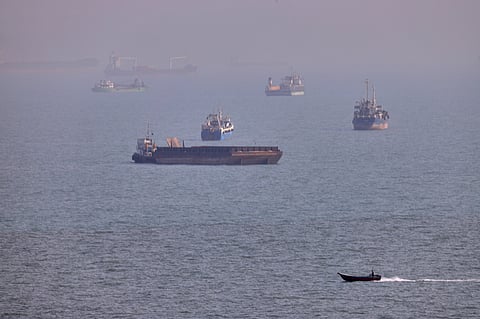
Diplomatic efforts over the Strait of Hormuz showed signs of progress on Tuesday, with Iran saying talks with Oman over navigation through the strategic waterway had advanced significantly.
But tensions elsewhere in the region intensified after Houthi missile and drone attacks hit civilian and economic sites in southern Saudi Arabia, injuring 73 people and temporarily halting operations at some energy facilities.
Get updated faster and for FREE: Download the Gulf News app now - simply click here.
The UAE strongly condemned the attacks and reaffirmed its solidarity with Saudi Arabia.
For UAE residents, developments around Hormuz, regional air travel and oil prices remain among the key issues to watch.
Here are the main developments this afternoon and evening.
Iran reports progress in Hormuz talks
Iranian Foreign Minister Abbas Araghchi said there had been “significant progress” in talks with Oman over the Strait of Hormuz.
Araghchi gave the update during a telephone conversation with Japanese Foreign Minister Toshimitsu Motegi, according to Iran's Foreign Ministry.
Iran and Oman, both coastal states on the strait, have been discussing a temporary transit arrangement to allow more commercial vessels to use the strategic waterway.
No final agreement has been announced.
The talks have taken on added importance as months of conflict, Iranian restrictions and the US naval blockade continue to disrupt shipping through a route that carried about a fifth of the world's oil and gas before the war.
Houthi attacks hit southern Saudi Arabia
73 civilians injured
Saudi Arabia condemned a major wave of Houthi attacks targeting civilian and economic sites in Abha, Khamis Mushait, Jazan and Najran.
The Saudi-led coalition said 73 civilians, including women and children, were injured.
Saudi Arabia's Energy Ministry said several energy facilities in the southern region were targeted, causing fires and forcing some operations to be temporarily suspended.
Authorities were working to contain the fires, secure affected sites and assess the damage.
Saudi Arabia said it would take all necessary measures to defend its sovereignty, national assets, citizens and residents.
The Houthis said they used dozens of ballistic missiles and drones against economic and military targets, describing the attacks as retaliation for Saudi strikes in Yemen.
UAE condemns attacks
The UAE strongly condemned the Houthi attacks on Saudi Arabia as well as continued attacks on commercial vessels in the Red Sea.
The Ministry of Foreign Affairs said the attacks constituted a flagrant violation of Saudi sovereignty and a threat to the Kingdom's security and stability.
The UAE reaffirmed its solidarity with Saudi Arabia and its support for measures taken to safeguard its security.
The GCC, Bahrain and Jordan also condemned the attacks and expressed support for Saudi Arabia.
Iran says it will continue to resist
Iranian President Masoud Pezeshkian said Tehran remained opposed to war and had sought to avoid escalation, but vowed that Iran would continue resisting what it considers aggression.
In a post on X, Pezeshkian said Iran would defend the rights of its people “with full strength”.
The statement comes amid increasingly assertive rhetoric from Tehran over both the Strait of Hormuz and US naval forces operating in the region.
Iran warns US warships could become targets
Iran has warned that US Navy vessels enforcing Washington's blockade could be targeted as the confrontation at sea becomes increasingly dangerous.
Iran's acting defence minister Brigadier General Majid Ibn Reza said Iranian forces had sufficient capability to strike American naval forces enforcing what Tehran describes as an economic blockade.
The warning followed an exchange over the weekend in which Iran fired ballistic missiles towards two US Navy warships.
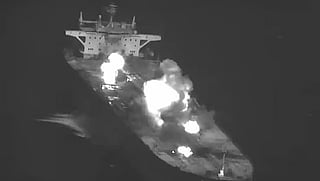
The US said the vessels avoided the attacks and subsequently struck three Iranian crude oil tankers.
Iran touts upgraded ballistic missile
Iranian state media has also highlighted what it describes as improved capabilities of its Qassem Basir ballistic missile.
Tehran says the missile forms part of a more assertive military doctrine under which Iran could act against a perceived threat before an attack takes place.
Iranian officials have claimed a missile was recently tested against a US warship, but it remains unclear whether the weapon involved was the Qassem Basir.
The missile was previously described as having a range of at least 1,200km.
US says 94 vessels redirected under blockade
US Central Command says it continues to enforce Washington's maritime blockade against Iran.
As of September 7, US forces had redirected 94 commercial vessels, disabled three and boarded two to ensure compliance, according to CENTCOM.
The blockade has become a central part of Washington's effort to restrict Iran's oil exports and increase economic pressure on Tehran.
At the same time, US forces have been working to keep international shipping moving through the Strait of Hormuz.
US Navy divers, SEALs and unmanned systems have spent months locating and clearing mines from shipping lanes in and around the waterway, according to a Financial Times report.
Oil prices remain elevated
Oil prices remain near six-week highs as markets assess the risk of further disruption to Gulf energy supplies.
Brent crude settled at $97.31 a barrel on Monday after reaching an intraday high of $98.06, its highest level since July 24.
US West Texas Intermediate settled at $92.65 after also reaching a six-week high.
The latest rise reflects continuing concern about shipping through the Strait of Hormuz as well as the latest escalation involving Saudi energy facilities.
UAE flights: Disruptions continue
UAE travellers continue to face a mixture of normal operations, delays and cancellations on Tuesday.
Etihad's Bahrain and Kuwait services are mostly operating normally, while Emirates is operating selected services to both destinations. Air Arabia has cancelled some flights to Kuwait and Bahrain, while several services from Abu Dhabi are delayed.
flydubai's Bahrain and Kuwait services listed in Tuesday's update are operating or scheduled, although passengers departing Dubai are advised to arrive at least four hours before departure.
Air France has extended its suspension of Dubai flights through September 10.
Flights between the UAE and Jakarta are also disrupted because of volcanic ash from Mount Anak Krakatau, meaning not all current cancellations and delays are related to the Middle East conflict.
Passengers should check their individual flight status directly with their airline before travelling to the airport.
Flight status alert: Always check official airline websites for real-time updates, as flight schedules and conditions can change rapidly.
What UAE residents should watch this evening
The Iran-Oman talks over the Strait of Hormuz are among the most significant developments to monitor. Tehran's announcement of “significant progress” raises the prospect of a temporary transit arrangement, although no final deal has been announced.
At the same time, the confrontation at sea remains dangerous, with Iran threatening US warships and Washington continuing its blockade.
The escalation involving the Houthis and Saudi Arabia adds another regional risk, particularly after attacks affected energy facilities and injured dozens of civilians.
For travellers, flight schedules remain fluid, while some disruptions — including services to Indonesia — are unrelated to the conflict.
Residents should continue following official UAE announcements and check directly with airlines before travelling.