US-Iran conflict: What UAE residents need to know today (August 4, 2026)
Energy, aviation and trade fears grow as US-Iran standoff enters new phase
The US-Iran conflict entered another uncertain phase on Tuesday (August 4) as President Donald Trump warned Tehran that it faces a final opportunity to reach a deal, while a new maritime incident near Oman underscored the risks still facing shipping through the Strait of Hormuz.
The developments are particularly important for UAE residents because the Emirates sits close to the strategic waterway and is a major regional aviation, logistics and energy hub.
Get it: Fast, verified news for FREE ... download the Gulf News app — simply click here
'Last chance' for Iran
Trump said Monday that Iran has a final opportunity to reach an agreement before the United States considers a major escalation, including potential strikes against Iran's leadership. He has also pushed for the reopening of the Strait of Hormuz before turning to the broader question of Iran's nuclear program.
But the diplomatic picture remains murky.
Washington says negotiations are possible, while Tehran has disputed the US characterisation of the talks. Iran has indicated that its discussions with Oman are focused on maritime safety rather than a comprehensive political settlement.
Cargo ship hit near Oman
The biggest new maritime development is a report that a cargo vessel was struck by an unknown projectile about 20 nautical miles northeast of Khasab, Oman, near the eastern entrance to the Strait of Hormuz.
The United Kingdom Maritime Trade Operations agency said the vessel reported being hit while sailing in the area. The circumstances and source of the projectile were not immediately established.
For UAE residents, the location matters: Khasab lies on Oman's Musandam Peninsula, directly adjacent to the Strait of Hormuz and close to UAE waters.
The incident demonstrates that even while Washington and Tehran discuss a possible diplomatic off-ramp, commercial shipping remains exposed to military risk.
What about UAE flights?
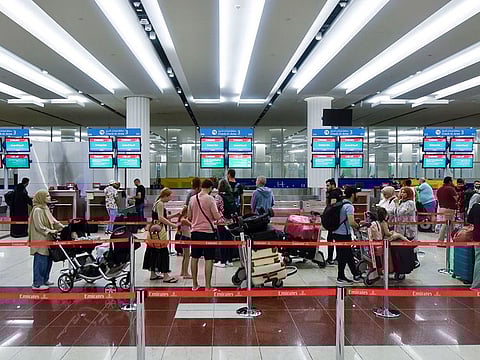
Air travel across the UAE remains largely operational despite continuing geopolitical tensions in the Middle East, with major airports and airlines maintaining most services.
However, passengers should remain prepared for cancellations, delays, rerouting and last-minute schedule changes, particularly on flights to destinations affected by regional airspace restrictions or security concerns.
Travelers are advised to check directly with their airline and airport before heading to the airport, as flight schedules can change with little notice.
For UAE passengers, the practical rule remains:
Check your airline and airport status before leaving for the airport.
Do not rely solely on an earlier booking confirmation or a flight-status screenshot, because schedules can change rapidly as airlines respond to airspace restrictions and security assessments.
Why Hormuz matters so much
The waterway is effectively the maritime gateway between the Gulf and the wider Indian Ocean, and the rest of the world.
A sustained confrontation could therefore produce three simultaneous shocks:
Energy shock: disruption to oil and gas exports.
Shipping shock: vessels avoid the area or face higher war-risk insurance and freight costs.
Aviation shock: airlines reroute around restricted or dangerous airspace, increasing flight times and costs.
The latest cargo-ship incident shows why reopening the waterway is such a central part of the diplomatic effort.
Bottom line for UAE residents
There is no indication from the latest developments that UAE residents should panic or change their daily routines, but
While the situation remains volatile,
The three things to watch today are:
Whether Trump and Iran actually move toward talks or another escalation
Whether commercial shipping through Hormuz begins to normalise
Whether airlines further change UAE flight schedules
For now, the most important message is: Diplomacy may be gaining another chance. But the missile, shipping and aviation risks around the Gulf have not disappeared.
The cargo vessel struck near Oman is a reminder that even as politicians talk, the physical risks of the conflict remain very real


