This is how Dubai’s economic model shows strength
Dubai Business leaders cite strong public-private collaboration as pillars of resilience
Dubai: Business leaders across Dubai’s key sectors say the emirate is not only weathering current global and regional challenges but reinforcing its position as a leading economic hub, driven by a diversified model, agile governance, and deep-rooted collaboration between the public and private sectors.
Leaders of Business Groups operating under the Dubai Chamber of Commerce have underscored that Dubai’s economic model continues to evolve in response to global shifts, ensuring business continuity, investor confidence, and long-term growth across industries.
They emphasised that the emirate’s resilience stems from a combination of diversification, strong infrastructure, forward-looking leadership, and an institutional framework designed to anticipate change rather than react to it. This approach, they said, has enabled Dubai to maintain operational stability even as geopolitical tensions and economic uncertainty persist in parts of the world.
As the global economic landscape continues to evolve, they said Dubai is not only well-positioned to navigate uncertainty but also to seize new opportunities, reinforcing its status as a competitive, future-ready, and globally connected business huA defining feature of Dubai’s economic strength, according to the leaders, is its ability to act swiftly and decisively. By aligning government policies with private sector needs, the emirate has created a business ecosystem that is both responsive and future-ready. This has allowed companies across sectors to adapt quickly, maintain high service standards, and continue expanding despite external pressures.
Hotels
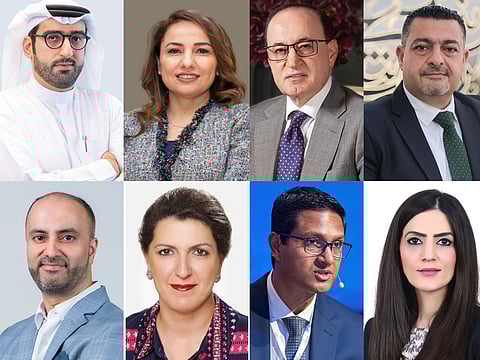
In the tourism and hospitality sector, Amit Nayak, Chairman of the Dubai Hotels Business Group, said Dubai entered the current phase from a position of strength, supported by sustained visitor demand and global connectivity. He noted that the sector has demonstrated remarkable agility, with hotels and restaurants adapting operations, offering flexible services, and prioritising customer experience.
Nayak said: “Dubai’s economic model is resilient because it’s diversified, execution-led, and built for speed. The hospitality sector has worked closely with aviation, logistics, and tourism stakeholders to ensure seamless service delivery while maintaining the emirate’s premium positioning.”
He added that businesses are focusing on value-driven offerings and responsible pricing to sustain demand, while preparing to capture renewed momentum as regional conditions stabilise.
Travel and tourism
The travel and tourism ecosystem has also benefited from strong integration across sectors. Mohamed Jassim Al Rais, Honorary Chairman of the Dubai Travel and Tour Agents Business Group, said Dubai’s ability to coordinate effectively between aviation, logistics, finance, and tourism ensures continuity and strengthens global confidence.
He highlighted that the emirate’s airports, ports, and supply chains have continued to operate efficiently, supported by advanced infrastructure and institutional readiness. “The speed and decisiveness of Dubai’s leadership, combined with its collaborative governance model, are key strengths. This ensures that the city remains open, connected, and welcoming to the world,” he added.
Events and exhibitions
In the events and exhibitions sector, Ajay Bhojwani, President of The Events Group, pointed to sustained investment in infrastructure and business-friendly policies as critical drivers of growth. He said Dubai has successfully created an environment that supports the meetings, incentives, conferences, and exhibitions (MICE) industry, enabling it to adapt quickly to changing circumstances.
Organisers, he noted, have adopted flexible strategies such as rescheduling events and integrating virtual platforms to maintain engagement and continuity. At the same time, initiatives under the Dubai Economic Agenda D33 are attracting international investment and expanding trade opportunities.
Bhojwani added that world-class venues such as the Dubai World Trade Centre, along with strong airline connectivity, continue to reinforce Dubai’s position as a global hub for business events.
Real estate sector
Across the real estate sector, stability and trust have emerged as key themes. Mania Merrikhi, Chairwoman of the Real Estate Valuation Business Group, said Dubai’s economy is underpinned by a clear strategic vision and a proactive government approach. She noted that strong relationships between leadership, institutions, and the business community have created a stable environment that supports long-term planning.
“Dubai has consistently demonstrated its ability to overcome global challenges with efficiency and optimism,” she said, adding that the sense of unity between leadership and the community plays a vital role in building confidence in the future.
Education
The education sector is also contributing to the emirate’s long-term competitiveness. Bushra Khan, Chairwoman of the Education Business Group, said Dubai has developed one of the world’s most dynamic private education ecosystems, offering diverse curricula and maintaining high standards of quality.
She noted that strong academic outcomes and global university placements reflect the sector’s success, while ongoing collaboration between regulators and private institutions ensures continuous improvement. “Dubai’s regulatory environment encourages innovation and private sector participation, creating a stable foundation for sustainable growth,” she said.
Healthcare, technology
In the healthcare and technology space, Mohd Kenanah, Chairman of the Medical Equipment Business Group, highlighted continued demand for advanced healthcare infrastructure and digital solutions. He said Dubai’s diversified economy and long-term planning have enabled it to remain resilient even during periods of uncertainty.
“Dubai’s economic model has been built to withstand external shocks,” he said, pointing to the importance of public-private partnerships in advancing healthcare, technology, and infrastructure development.
Intellectual property
Business confidence is also being reinforced by Dubai’s legal and regulatory framework. Hoda Barakat, Chairwoman of the Dubai Business Group for Intellectual Property, said the emirate’s investor-friendly policies and commitment to modernising regulations have created a predictable and supportive environment for businesses.
She noted that companies continue to demonstrate strong confidence in Dubai, maintaining operations and pursuing growth opportunities despite regional challenges. “Dubai has always emerged stronger from global disruptions,” she said, citing its focus on innovation, sustainability, and digital transformation as key differentiators.
Fruit and Vegetables
Trade and logistics remain central to Dubai’s economic resilience. Redha Al Mansouri, Chairman of the Fruit and Vegetable Traders Business Group, said the emirate continues to play a critical role in ensuring the smooth movement of goods, supported by modern infrastructure and efficient supply chains.
He emphasised that Dubai’s open trade environment and strategic location enable it to maintain strong growth even during uncertain times. “Clear regulations, institutional readiness, and a business-friendly environment continue to support investor confidence and expansion,” he said.
Al Mansouri added that platforms such as Business Groups and Business Councils under the Dubai Chamber of Commerce allow the private sector to actively contribute to policymaking, ensuring that regulations remain aligned with market realities.
Practical execution
Collectively, the leaders stressed that Dubai’s success lies in its ability to combine strategic foresight with practical execution. Its diversified economy, strong governance, and close collaboration between the public and private sectors have created a resilient foundation capable of withstanding global challenges.