UAE–Turkiye CEPA: A strategic trade bridge anchored in friendship and forward strategy
How the deal reshapes supply chains, investment, and regional growth
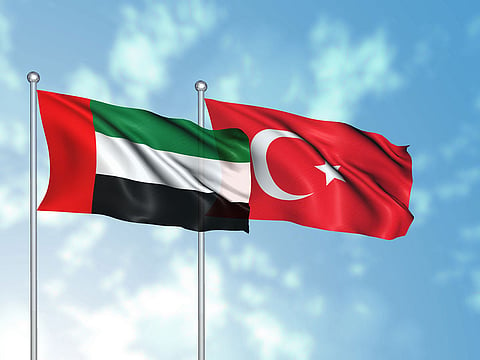
In today’s uncertain global environment, where economic fragmentation and geopolitical tensions are reshaping trade dynamics, the Comprehensive Economic Partnership Agreement (CEPA) between the UAE and Turkiye offers a clear and constructive alternative. It is not merely a trade agreement — it is a reflection of a strong and evolving friendship between two countries that increasingly see alignment as both an economic and strategic necessity.
Even before the agreement, economic ties between the UAE and Turkiye were gaining strong momentum. Bilateral non-oil trade exceeded $18 billion in 2022, reflecting growth of more than 40 per cent compared to the previous year. With the CEPA now in place, both countries have set an ambitious target of reaching $40 billion in annual trade within five years - an objective that underscores both confidence and complementarity in their economic relationship.
What distinguishes the UAE–Turkiye CEPA is its ability to generate shared value rather than one-sided gains. It encourages collaboration across entire value chains, from production and logistics to services and innovation.Onur Saylan, Areej Siddiqui, and Sania Ashraf
Natural alignment of strengths
At the heart of this strategic partnership lies a natural alignment of strengths. The UAE has established itself as a global hub for logistics, finance, and advanced services, while Turkiye brings a strong industrial base and a strategic position bridging Europe and Asia. Together, they create a corridor where goods, services, capital, and ideas can move more efficiently and with greater certainty. For businesses navigating an increasingly complex global environment, this predictability is as valuable as cost efficiency.
The CEPA significantly reduces trade barriers, with tariffs expected to be eliminated or lowered on more than 80 per cent of goods. This creates immediate advantages for exporters and importers alike, lowering costs and improving competitiveness across sectors such as manufacturing, construction, consumer goods, and agri-products. At the same time, enhanced customs cooperation and regulatory alignment allow companies to operate with greater speed and confidence, enabling them to adapt quickly to shifting market conditions.
Centre for value creation
For the UAE, the agreement strengthens its evolution from a transit-driven economy into a centre for value creation. Emirati firms can increasingly partner with Turkish manufacturers to co-develop and distribute products for regional and global markets, leveraging the UAE’s connectivity to Asia, Africa, and the Middle East. This not only supports industrial diversification but also enhances supply chain resilience at a time when businesses are prioritising reliability alongside efficiency.
Turkiye, in turn, gains a powerful gateway to high-growth markets through the UAE’s world-class infrastructure and business ecosystem. The agreement enhances the competitiveness of Turkish exports while creating a stable platform for increased investment flows. As a major global investor, the UAE is well positioned to channel capital into Turkiye’s infrastructure, renewable energy, and technology sectors, supporting long-term industrial growth and innovation.
Shared value
What distinguishes the UAE–Turkiye CEPA is its ability to generate shared value rather than one-sided gains. It encourages collaboration across entire value chains, from production and logistics to services and innovation. Opportunities are particularly strong in sectors that will define the next phase of economic transformation, including renewable energy, digital trade, food security, and advanced logistics. By combining Turkiye’s production capabilities with the UAE’s investment strength and global connectivity, both countries can build scalable and sustainable growth platforms.
The benefits extend beyond businesses to individuals and communities. Consumers are likely to see greater product diversity and price stability, while entrepreneurs gain access to new markets and partnerships. For professionals, the strengthening of economic ties between the UAE and Turkiye opens up broader career pathways across an increasingly integrated regional landscape.
Commitment to constructive engagement
Beyond economics, the agreement also reflects a broader commitment to constructive engagement. In a global environment often characterised by uncertainty and conflicts, the UAE and Turkiye are choosing to deepen cooperation, align standards, and create institutional frameworks that support long-term stability. This approach reinforces the role of trade as a bridge — connecting not only markets, but also ideas, talent, and opportunities.
Ultimately, the UAE–Turkiye CEPA is about preparing for the future. Therefore, the agreement should be viewed as a starting point rather than an endpoint. It equips both economies to navigate an increasingly complex and interconnected world — scarred by regional conflicts and unpredictability — through deepening partnerships and strengthening resilience.
In a world searching for dependable growth and renewed confidence, the UAE–Turkiye CEPA offers a clear and positive direction - one built on collaboration, complementarity, and shared prosperity for their region and beyond.
Onur Saylan is Consul General of the Republic of Turkiye in Dubai and Northern Emirates
Dr Areej Aftab Siddiqui is Director of BBA programme and an Assistant Professor of International Trade and Business at the University of Dubai
Dr Sania Ashraf is the Director of Graduate Programmes and Associate Professor at the University of Dubai


