How Seha’s Corniche Hospital in Abu Dhabi detected a rare congenital heart condition in a newborn
Swift diagnosis at Seha highlights importance of early screening in saving lives
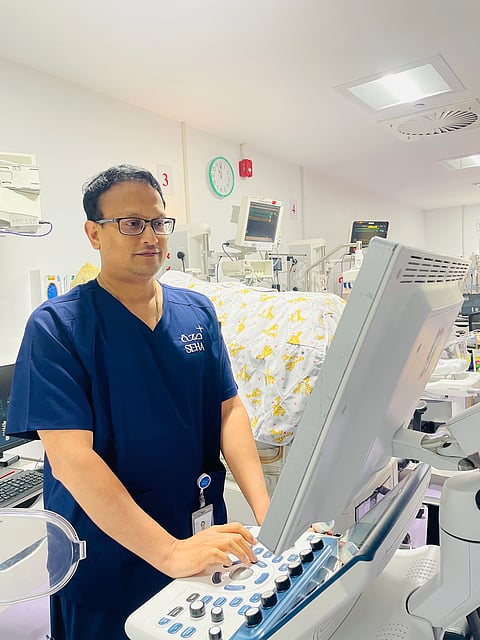
Dubai: Doctors in Abu Dhabi have successfully diagnosed a rare congenital heart condition in a newborn just two days after birth, highlighting the importance of early screening and specialised neonatal care.
The baby has been admitted to the Neonatal Intensive Care Unit (NICU) at Seha’s Corniche Hospital, after developing respiratory distress. Seha is a subsidiary of PureHealth, the largest healthcare group in the Middle East.
Stay updated: Get the latest faster by downloading the Gulf News app now - it's completely free. Click here for Apple or here for Android. You can also find it on the Huawei AppGallery.
What doctors discovered
Following a comprehensive clinical assessment, specialists have used advanced echocardiography to diagnose Partial Anomalous Pulmonary Venous Drainage (PAPVD), a rare condition affecting the heart’s blood flow.
The procedure has been conducted by Dr. Velmurugan Ramalingam, consultant physician at NICU of Seha’s Corniche Hospital.
According to Ramalingam, some pulmonary veins drain into an abnormal cardiac chamber in PAPVD, which results in a mix of oxygenated and deoxygenated blood, placing additional strain on the right side of the heart.
“Partial anomalous pulmonary venous drainage is an exceptionally rare congenital heart defect and can be difficult to detect, even for experienced paediatric cardiologists,” explained Ramalingam.
Why early detection is critical
Medical experts have pointed out that if not diagnosed in time, PAPVD may lead to complications such as pulmonary arterial hypertension, enlargement of the right side of the heart, and long-term cardiac dysfunction.
In this case, early detection has enabled doctors to initiate timely care and plan appropriate interventions, improving the newborn’s chances of a healthy recovery.
How technology helps
Moreover, doctors have credited advanced cardiac imaging for the quick diagnosis.
“Early access to advanced cardiac imaging enabled a timely diagnose, appropriate clinical planning, and early intervention, giving the newborn the best possible start in life,” said Ramalingam.
The case has showcased how access to modern diagnostic tools and experienced neonatal teams can improve outcomes for newborns with rare conditions.
Meanwhile, Seha’s Corniche Hospital continues to serve as a leading centre for maternal and neonatal care in the UAE, handling complex cases referred from across the country.
With advanced medical technologies, multidisciplinary teams, and patient-centred care, healthcare providers such as Seha continue to raise standards in neonatal and cardiac treatment nationwide.