Seedance 2.0: Can this AI tool replace Hollywood movie studios?
No crew, no actors, no budget - the new Chinese AI tool that’s putting Hollywood on notice
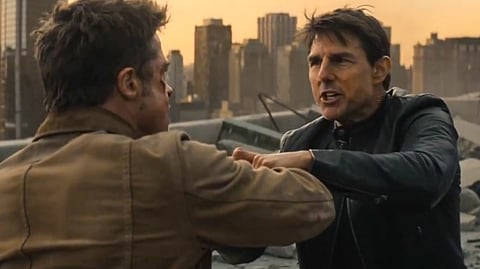
Dubai: Scrolling through your feed and wondering whether that dramatic rooftop fight is real or AI? Brace yourself, it’s about to get even harder to tell.
A Chinese tech giant has quietly released an artificial intelligence (AI) model that can generate cinema-quality video, complete with dialogue and sound effects from just a few lines of text. And it’s already rattling Hollywood.
Meet Seedance 2.0
The tool, called Seedance 2.0, was developed by ByteDance, the parent company of TikTok.
It shot into the spotlight after hyper-realistic clips began circulating online, including a viral video - Tom Cruise and Brad Pitt locked in hand-to-hand combat on a rubble-strewn rooftop, trading blows over Jeffrey Epstein. The scene, reportedly generated from a two-line prompt, looked like it had been lifted straight from a Hollywood blockbuster.
Launched quietly in June 2025, the first version of Seedance landed with little fanfare. Eight months later, version 2.0 arrived and it didn’t take long for the hyper-realistic AI videos to flood the internet.
The tool can produce cinema-quality video and audio, no film crew, no actors, no budget. Clips featuring Spider-Man, Deadpool, Stranger Things and other popular characters quickly flooded social media, racking up millions of views.
Hollywood fires back
The studios didn't stay quiet for long.
Within days of the videos going viral, major Hollywood studios fired off cease-and-desist letters to ByteDance to protect their intellectual property and demanding the company stop enabling the unauthorised use of their intellectual property.
According to Variety and The Hollywood Reporter, the Motion Picture Association and labour union SAG-AFTRA also condemned what they described as the unauthorised use of US-copyrighted works.
ByteDance said it would introduce stronger safeguards to prevent intellectual property misuse.
But for many in the industry, the damage may already be done. Rhett Reese, co-writer of Deadpool & Wolverine, Zombieland and Now You See Me 2, reacted bluntly to the viral AI-generated Cruise and Pitt clip on X.
“In next to no time, one person is going to be able to sit at a computer and create a movie indistinguishable from what Hollywood now releases,” he warned.
This isn't Hollywood's first AI battle
The studios have been here before and they've come out swinging.
Last June, various American news outlets reported that Disney and NBCUniversal became the first major studios to sue a generative AI company, filing a complaint against image generator Midjourney. They later teamed up with Warner Bros. Discovery to go after Chinese AI firm MiniMax, alleging large-scale piracy of their copyrighted works.
But here's where it gets complicated, Disney has simultaneously been cutting deals with AI companies.
The Walt Disney Company recently struck a three-year partnership with OpenAI, licensing its vast library of characters and imagery, including Marvel, Pixar and Star Wars for use on Sora, OpenAI's generative AI video platform. The deal allows fans to create and share AI-generated short videos using Disney's most beloved characters.
The AI video race is heating up
Seedance 2.0 isn’t alone.
In 2024, OpenAI released the latest version of its Sora video generator to the public. In 2025, Google unveiled Veo 3, an advanced AI video generator developed by Google DeepMind. Like Seedance, it can generate high-quality video from text prompts, complete with human-like dialogue, realistic physics and immersive sound design.
AI systems, including chatbots, image generators and video tools, are typically trained on vast amounts of publicly available web data, which can include copyright-protected novels, artwork and film clips.


