Gold hit record highs in 2025. How it’s reshaping weddings, savings and buying decisions in 2026
After a record year, gold demand shifts from volume to value heading into 2026
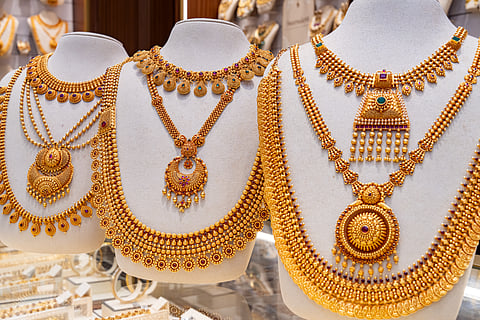
Dubai: Gold’s historic rally in 2025 delivered record prices and strong returns, but its most lasting impact may be how it fundamentally changed the way consumers buy the metal. Across the UAE, higher prices have not pushed buyers out of the market. Instead, they have made them more deliberate, more investment-focused and far more conscious of weight, timing and liquidity. (Check latest UAE gold prices here, alongside prices in Saudi Arabia, Oman, Qatar, Bahrain, Kuwait, and India.)
Retailers say the year marked a clear shift away from impulse purchases towards value-driven decision-making. While headline spending held up, underlying volumes softened, reflecting a market adjusting to prices that reset expectations rather than triggered a collapse in demand.
Spending holds, volumes soften
At the retail level, the rally produced a paradox. Jewellery demand by volume declined, yet consumer spending rose, largely because prices climbed sharply.
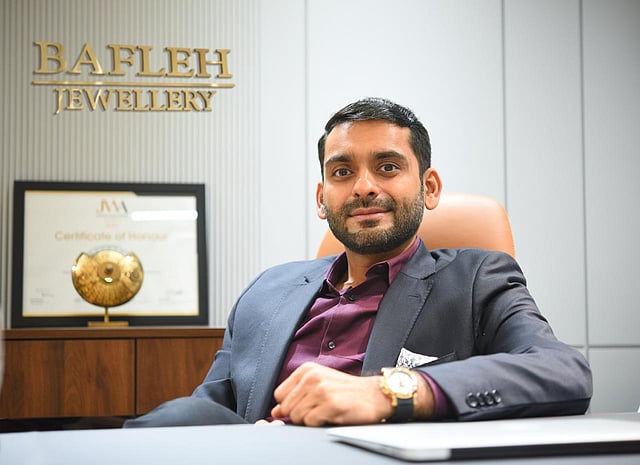
Chirag Vora, managing director at Bafleh Jewellers, said the change was most visible in how customers funded purchases. “Jewellery demand volumes fell sharply, yet consumer spending grew due to higher prices,” he said. “Buyers opted for gold exchange and upgrade options instead of bringing fresh cash.”
This behaviour became widespread across income groups. High net worth individuals continued to buy outright, while middle- and lower-income customers became more cautious. In many stores, a significant share of transactions now involve exchanging older jewellery for newer, lighter designs rather than fresh purchases.
Gold has historically been an asset that demonstrates steady price appreciation over time, and our experience indicates that consumers have largely adjusted to prevailing market prices. While a small segment of price-conscious buyers may wait for a temporary dip before making a purchase, sales across our showrooms remain strong, suggesting that customers have broadly accepted current price levels as the norm.

Investment demand takes the lead
As prices climbed, investment products moved to the forefront. Bars, coins and savings schemes saw a sharp rise in interest, reflecting gold’s renewed role as a financial hedge rather than purely an adornment.
“Consumption of bars and coins surged,” Vora said. Among jewellery buyers, minimalist and lightweight designs gained traction. “Dainty necklaces, sleek bracelets and thin gold rings are dominating the market. Simplicity has become economically practical.”
That pattern is consistent across the market. Tawhid Abdulla, chairman of the Dubai Jewellery Group, said customers are now approaching purchases with a longer-term mindset.
“Most purchases are no longer impulsive,” he said. “Buyers are taking more time to understand purity, pricing, buyback value and long-term relevance.”
Lower ticket sizes, flexibility and liquidity have become key decision factors, particularly as consumers seek protection against inflation without overcommitting capital.
There is hesitation, but it varies by customer segment. The HNIs remain willing to pay elevated prices, while middle and lower-income shoppers show much more caution. We're also seeing increased profit-taking, with up to a third of sales involving exchange of old jewelry for newer, lighter pieces.
Weddings adapt, not retreat
Despite record prices, gold’s cultural role in weddings has remained intact. What has changed is how families manage budgets.
Retailers say wedding purchases have been rationalised rather than postponed. Families are choosing lighter designs, spreading purchases across stages or combining gold with studded jewellery to manage costs.
Bafleh introduced necklaces weighing under 10 grams and earrings as light as 2 grams to meet demand. “The cultural imperative remains strong,” Vora said. “Families still want brides to have gold, but they are adapting.”
Malabar Gold & Diamonds reports a similar trend. Shamlal Ahamed, managing director of international operations, said wedding-related buying has remained resilient despite higher prices.
“Gold has historically demonstrated steady price appreciation, and consumers have broadly accepted current price levels as the norm,” he said. “Jewellery continues to be the fastest-moving category, driven by gold’s dual role as both adornment and investment.”
The demand is well-balanced between first-time buyers and repeat customers. We’re seeing many new buyers entering the market through lightweight jewellery or gold coins, which offer both affordability and value.Joyalukkas spokesperson
Timing the market becomes part of the purchase
One of the clearest shifts in 2025 was the nature of conversations at jewellery counters. Almost every buyer now asks whether prices will fall.
“Nearly every conversation involves the question ‘Will gold prices go down?’” Vora said. Retail staff are increasingly expected to explain price cycles, exchange values and long-term returns rather than focus purely on design.
Abdulla said questions around timing have increased significantly. Retailers, he noted, are responding by emphasising education and value communication rather than short-term price predictions.
At Joyalukkas, spokespersons said customers are more informed and price-aware, but not deterred. Buyers still proceed for weddings, festivals and milestone events, even as they track global gold trends more closely.
Footfall is expected to remain steady, but growth will depend on how well retailers adapt. Lighter designs, flexible purchase options, transparent pricing, product disclosure and strong value communication will be key to sustaining demand in a high-price environment.

Who is buying in a high-price market
The composition of buyers has also shifted. Younger professionals, tourists and first-time investors are increasingly entering the market through coins, bars and digital formats rather than traditional jewellery.
Vora estimates first-time buyers now account for 55 to 60% of demand, driven largely by Gen Z and millennials treating gold as a hedge against inflation. Repeat customers, making up 40 to 45%, are primarily trading in old pieces for lighter designs.
Abdulla said repeat customers continue to drive jewellery demand, while first-time buyers are entering through investment-linked products and savings formats.
Looking ahead, the sustainability of gold’s price strength into 2026 depends less on the pace of policy rate easing and more on the broader macro picture, particularly the balance of trade risks and geopolitics. The sensitivity of these risks suggests that 2026 is likely to remain a constructive year for gold, though not a repeat of the outsized gains seen in 2025. A move of similar magnitude would imply prices well beyond $6,000 per ounce, which would require a materially more severe global shock than is currently implied by markets.
Structural forces behind the rally
Analysts argue that gold’s 2025 performance was driven less by retail enthusiasm and more by a structural shift in global demand.
Ahmad Assiri, research strategist at Pepperstone, said sovereign and institutional buying became the dominant force behind prices. Central banks, particularly in emerging markets, increasingly treated gold as a strategic reserve asset amid trade tensions, sanctions risk and widening fiscal deficits.
“Gold’s strength was not only driven by retail participation or speculative flows,” he said. “Central banks and financial institutions became the dominant buyers.”
Ole Hansen, head of commodity strategy at Saxo Bank, said geopolitical fragmentation and reserve diversification reshaped gold’s role in the global financial system.
“The freezing of Russian reserves in 2022 fundamentally altered perceptions of risk around dollar assets,” he said, adding that Asian demand has proved less sensitive to interest rates than Western investment flows.
Current price strength appears sustainable into 2026 because the underlying drivers reflect more profound shifts in the global financial system. Central-bank demand, geopolitical fragmentation, and rising fiscal risks support gold’s role as a strategic asset rather than simply a cyclical hedge. However, sustainability depends on broader conditions. A broad risk-on environment, rising real yields, or a strengthening dollar could dampen momentum.

What 2026 is likely to bring
Looking ahead, analysts expect gold prices to remain elevated, but few anticipate a repeat of 2025’s gains.
Assiri said the sustainability of gold’s strength into 2026 depends more on geopolitics, trade risks and fiscal credibility than on interest rate policy alone. Even if central bank buying moderates, the strategic motivation remains intact, creating a structural floor under prices.
Hansen said gold is likely to grind higher rather than surge. A stronger dollar, rising real yields or meaningful geopolitical de-escalation could temper momentum, but would not necessarily undermine the broader bull case.
For retailers, the outlook is one of adjustment rather than retreat. Footfall may ease, but intent is expected to remain high. Lightweight designs, exchange schemes, flexible payment options and service-led loyalty are likely to define survival in a high-price environment.
After a record year, gold may no longer be bought by weight alone. But its role as a store of value, cultural anchor and financial hedge appears firmly intact heading into 2026.