Iran scrambles to store more oil as Kharg Island nears capacity under blockade pressure
Floating storage buys time as blockade pushes Iran’s main oil terminal to brink
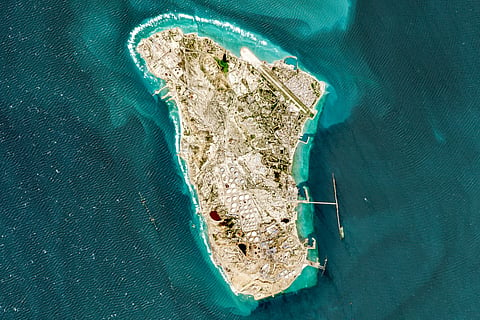
Iran is reportedly moving to expand crude storage at Kharg Island by reactivating the 30-year-old very large crude carrier M/T Nasha, a sign that the country’s main oil hub is nearing its onshore storage limit amid the US blockade of Iranian ports.
Maritime analysts say the vessel, which had been anchored empty for years, is being repositioned as floating storage to absorb crude that still has to move out of the system.


Supply-and-demand mismatch
The pressure at Kharg Island is being driven by a simple supply-and-demand mismatch, according to Tanker Trackers, an industry think-tank.
Analysts estimate roughly 13 million barrels of spare onshore storage remain at the terminal, while net inflows are running at about 1.0 million to 1.1 million barrels per day.
At that pace, storage could be filled in about 12 to 13 days, which places the saturation point in late April if current flows hold.
What happens when storage fills
That matters because once storage fills, Iran would have to start shutting in wells, especially in water-injection fields that require steady operation to avoid damage and long-term production losses.
Iran has already kept Kharg busy despite the war, with reports in recent weeks showing tankers loading crude there even after U.S. and Israeli strikes.
The use of M/T Nasha reflects how Iran is trying to keep oil moving without relying entirely on vulnerable shore facilities.
Temporary buffer
Floating storage gives Tehran a temporary buffer, but it is not a permanent fix.
If the blockade remains in place and exports keep slowing, Iran will face a choice between deeper production cuts and risking damage to its upstream fields.
The broader context is that Kharg Island is Iran’s most important crude export gateway, so any congestion there quickly becomes a national economic problem.
For now, the reactivation of Nasha suggests Tehran is trying to buy time before the terminal reaches a critical breaking point.


