Iran fortifies Kharg, lays traps as US weighs risky ground operation
Key oil hub turns flashpoint as Hormuz leverage and war risks intensify
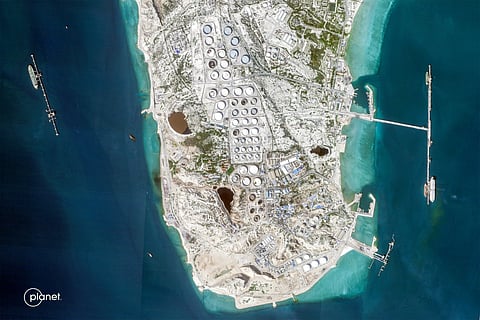
Dubai: Almost exactly a month after indirect talks were followed within days by war, Washington is again speaking of negotiations with Iran — even as it weighs a risky ground operation against Kharg Island that could trigger a fresh escalation.
Those earlier contacts, involving US envoys and Iranian officials in Geneva, were followed within days by US-Israeli strikes on February 28.
The island, which handles nearly 90 per cent of Iran’s oil exports, has taken on outsized importance in the escalating conflict.
Less than two weeks ago, the US carried out airstrikes targeting military installations there — a signal, analysts say, of its strategic value without directly hitting energy infrastructure.
Now, according to CNN, Iran has begun laying traps and moving additional weaponry onto the island, including shoulder-fired surface-to-air missiles (MANPADS), as it prepares for the possibility of a US assault.
Iranian Parliament Speaker Mohammad Bagher Ghalibaf warned that Tehran is closely monitoring enemy movements and issued a stark warning to regional countries supporting Washington.
Kharg Island: Iran’s oil lifeline
Handles 90% of Iran’s oil exports and sits near the Hormuz chokepoint
Located about 25 km off Iran’s coast in the Arabian Gulf
Accounts for nearly 90% of Iran’s oil exports
Houses key oil storage and loading terminals
Also has military infrastructure and air defence systems
Close to the Strait of Hormuz, a global energy chokepoint
“Our forces are monitoring all enemy movements, and if they take any step, all the vital infrastructure of that regional country will be targeted,” he said in a post on X.
Kharg Island’s location — just 25km off Iran’s coast in the Arabian Gulf — and its proximity to the Hormuz chokepoint make it a linchpin of Tehran’s economic and strategic posture. The island houses key oil storage facilities as well as military infrastructure, making it both a vital asset and a prime target.
High-risk gamble
For Washington, seizing or neutralising Kharg could deliver a significant blow to Iran’s economy and weaken its leverage over global energy flows. But military experts warn that such a move would be a high-risk gamble.
The island is believed to have layered defences, and Iranian forces are expected to resist any incursion fiercely. A person familiar with US military planning told CNN that American forces maintain persistent surveillance over the island and would be able to detect defensive traps.
Still, the risks remain substantial.
A ground offensive could lead to heavy US casualties and trigger a wider escalation, including potential Iranian retaliation against Gulf infrastructure. Regional allies have reportedly urged caution, warning against actions that could further destabilise the region.
The stakes are already high.
Iran’s blockade of the Strait of Hormuz — through which around 20 per cent of global oil and gas supplies pass — has pushed up crude prices and heightened energy security concerns in major markets such as China and India.
At the same time, the conflict has turned into a battle of nerves.
While US President Donald Trump has claimed that talks are under way, Iranian leaders have dismissed such assertions, insisting there are no negotiations.
Tehran, analysts say, now sees little incentive to step back.
Having come under sustained attack, Iran is likely to push for a stronger negotiating position, leveraging its control over Hormuz and its ability to disrupt global energy flows. At the same time, domestic pressures — including rising inflation, damage to infrastructure and simmering unrest — add urgency to finding a way out.
For now, Kharg Island sits at the centre of the standoff — a potential flashpoint where economic leverage, military strategy and geopolitical risk converge.


