How much more are you paying for petrol, diesel this April?
UAE fuel prices increased in April as global oil costs spiked worldwide in March
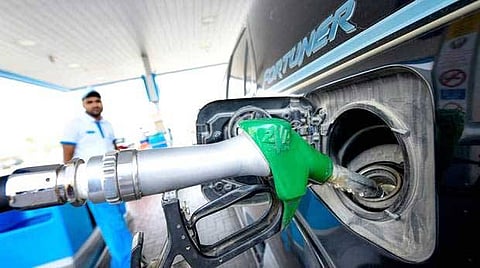
Dubai: UAE motorists are facing a sharp increase at the pump this April, with fuel prices rising between 31% and 72% month-on-month as global energy costs reset higher.
Get updated faster and for FREE: Download the Gulf News app now - simply click here.
From April 1, the new rates are:
Super 98: Dh3.39 per litre (up from Dh2.59, +30.9%)
Special 95: Dh3.28 (up from Dh2.48, +32.3%)
E-Plus 91: Dh3.20 (up from Dh2.40, +33.3%)
Diesel: Dh4.69 (up from Dh2.72, +72.4%)
In practical terms, petrol prices have increased by around 80 fils per litre, while diesel has surged by nearly Dh2 per litre—marking one of the steepest monthly adjustments in recent years.
The shift is just as striking on a yearly basis. Compared to April 2025, petrol prices are now 30%–35% higher, while diesel has jumped by nearly 80%, underlining how quickly global fuel markets have turned.
What a full tank now costs
The increase is immediately visible when you refuel.
For a typical 60-litre sedan (Special 95):
March: Dh148
April: Dh196
Increase: Dh48 per tank
For an 80-litre SUV or 4x4:
March: Dh198
April: Dh262
Increase: Dh64 per tank
For drivers filling up twice a week, that adds roughly Dh380–Dh500 more per month, depending on vehicle type and usage.
Diesel users—especially in transport and logistics—are seeing a sharper cost impact, reflecting tighter global supply of industrial fuels.
Global surge feeds UAE rates
The UAE’s increase mirrors a broader surge in global fuel prices driven by supply disruptions and rising crude oil benchmarks.
Oil markets turned volatile in March:
Brent crude surged more than 50% in a single month, nearing $120 per barrel at its peak
Prices have since stabilised around $110–$115, still well above earlier levels
In the US, petrol prices have crossed $5 per gallon, up roughly 25%–30% within weeks
The key driver is a supply shock linked to disruptions in the Strait of Hormuz, which handles around 20% of global oil flows. The resulting pressure on supply chains has pushed up both crude and refined fuel prices worldwide.
How UAE prices compare globally
Because the UAE follows a 'liberalised' pricing system, global price movements are reflected relatively quickly at the pump.
Recent international trends show:
Diesel prices rising over 80% in markets such as the Philippines and Nigeria
Increases exceeding 50% in countries like Australia
US petrol prices climbing to above $5 per gallon
In contrast, countries with regulated or subsidised fuel—such as Saudi Arabia, India, and China—have seen slower adjustments due to policy controls.
Even after April’s increase, UAE fuel prices remain within a mid-range globally, particularly compared to heavily taxed European markets.
Why UAE prices adjust quickly
Fuel prices in the UAE are linked directly to international benchmarks under a system introduced in 2015.
Prices are reviewed monthly
Rates reflect global crude and refined fuel averages
Changes are applied without significant delay
This means prices move in line with global oil cycles—rising when markets tighten and easing when they soften.
What happens next
The latest increase follows a period of declining fuel prices through much of 2025, when global oil markets were softer. Prices hit multi-month lows in early 2026 before reversing in March. April’s rise signals the start of that rebound phase rather than a continuous upward trend.
Looking ahead:
Oil markets remain volatile amid supply risks
Prices have stabilised but at elevated levels
Any sustained easing in crude could bring relief in upcoming monthly revisions
For motorists now, one thing to remember is: Fuel prices will continue to track global markets—and can shift just as quickly if conditions change.