UAE residents' update: Flight updates, oil spill near Oman, Strait of Hormuz standoff
Tensions in the Gulf are still disrupting shipping, and oil markets — here's the latest
The Middle East security situation remains fluid, with Iran refusing to fully reopen the Strait of Hormuz until the US meets its demands. For UAE residents, the developments could affect flights, regional travel, shipping and energy markets.
Get updated faster and for FREE: Download the Gulf News app now - simply click here.
Strait of Hormuz standoff
Tensions in the Gulf continue to disrupt flights, shipping and oil markets. Here’s the latest:
Iran holds firm. Tehran says it won't reopen the Strait of Hormuz until the US ends its naval blockade of Iranian ports, halts military action, withdraws blockade forces, pays for war damages, drops sanctions, and unfreezes Iranian assets. Officials say there are no direct US-Iran talks right now — just messages passed through mediators. President Trump has called it only "semi-negotiating" and says he's prepared to let economic pressure on Iran increase.
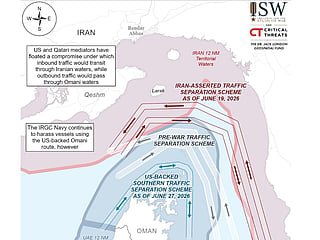
A possible workaround with Oman. Talks between Iran and Oman on a temporary alternate shipping route are reportedly in their final stages, with a new maritime lane potentially replacing the existing routes. But Iran insists a deal with Oman wouldn't mean the Strait is fully reopened — its broader conditions with the US still stand.
Traffic is drying up. Ship crossings through Hormuz dropped sharply — from 15 a few days ago to just 6 by Sunday, per maritime tracker Kpler. By comparison, the Red Sea's Bab al-Mandeb Strait saw over a hundred crossings in the same period.
Oil prices are climbing. Brent crude pushed past $84 a barrel as markets react to the uncertainty over a route that normally carries about a fifth of the world's oil.
Oil spill in Oman: A tanker — reportedly part of Russia's sanctions-evading "shadow fleet" — ran aground near a protected marine area, spilling oil across roughly 390 square kilometers of sensitive coastline.
A new regional pact: Saudi Arabia, Pakistan and Turkey signed a mutual defence agreement, treating an attack on any one of them as an attack on all three.
UAE flights remain disrupted
UAE travellers continue to face cancellations and schedule changes amid ongoing regional security concerns. Etihad has cancelled Abu Dhabi-Bahrain and Abu Dhabi-Kuwait services, while Air Arabia has cancelled several regional flights. Emirates has yet to confirm some Dubai-Bahrain and Dubai-Kuwait services.
Limited regional flights: Some regional carriers continue to operate selected services. flydubai is running limited flights, while Qatar Airways, Saudia, Oman Air and SalamAir have resumed or maintained services to some Gulf destinations. Schedules remain subject to change.
Airspace warning remains in place: The European Union Aviation Safety Agency (EASA) has extended its conflict-zone advisory until August 31, urging airlines to exercise caution around affected Gulf airspace because of ongoing security risks. Airlines avoiding restricted airspace may also add one to three hours to some flight times.
What UAE travellers should do
Check flight status before leaving for the airport.
Monitor airline apps and websites for last-minute changes.
Allow extra time for longer routes and connections.
Check official travel advisories before travelling overseas.
Bottom line: The key questions are whether Iran and Oman can finalise a temporary shipping arrangement and whether the wider US-Iran standoff can be resolved. Until then, disruption to shipping, aviation and energy markets could continue.
How tensions escalated over the weekend
Friday: Houthi strikes in Yemen’s Marib province killed at least two civilians and injured 14, according to the internationally recognised government. Saudi Arabia, Pakistan and Turkey signed a mutual defence agreement under which an attack on one would be treated as an attack on all three.
Saturday: Yemeni government forces launched a military operation against Houthi positions on several fronts.
Sunday: The Houthis claimed an attack on Saudi Aramco’s Jazan refinery, sparking a fire. Saudi authorities said no injuries were reported.
Mokha attack: The Houthis later claimed a large-scale attack targeting Saudi forces in Mokha. Yemeni government forces said they had thwarted the assault on the commercial port.
Iran-Oman talks: Where things stand
Talks nearing conclusion: Iran says negotiations with Oman on new shipping lanes through the Strait of Hormuz are in their final stages.
New route proposed: The existing northern and southern routes could temporarily be replaced by a new maritime route.
No direct US-Iran talks: Iran says there are currently no direct negotiations with Washington, although messages are being exchanged through mediators.
Six conditions: Iran says Hormuz will reopen only if the US ends threats and military action, withdraws forces involved in the blockade, pays compensation, lifts sanctions and unfreezes Iranian assets.
Trump’s position: US President Donald Trump said Washington is only “semi-negotiating” with Tehran and is prepared to let economic pressure on Iran increase.
Key point: An agreement between Iran and Oman would not automatically mean the Strait reopens. Tehran says reopening depends on its conditions being met.