One week of widening war: Leaders killed, nuclear sites hit — what we know so far
Oil fears, shipping attacks, missiles and drones mark first week of widening war

Dubai: A week after the United States and Israel launched a sweeping military campaign against Iran, the conflict has rapidly expanded across the Middle East, with strikes hitting nuclear facilities, military bases and senior leadership targets inside Iran.
The fighting has already killed nearly 1,400 people, according to Iranian emergency authorities and media reports, after waves of airstrikes and missile attacks across the country.
Iran responded with ballistic missiles and attack drones targeting Israel and US interests across the region, with Gulf states bearing the brunt of the retaliation as missiles and drones were intercepted over countries including the UAE, Qatar, Saudi Arabia, Bahrain, Kuwait and Jordan.
Iranian President Masoud Pezeshkian said Tehran would not target neighbouring Gulf countries, unless attacks originated from those nations, and apologised for earlier attacks, but missile and drone strikes in the Gulf continued as the conflict intensified.
The conflict has also spilled into key shipping lanes and energy infrastructure, raising fears of wider economic disruption.
Leadership targets
The opening wave of strikes on February 28 focused heavily on Iran’s military and political leadership. Iranian state media confirmed the death of Supreme Leader Ayatollah Ali Khamenei, the most powerful figure in the Islamic Republic.
Week of war: At a glance
Nearly 1,400 killed in the first week of fighting
Iran’s Supreme Leader Ayatollah Ali Khamenei killed in opening strikes
Key nuclear sites hit: Natanz, Fordow and Isfahan
Missiles and drones launched across the region
Gulf states bear the brunt of Iranian retaliation
Oil facilities and shipping routes targeted
Strait of Hormuz security fears rise
Several senior commanders were also reported killed, including top officials linked to the Islamic Revolutionary Guard Corps (IRGC) and the country’s defence establishment.
According to reports cited by The New York Times, the strikes aimed to cripple Iran’s command structure and disrupt coordination between the military and the Revolutionary Guards.
Key Iranian leaders reported killed
Ayatollah Ali Khamenei – Iran’s Supreme Leader and the country’s ultimate authority on military and foreign policy.
Mohammad Pakpour – Commander of the Islamic Revolutionary Guard Corps (IRGC).
Aziz Nasirzadeh – Iran’s defence minister and former air force commander.
Ali Shamkhani – Senior adviser to Khamenei and former secretary of Iran’s Supreme National Security Council.
Several other senior military commanders and officials were also reported killed in strikes targeting Iranian leadership compounds.
Nuclear infrastructure
US and Israeli forces also targeted facilities connected to Iran’s nuclear programme in an effort to weaken its uranium-enrichment capability.
Among the sites reportedly hit:
Natanz nuclear enrichment facility – Iran’s main uranium-enrichment centre
Fordow enrichment plant – a heavily fortified underground facility built inside a mountain
Isfahan nuclear technology centre – a key site for uranium conversion and nuclear research
Military analysts told The New York Times that targeting these locations was meant to delay Iran’s nuclear programme and limit its ability to rapidly produce enriched uranium.
Missile and air-defence systems
The strikes also focused on Iran’s missile capabilities and air-defence network.
Targets included:
ballistic missile launchers
military bases and storage depots
air-defence batteries
command centres operated by the Revolutionary Guards
Israel’s military also said it destroyed 16 aircraft belonging to the IRGC’s Quds Force at Tehran’s Mehrabad Airport, accusing the Guards of using the facility to transport weapons and funds to regional allies such as Hezbollah.
Expanding conflict
Iran responded with large waves of ballistic missiles and attack drones, targeting Israel as well as US military installations and allied infrastructure across the Gulf.
Missiles and drones were intercepted over Jordan, Saudi Arabia and other regional states, while attacks have also struck oil facilities, shipping routes and military bases.
The war has increasingly drawn in regional actors. The Iran-backed Lebanese group Hezbollah launched rocket and drone attacks on Israeli targets, prompting Israeli airstrikes on positions in southern Lebanon and evacuation warnings in parts of the south.
Submarine sinks Iran ship
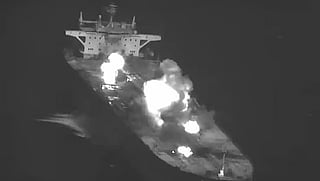
The conflict has also spilled into international waters. A US submarine torpedoed the Iranian frigate IRIS Dena, sinking the vessel in one of the most serious naval confrontations of the conflict so far. Sri Lanka later rescued surviving sailors and recovered dozens of bodies.
Shipping routes have come under threat in the Strait of Hormuz, one of the world’s most critical oil transit chokepoints, after several commercial vessels reported attacks or security incidents.
Energy infrastructure has also come under fire, with drone and missile strikes targeting oil facilities in the Gulf region.
Widescale aviation disruption
The escalation has rattled global markets, pushing oil prices higher amid fears that shipments from the Gulf could be disrupted.
The fighting has also disrupted regional aviation, forcing airlines to reroute or cancel flights as missiles and drones were intercepted over parts of the Gulf.
Regional security alerts have widened. Turkey briefly activated air defence systems after reports of missile activity near its airspace, while European governments have begun deploying military assets to protect shipping lanes and their citizens in the region.
Several European countries have sent fighter jets, surveillance aircraft and air-defence systems to bases in Cyprus and the Gulf as tensions continue to rise.
With strikes continuing and regional forces on high alert, analysts warn the conflict could expand further if diplomatic efforts fail.