Inside Trump’s ‘15-point’ Iran plan: Big claims, few details
No full list released as clues suggest sweeping demands on nukes, missiles and influence
Dubai: President Donald Trump’s claim that the United States and Iran have discussed a “15-point” framework to end the war has sparked intense curiosity — and confusion — as neither Washington nor Tehran has revealed what those points actually are.
Tehran has even denied that any talks are taking place, underscoring the uncertainty surrounding the emerging diplomatic push.
While Trump has insisted that “major points of agreement” are already in place, US officials have declined to disclose details, saying sensitive diplomacy will not be conducted publicly.
That leaves a critical question hanging over the emerging diplomatic push: What exactly is in Trump’s 15-point plan?
What we know so far
Only a handful of elements have been publicly referenced — mostly by Trump himself.
At the top of the list is the nuclear issue. Trump has repeatedly said Iran will “never have a nuclear weapon,” describing it as the primary condition of any deal. He has also suggested that the US wants control over Iran’s stockpile of highly enriched uranium, believed to be buried deep at key nuclear sites.
These demands point to a hardline approach that goes beyond simply freezing Iran’s nuclear programme, instead aiming to dismantle or neutralise it altogether.
What it likely includes
Beyond those limited disclosures, diplomats and analysts say the broader framework is likely to resemble — and expand upon — earlier US demands made before the war.
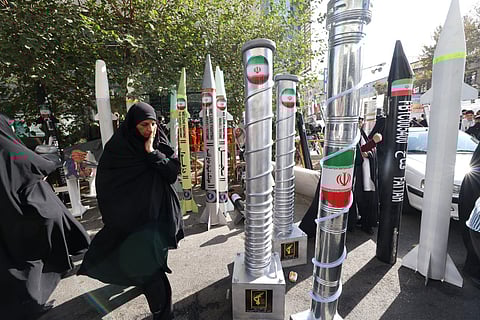
One expected pillar is strict limits on Iran’s ballistic missile programme, which Western officials have long viewed as a major security threat in the region.
Another is curbing Iran’s support for proxy groups across the Middle East, including armed factions that have been central to Tehran’s regional strategy for years.
There are also indications that the US may be seeking some form of acknowledgment of Israel’s right to exist, a longstanding sticking point in any negotiations involving Iran.
And at the heart of the current conflict, the plan is almost certain to include provisions on the Strait of Hormuz — specifically, guarantees that the vital oil shipping route remains open and secure after weeks of disruption.
More than just nuclear
Taken together, the emerging picture suggests that Trump’s proposal is not limited to the nuclear file, but instead aims at a much broader reshaping of Iran’s military and geopolitical posture.
Analysts say this reflects a long-standing US objective: Not just preventing Iran from developing nuclear weapons, but reducing its overall influence across the region.
That ambition, however, is precisely what could make the proposal difficult to accept.
Why the details remain unclear
The lack of clarity around the “15 points” is not unusual in early-stage diplomacy, particularly when talks are indirect and mediated through third countries such as Oman, Pakistan, Egypt or Turkey.
In such situations, proposals are often fluid — more a collection of negotiating positions than a fixed, agreed document.
It is also possible that the number itself is part of the messaging. By citing a detailed list, Trump may be seeking to signal progress and momentum, even if the specifics are still being shaped behind the scenes.
A high bar for Tehran
Even without a full list, the contours of the proposal suggest a high bar for Iran.
Demands related to nuclear rollback, missile restrictions and regional influence would require significant concessions from a government that has just endured weeks of military strikes and leadership losses.
Far from softening its stance, some analysts argue, Iran may now see these capabilities as even more essential — both as a deterrent and as leverage in negotiations.
Deal — or opening bid?
That raises the possibility that Trump’s “15-point” plan is less a final framework and more an opening position — one designed to test how far Tehran might be willing to go.
For now, diplomacy appears to be moving, but in fragments — through intermediaries, partial messages and competing narratives.
Until more details emerge, the “15 points” remain as much a political signal as a concrete roadmap.
And whether they lead to a deal — or simply mark another phase in an already volatile conflict — remains an open question.


