US–Iran MoU sparks big question: When does Hormuz fully reopen — and is the US naval blockade on Iran really ending?
Trump signals immediate opening of the geopolitically sensitive strait
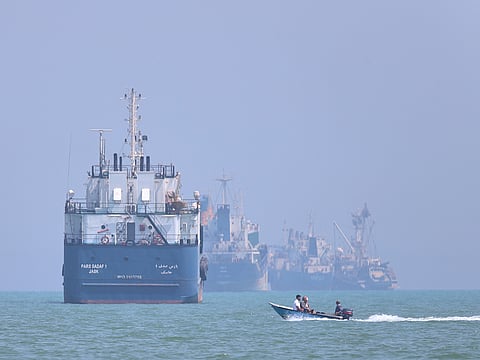
President Donald Trump said the United States and Iran have reached an agreement that includes the lifting of a US naval blockade on Iranian ports in the strategically vital Strait of Hormuz, marking a major potential shift in one of the world’s most sensitive maritime chokepoints.
“Congratulations to all!” Trump wrote on social media, without releasing detailed terms of the agreement.
Donald Trump, born on June 14, 1946, turned 80 on the day the Iran-US agreement was signed.
Recent updates suggest the situation is shifting but not fully resolved, and the MoU details are scant.
A US–Iran agreement framework (MoU) has been announced, including plans to reopen the Strait of Hormuz and lift the U.S. naval blockade.
Iran has not yet fully confirmed implementation on the ground, and shipping flows remain only partially restored in some reports.
Oil and LNG shipments are recovering but still below pre-war levels, with insurers and shipping firms remaining cautious due to residual risk.
Get updated faster and for FREE: Download the Gulf News app now - simply click here.
In a follow-up message, he added: “Ships of the World, start your engines. Let the oil flow!” — signalling an immediate reopening of commercial navigation through a waterway critical to global energy supplies.
The Strait of Hormuz, through which a large share of global oil and liquefied natural gas exports pass, had become a central pressure point in the wider conflict involving Iran, Israel, and Iranian-aligned groups across the region.
Any disruption to traffic in the strait has previously triggered sharp spikes in global energy markets.


Iranian state media reported the development after Pakistan's Prime Shehbaz Sharif announced that the US and Iran have agreed to an “immediate and permanent” halt to military operations across all fronts, including Lebanon, in a major claimed breakthrough aimed at de-escalating regional conflict.
The announcement followed a volatile day in which Israeli strikes hit Beirut’s southern suburbs, further raising fears that the broader conflict could derail diplomatic efforts.
Immediate, permanent termination of military operations on all fronts
According to Pakistan’s statement, both sides have agreed to an “immediate and permanent termination of military operations on all fronts, including in Lebanon,” with mediators expected to facilitate follow-up technical talks aimed at implementing the agreement.
The reported deal would, in effect, unwind recent naval and military restrictions that had disrupted shipping and heightened insurance costs for vessels passing through the Gulf.
What is the 'dual blockade' in the Strait of Hormuz?
The term “dual blockade” of the Strait of Hormuz is used in recent reporting to describe a two-sided maritime shutdown mechanism that emerged during the 2026 Iran–US conflict, where both the United States and Iran imposed overlapping restrictions on shipping through the world’s most important oil chokepoint.
Analysts say the move, if fully implemented, could restore maritime flows to pre-war levels — but caution that enforcement and verification will be critical given the scale of recent hostilities and mistrust between the parties.
Iran is also expected to retain significant leverage in any follow-on negotiations, particularly through its influence over regional security dynamics and its proximity to the Strait, even as the blockade is lifted.
Dual-layed chokehold
Together, these created a “dual-layer chokehold” on traffic:
Iran limiting passage through the Strait itself
The US restricting access to and from Iranian ports and Iranian-linked shipping routes
This effectively turned Hormuz into a contested maritime zone where neither side had full control of normal commercial flow, dramatically reducing global tanker traffic and raising insurance costs.
Timeline of blockade
The “dual blockade” is not a formal legal term, but a journalistic shorthand for escalating actions that unfolded in phases:
28 February 2026: Conflict begins; Iran disrupts shipping and declares restrictions on passage through the Strait.
March 2026: Shipping collapses as attacks, mines, and electronic warfare intensify; Iran’s enforcement becomes more systematic.
13 April 2026: The United States formally imposes a naval blockade on Iran, targeting vessels entering or leaving Iranian ports after failed ceasefire talks.
From mid-April onward, both systems operate in parallel — producing what analysts describe as a mutual maritime blockade regime rather than a single-sided closure.


