Did Trump’s Iran deal hand Tehran control of Hormuz?
Critics say vague MoU wording strengthened Iran’s claim over key waterway
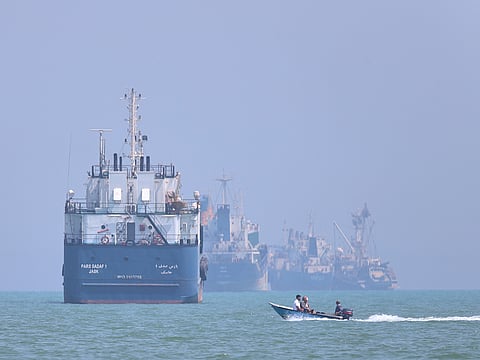
Dubai: Less than a month after President Donald Trump hailed his agreement with Iran as the breakthrough that would reopen the Strait of Hormuz, the strategic waterway has once again become the centre of military confrontation — raising questions over whether the deal may have unintentionally strengthened Tehran’s hand instead.
Washington and Tehran now openly dispute who controls one of the world’s most important shipping lanes, with both sides launching fresh military operations and accusing each other of violating the agreement signed on June 14.
According to an investigation by The New York Times, the latest crisis has revived criticism that the 14-point memorandum of understanding (MoU) contained language that Iran interpreted as recognising its role in managing navigation through the strait.
The agreement said Iran would make “best efforts” to ensure the safe passage of commercial vessels through Hormuz and would hold talks with Oman and other Gulf states on the future administration and maritime services of the strategic waterway.
Critics argue those provisions left too much room for interpretation.
Powerful leverage
“No one should be surprised that Iran views that as explicitly giving them an enduring role controlling passage through Hormuz,” Michael Ratney, the former US ambassador to Saudi Arabia, told The New York Times.
“Iran’s control obviously gives them powerful leverage,” Ratney said, adding that Tehran appeared willing “to risk a resumption of conflict, perhaps even a collapse of the cease-fire, to maintain that leverage.”
Dennis Ross, a veteran US Middle East negotiator who served several presidents, said Iran’s reading of the agreement was clear.
“You were opening the strait — but only on the condition that Iran was completely in control and that any other routes are not acceptable,” Ross told The New York Times.
The White House, however, rejects that interpretation. According to the newspaper, a US official involved in the negotiations said Washington understood Iran’s commitment to make its “best efforts” to guarantee safe passage as meaning Tehran would not attack ships using the route established near Oman’s coast.
Tehran’s claim rejected
The dispute has now spilled back onto the water.
According to The Associated Press, Iran struck another commercial vessel over the weekend, prompting a fresh wave of US airstrikes against Iranian military targets. US Central Command said its forces struck dozens of sites, including air defence systems, missile launchers, drone facilities and radar installations.
The military also rejected Tehran’s claim that it controls the strategic waterway.
“The Strait of Hormuz is a vital maritime corridor for global trade. Iran does not control it,” Central Command said.
Iran’s Revolutionary Guard responded by insisting the opposite.
“The Strait of Hormuz is our territory, and we will not allow a rogue and child-killing army from the other side of the world to continue its illegal interference in it,” the Guard said.
The competing claims underline how the conflict has evolved beyond missile strikes into a struggle over who sets the rules for one of the world’s busiest energy corridors.
Trump signed the interim agreement after weeks of indirect negotiations aimed at halting fighting that began in late February. The deal suspended Iranian charges on commercial shipping for 60 days, eased restrictions on Iranian oil exports and was intended to pave the way for broader peace negotiations.
But diplomacy has steadily unravelled.
Iran has resumed attacks on commercial shipping while insisting vessels should use routes closer to its coastline and obtain permission from an authority it established earlier this year. The United States has instead backed an alternative shipping corridor along Oman’s coast and has stepped up military operations to protect commercial traffic.
Nearly one-fifth of the world’s traded oil and liquefied natural gas passes through the Strait of Hormuz, making it the world’s most important maritime energy chokepoint.
With Trump now declaring that the June agreement is effectively “over”, mediators including Oman, Qatar, Egypt and Pakistan continue efforts to prevent a return to full-scale war.
For now, however, the battle over Hormuz has become more than a military confrontation. It is increasingly a contest over who controls the gateway to global energy supplies — and whether last month's ceasefire inadvertently created a new and more dangerous status quo.


