Diplomacy vs revenge: Inside Iran’s two camps driving the conflict
Hardliners demand retaliation while pragmatists argue talks offer Iran best way forward
Dubai: The latest round of US-Iran military exchanges has exposed more than a regional confrontation over the Strait of Hormuz. It has also brought into sharper focus a growing struggle inside Tehran over the country’s future direction.
Even as Iranian negotiators have continued contacts with Oman and other mediators in search of a diplomatic solution, hardliners have demanded retaliation for the killing of former supreme leader Ayatollah Ali Khamenei and warned against any compromise with Washington. The debate has become increasingly visible since Khamenei’s death, with analysts saying Iran is now balancing two competing visions — one centred on diplomacy, the other on resistance and revenge.
While both camps ultimately seek to preserve the Islamic Republic, they disagree sharply over how to achieve that goal.
The revenge camp
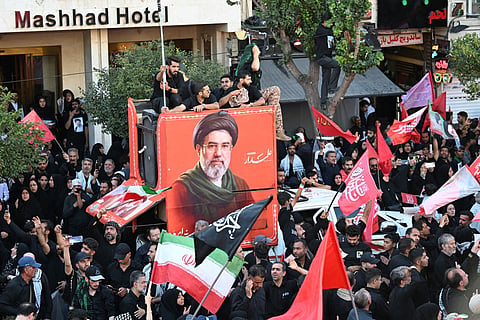
The funeral of Ali Khamenei offered perhaps the clearest glimpse yet of the hardliners’ message.
Thousands of mourners carried red flags — a Shiite symbol associated with vengeance — while anti-American slogans dominated the week-long ceremonies. Reuters described the funeral as a demonstration of national defiance intended to show that Iran had survived the war and remained determined to shape the region’s future, particularly over the Strait of Hormuz.
Ayatollah Mojtaba Khamenei, who succeeded his father as supreme leader, reinforced that message in a written statement.
“This revenge is the demand of our nation, and it must certainly be carried out.”
Although he has yet to appear publicly since taking office, his statement has been widely interpreted as signalling continuity rather than moderation.
The New York Times, citing analysts of Iranian politics, said hardliners have sought to use the atmosphere of mourning to narrow support for negotiations.
Saeid Golkar, a professor at the University of Tennessee at Chattanooga, told the newspaper that they are portraying compromise as “strategically dangerous and morally illegitimate.”
The diplomacy camp
Yet the hardliners are not the only voices shaping policy.
Despite repeated military exchanges, Tehran has continued diplomatic contacts through Oman, which has mediated indirect talks with Washington for months. Iranian officials participated in discussions in Muscat only hours before the latest escalation over reopening normal navigation through the Strait of Hormuz.
President Donald Trump said the two sides had been close to reaching an agreement before the latest fighting. “They were giving up everything, and then all of a sudden two hours after that they hit a ship with a drone,” he told CNN after US strikes on Iranian military targets, suggesting diplomacy had been overtaken by events on the ground.
Many within Iran’s political establishment argue that sanctions relief, economic recovery and preventing another prolonged conflict remain vital national interests. They do not necessarily trust Washington, but they believe diplomacy offers Iran its best chance of stabilising an economy weakened by years of sanctions and war.
Ali Fathollah-Nejad, director of the Center for Middle East and Global Order in Berlin, told the New York Times that the struggle is essentially between those who believe in the “primacy of the battlefield” and those who still see diplomacy as the better path.
Hormuz became the test
That internal debate is now playing out in the Strait of Hormuz.
Only a day before the latest fighting, Iranian and Omani officials were discussing proposals to restore normal commercial navigation through both shipping lanes in the strategic waterway.
Within hours, however, a merchant vessel was attacked, the United States launched its largest military response since the ceasefire, and Iran declared the Strait closed once again while firing missiles and drones towards Gulf states.
The sequence illustrates how quickly diplomatic efforts can be overtaken by military developments, leaving negotiators struggling to keep talks alive.
Why Iran’s messages seem contradictory
To outside observers, Tehran’s actions often appear inconsistent.
One day Iranian officials are discussing technical arrangements for commercial shipping. The next, missiles are flying across the Gulf.
Analysts say that apparent contradiction reflects the competing pressures within Iran’s leadership rather than necessarily indicating policy confusion.
The military establishment sees strength and deterrence as essential to preventing future attacks. Diplomats, meanwhile, continue searching for a negotiated settlement that could ease sanctions and reduce the risk of another major conflict.
Those competing priorities increasingly overlap rather than replace one another, producing a strategy that mixes military escalation with continued diplomatic engagement.
What happens next?
For now, neither side appears ready to abandon either track completely.
The United States says it remains open to negotiations even as it responds militarily to attacks on commercial shipping. Iran, meanwhile, continues to speak through mediators while insisting it will retaliate against further military action.
Which camp ultimately gains greater influence inside Tehran could shape not only the future of US-Iran relations but also the fate of the Strait of Hormuz and wider Gulf security.
For the moment, Iran appears to be pursuing both strategies simultaneously — keeping diplomacy alive while demonstrating that, in the eyes of its leadership, revenge and deterrence remain central pillars of national policy.


