ASEAN ready to extend aid to Southeast Asians if crisis deepens
Support will cover not only Filipinos but all Southeast Asians working in the region
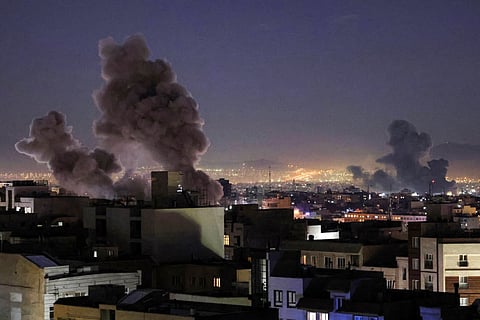
Dubai: As the current chair of the Association of Southeast Asian Nations (ASEAN), the Philippines has noted that it is closely monitoring developments in the Middle East, particularly its impact on millions of Southeast Asians living and working across the Gulf.
Officials have mentioned that assistance mechanisms are being prepared should the situation escalate further.
In a press briefing, Department of Social Welfare and Development (DSWD) assistant secretary Irene Dumlao has highlighted the Philippines’ readiness to extend help not only to Filipinos but also to other Southeast Asians if necessary.
“The ASEAN Socio-Cultural Community (ASCC), through the DSWD, is also ensuring that needed assistance would be extended not only to Filipinos but also to the nationals of our ASEAN family,” said Dumlao.
She has added that discussions are expected to continue in the upcoming council and bilateral meetings that will be hosted by the ASCC.
The ASEAN is an intergovernmental organisation that has been established to promote economic growth, social development, and stability across Southeast Asia. Its 10 member states are Brunei, Cambodia, Indonesia, Laos, Malaysia, Myanmar, Singapore, Thailand, Vietnam and the Philippines.
Millions of Southeast Asians in the Gulf
The Middle East hosts more than one million Filipinos, along with large numbers of workers from across Southeast Asia. Any escalation in regional tensions could have implications for employment, mobility, and safety, prompting governments to activate monitoring and assistance systems.
To recall, tensions intensified after joint military operations have been launched by the US and Israel against Iran. In response, Iran has conducted retaliatory strikes, raising concerns of wider instability in parts of the region.
Earlier, Israel has declared that it could not provide a timeline for how long the strikes would continue, but has said that operations would persist until three key objectives are achieved.
These include halting Iran’s nuclear weapons development, ending its long-range ballistic missile production, and stopping the financing of what it described as “terror proxies” in the Middle East.
Continued ASEAN coordination
Meanwhile, the Philippines is expected to facilitate discussions on how to coordinate possible welfare responses, especially if emergency assistance or full repatriation becomes necessary.
While no immediate large-scale action has been announced, officials have stressed that the bloc remains on alert, focusing on the safety and protection of expatriates across the region.
Stay updated: Get the latest faster by downloading the Gulf News app now - it's completely free. Click here for Apple or here for Android. You can also find it on the Huawei AppGallery.