Singapore tops Asean in foreign direct investments (FDI)
City-state, acting as a stable business and innovation hub, keeps leadership in Asean bloc
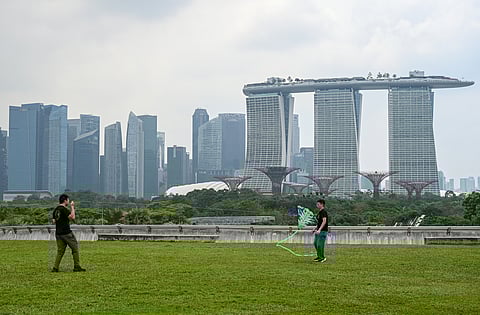
Singapore has emerged once again as the unrivalled leader of foreign direct investment (FDI) inflows among the major Association of Southeast Asian (Asean) economies, far outpacing its regional peers.
While Indonesia, Vietnam, Malaysia, and Thailand also attracted significant capital, it was Singapore that stood out with exceptionally high inward investment — a testament to its long-cultivated advantages and strategic role in global business, as per preliminary data.


Numbers tell the story
No full-year 2025 actual data is available yet, with ADB Outlook or UNCTAD, still finalising 2025 figures.
Preliminary data shows that despite a challenging global investment climate that saw declines in worldwide FDI flows, Singapore captured an overwhelming FDI share, estimated at over $167 billion (Jan. to Sep. 2025), a huge jump from $140 billion in 2024 — dwarfing the inflows of fellow Asean-5 economies such as Indonesia (~$24 billion), Vietnam (~$20 billion), Malaysia (~$11 billion), and Thailand (~$10 billion), put together.
Asean Top 5 FDI rankings
| Rank | Country | Estimated/Key FDI Notes (2024-2025 Trends) |
|---|---|---|
| 1 | Singapore | $143B+ net inflows (2024); AI/tech hub dominance, 93%+ ASEAN share leader |
| 2 | Indonesia | $24B (2024); supply chain shifts, record regional growth |
| 3 | Vietnam | $20B (2024); manufacturing/digital surge, strong outlook |
| 4 | Malaysia | $11B (2024); AI capex, infrastructure appeal |
| 5 | Thailand | $10B (2024); front-loading investments, stable energy |
Global capital hub
What sets Singapore apart is its role as ASEAN’s financial, legal, and corporate nerve center. Multinational corporations often choose the city-state not just as an investment destination, but as a regional headquarters and gateway into Southeast Asia.
Singapore’s predictable common-law legal framework, strong investor protections, and extensive network of double-taxation treaties make it exceptionally attractive for firms seeking to structure and centralize investment across ASEAN.
In fact, a large portion of regional FDI capital is routed through Singapore-incorporated holding companies before being deployed in other Southeast Asian nations — highlighting how deeply embedded the city-state is in regional investment strategies.
Source: Aseanstats.org
Finance, innovation, connectivity
Singapore’s dominance is also rooted in its financial sector strength. The Singapore Exchange (SGX) boasts a market capitaliSation larger than several of its regional counterparts, while local banks collectively hold assets in the trillions, underscoring the city-state’s role as a regional financing hub.
This comprehensive financial ecosystem allows investors to access capital markets, banking services, and trade finance with unmatched depth in Southeast Asia.
At the same time, Singapore has intentionally positioned itself as a center for innovation and high-value sectors.
With a focus on R&D, digital technologies, and advanced industries, the city-state attracts strategic investments from firms looking not merely to sell products, but to base cutting-edge operations and talent in Asia.
Stability, infrastructure, and governance
Beyond finance and legal efficiency, Singapore’s political stability and rule of law continue to reinforce investor confidence.
Corporate leaders value the assurance of transparent governance, clear regulations, and strong enforcement — qualities not as pronounced in many other emerging markets.
This reliability becomes a key differentiator when global capital is weighing long-term commitments amidst geopolitical uncertainty.
Crucially, Singapore’s world-class physical infrastructure — from its deepwater port to advanced logistics networks — further enhances its openness to trade and investment, acting as a logistical hub for regional supply chains.
Gateway, and destination
Taken together, these advantages mean that while countries like Indonesia and Vietnam attract FDI for manufacturing, resources, and competitive labour, Singapore’s appeal lies in financial services, corporate structuring, innovation, and connectivity — sectors that tend to command larger capital commitments and underpin broader regional investment flows.
This unique role allows the city-state to capture a disproportionately large share of FDI relative to its population and geographic size, cementing its position at the top of Asean's investment hierarchy going into 2025.


