Look: Singapore-Malaysia rapid transit system (RTS) link nears completion
Project's role as a new lifeline, set to ease cross-border "Causeway" commute woes
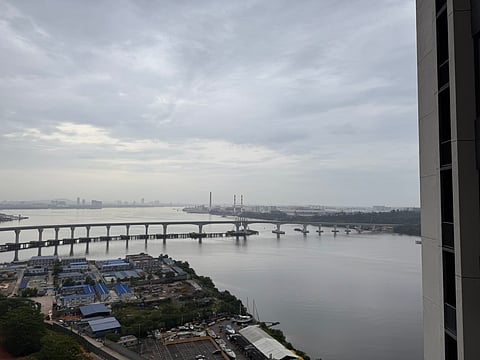
Excitement over the Johor Bahru-Singapore Rapid Transit System (RTS) Link is growing as the link nears completion.
The construction, deemed as a "new lifeline" for one of the world's busiest border crossings, the Causeway, is visible in the shared photos of cranes, bridges, and bustling work sites.
The under-construction 4km rail line spans the Straits of Johor.
Officially kickstarted on January 22, 2021, with groundbreaking at Singapore's Woodlands North station, the RTS Link has progressed steadily despite pandemic delays, according to the Singapore government.
Now at 65% completion, the project remains on track for its December 31, 2026, finish.
Passenger services
This, its builders said, would paving the way for passenger services in January 2027, Malaysian Transport Minister Anthony Loke Siew Fook told the Straits Times.
The first of eight automated trains was unveiled in June 2025, signalling advanced readiness for test runs slated to begin mid-November this year.
Cost
Jointly funded by Singapore and Malaysia at a total cost of approximately S$2.9 billion (RM10 billion / $1.41 billion), the initiative promises substantial benefits.
It aims to carry up to 40,000 passengers daily, slashing travel time from 45 minutes by bus across the Causeway to just five minutes by rail.
This jam-free corridor will integrate seamlessly with Singapore's Thomson-East Coast Line and Malaysia's KTM network, boosting economic ties in the Iskandar region and reducing carbon emissions by diverting commuters from cars.Experts hail it as a model for ASEAN connectivity.
"The RTS Link will transform daily commutes, fostering closer integration while alleviating congestion that costs billions in lost productivity," noted a Land Transport Authority (LTA) spokesperson.
With neighbours like Thailand eyeing similar links, this cross-border marvel positions the region for a more unified future


