Saudi-Houthi conflict escalates: 7 major developments and what comes next
Aramco evacuates HQ, four killed in separate incidents as US pulls embassy staff
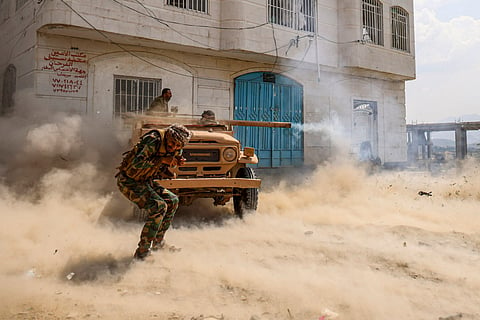
Dubai: Saudi Arabia’s confrontation with Yemen’s Houthis has entered a dangerous new phase, with attacks on airports and energy facilities killing civilians, forcing oil giant Aramco to evacuate its remaining headquarters staff and prompting the United States to withdraw non-emergency diplomatic personnel.
Four people, including an Indian national, were killed in separate incidents involving Dammam airport and the Shaybah oilfield, while Saudi air defences continued intercepting drones over different parts of the kingdom.
The escalating conflict has disrupted flights, threatened vital oil infrastructure and drawn greater international military involvement, raising fears that fighting in Yemen could develop into a broader regional confrontation.
Here are seven major developments and what they mean.
Why has Aramco evacuated its headquarters?
Saudi Aramco ordered its remaining staff at its headquarters in Dhahran to leave and work remotely until further notice, sources told AFP and Reuters on Thursday.
Non-essential employees had already been working from home following a Houthi attack on the sprawling complex last week.
Saudi officials confirmed that a building in the area housing Aramco’s operations centre was struck. Employees described extensive damage, although AFP could not independently verify its extent.
The latest evacuation did not include residential areas within the complex. The number of employees affected remains unknown.
The move highlights growing security concerns surrounding Saudi Arabia’s energy industry, which plays a critical role in global oil supplies.
What happened at Dammam airport?
An attack on King Fahd International Airport in Dammam on Wednesday night killed two people — an Indian resident and a Saudi citizen — and injured eight others.
The injured included two Indians, two Yemenis, two Bangladeshis, a Nepalese and a Saudi national.
Saudi Arabia’s General Authority of Civil Aviation said operations subsequently resumed and air traffic returned to normal.
The attack added to a mounting civilian toll. According to an AFP tally of official figures, 22 people have been killed in attacks on Saudi airports this month.
Repeated strikes have also disrupted aviation, with Riyadh’s international airport previously closed for several days.
How did two more people die near an Aramco oilfield?
In a separate incident, falling debris from an intercepted drone targeting Aramco’s Shaybah oilfield killed a Filipino and a Nepalese national.
An Indian and a Pakistani were injured.
Saudi authorities said the debris caused a fire in a contractor’s vehicle outside the facility’s perimeter, but oilfield operations were unaffected.
The incident underlined how attempted attacks can cause casualties even when incoming drones are successfully intercepted.
It also demonstrated the vulnerability of civilian workers around major energy installations.
Are Riyadh and Medina facing fresh drone threats?
Saudi Arabia reported further drone interceptions on Thursday, including threats in the Riyadh and Medina areas.
The Saudi-led coalition also announced interceptions over the Eastern Province as security operations continued.
The reports do not establish that Medina’s holy sites were struck.
The Houthis had previously denied launching drones towards Medina, despite Saudi coalition statements reporting interceptions.
The widening geographical spread of alerts illustrates the challenge facing Saudi air defences as the kingdom seeks to protect cities, airports and energy facilities simultaneously.
Why is the US withdrawing diplomatic personnel?
Washington has ordered non-emergency US government employees and their families to leave Saudi Arabia because of the deteriorating security situation.
The State Department cited Houthi attacks on civilian airports and critical infrastructure that had caused casualties and severe travel disruption.
Reuters reported that US officials also expected departures involving families at other Gulf diplomatic missions.
However, the State Department stressed that the confirmed departure order applied only to Saudi Arabia.
The move represents a significant precaution as the conflict increasingly threatens civilian and diplomatic infrastructure.
Could the conflict spread beyond Saudi Arabia and Yemen?
The confrontation is already drawing wider international involvement.
Britain has announced additional defensive military support for Saudi Arabia, including RAF Typhoon patrols intended to help intercept missiles and drones. Egypt has also pledged support for Saudi security.
Meanwhile, the Houthis have threatened Saudi energy installations and declared a maritime blockade, bringing the strategically important Red Sea shipping routes into the confrontation.
Saudi Arabia has responded with air strikes against Houthi-controlled areas of Yemen.
The renewed fighting follows the breakdown of a prolonged truce and a Houthi offensive along Yemen’s Red Sea coast.
The danger is that further attacks on shipping, oil installations or civilian infrastructure could draw additional countries into the conflict.
What happens next — escalation or diplomacy?
Saudi Arabia faces a difficult balance between defending its territory and avoiding a prolonged confrontation that could further disrupt aviation, oil exports and regional trade.
The Houthis have demonstrated their ability to threaten targets far beyond Yemen, while Saudi forces continue targeting the group’s military capabilities.
The United States and other partners are strengthening security precautions, but the expanding military response carries risks of further escalation.
Diplomatic efforts to end Yemen’s conflict have not produced a lasting settlement, and the broader US-Israel-Iran confrontation has added another layer of uncertainty.
For now, the most immediate questions are whether Saudi air defences can contain further attacks, whether vital energy and aviation infrastructure can remain operational, and whether regional powers can prevent another front from expanding into a wider war.


